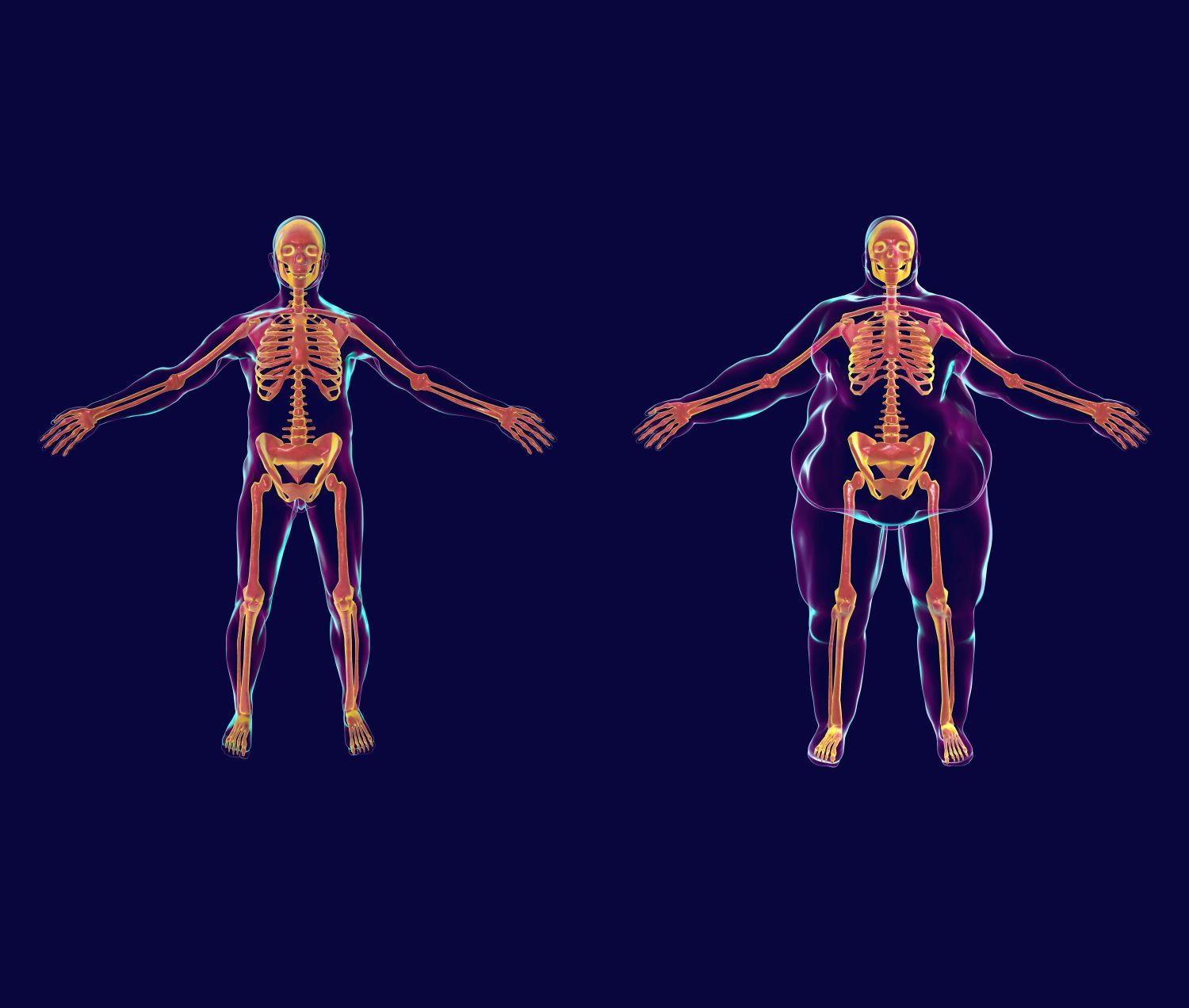
Being overweight promotes cancer and makes both the early detection of tumors and their treatment more difficult. This makes prevention all the more important.
Alongside tobacco and alcohol consumption, obesity is one of the most important preventable risk factors for cancer. There is a proven link to obesity for at least 13 types of cancer. These include carcinomas of the intestines, kidneys, oesophagus, pancreas and gallbladder and, in women, of the breast after the menopause, the uterus and ovaries.
Visceral fat in particular, which envelops the internal organs, is considered a cancer driver. The more overweight someone is and the longer the excess weight persists, the higher the risk. However, cancer cannot be traced back to a single factor – and cancer often develops without any recognizable risk factor.$
Why being overweight leads to cancer
Adipose tissue is an active endocrine organ that produces estrogens and inflammatory messengers. Oestrogens can drive the growth of some types of cancer. Chronic low-threshold inflammation is also considered to be cancer-promoting. In addition, obesity causes the body to release more insulin, which is suspected of promoting the growth of cancer cells. The interrelationships are complex and not yet fully understood. The immune system also appears to be impaired by severe obesity.
“Cancer is just one of the many health risks associated with being overweight.”
The early detection, diagnosis and treatment of cancer can also be more difficult if you are overweight. In addition, overweight patients show an altered drug metabolism. Effective prevention therefore aims to avoid obesity from the outset or to systematically reduce it.