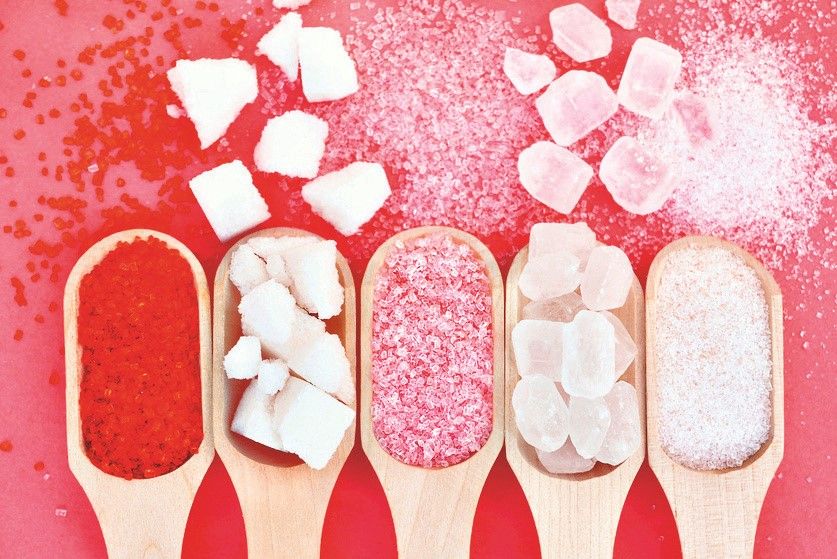
Our brain loves sugar, although too much of it is not good for the body. Hidden sugars in processed foods are particularly difficult to detect. But too much fruit can also be unhealthy.
Sweets, lemonade, ice cream, chocolates, cakes – our mouths water just looking at them. Most adults like sugar, children do anyway. The lactose contained in breast milk triggers feelings of happiness even in babies. This is due to the taste buds distributed on our tongue. When they perceive sweetness, the brain releases the happiness hormone dopamine. Our brain loves sugar – and there are evolutionary reasons for this. For our ancestors, a valuable source of energy such as sugar from fruit was rarely available. What’s more, not a single naturally occurring sweet fruit is poisonous. That’s why our brain has filed sweets under “rare and safe”. No wonder, it sends a clear signal with the first bite: “Eat, and as much of it as possible!”.
Our brain prefers the simple sugar glucose, which is found in sugary foods and fruit, because it quickly supplies the brain cells with energy. The brain needs a particularly large amount of it – it devours around 75 percent of the glucose we consume. This explains the happiness boost that we get as a reward, so to speak. However, we wouldn’t need to eat sugar at all to supply our bodies with glucose – and that would be even healthier.
Sugar is not a staple food
Our body can produce glucose itself from many foods, such as potatoes, lentils, cereals, vegetables and fruit. This is why sugar is missing from the list of staple foods. We can feel this when we chew a piece of bread longer and it suddenly tastes sweet. Enzymes present in our saliva then become active, producing simple sugars such as glucose from carbohydrates such as those found in bread. The further breakdown of carbohydrates takes place in the small intestine. From there, the glucose enters the blood.
Because our body constantly needs energy, there is always glucose floating in our blood – we measure the amount as blood sugar. Normal values for healthy people are between 70 and 110 milligrams per deciliter in the morning, before they have eaten anything; after eating, the blood sugar value rises to a maximum of 140 milligrams per deciliter. Insulin is responsible for stabilizing the blood sugar level. This is because sugar also causes the pancreas to kick in and release insulin. This hormone ensures that the cells can absorb the sugar and then “burn” it.
When we eat chocolates or other desserts, our blood sugar level suddenly rises – and falls again just as quickly. Because as soon as the sugar has been removed from the chocolates, the insulin circulating in the blood signals: I want more sugar! On days when we consume a lot of sugar, we become real sugar junkies – with the corresponding blood sugar spikes.
Reserves in the liver and fat deposits
If we consume much more sugar than we need, our body stores the energy for times when it is scarcer. Insulin is also involved in this: It signals to the liver, our metabolic center, that it should produce the polysaccharide glycogen from the simple sugar glucose and keep it in stock until it is needed. Muscles can also store glycogen, but to a lesser extent than the liver. The fuel reserve can be mobilized quickly, for example during hard physical work – and is also quickly used up again. After 12 to 18 hours without food intake, the liver’s stores are empty. This is why the liver takes double precautions: As soon as its stores are full, it produces fat from the excess glucose. It does this with all carbohydrates that the body does not consume.
If we don’t overdo it with sugar consumption, it all fits together nicely and the sugar level is neither too high nor too low. It becomes dangerous if the sugar intake remains high or even gradually increases. The fat deposits then grow and the blood sugar level gets out of control: obesity, fatty liver and adult-onset diabetes can be the consequences, and the heart and kidneys can also be damaged. The balance can also get out of control in the other direction: If we consume too few carbohydrates over a longer period of time, the body produces glucose itself by breaking down the body’s own protein, for example from the muscles.
Fructose boost from smoothies
If we eat a balanced diet, our body does not need any additional sugar. Ideally, 45 to 60 percent of the energy we burn comes from complex carbohydrates, such as those found in wholemeal bread or nuts. Because they are only broken down slowly, they provide energy for several hours and thus keep the blood sugar level constant. Fruits and vegetables are considered additional components of a healthy diet because they also provide the body with vitamins and fiber.
However, you should not eat more than two portions of fruit a day. In addition to glucose, fruit contains fructose in particular, which the body can only utilize poorly – a large proportion of it therefore ends up directly in the liver, where the sugar is deposited as fat. If you eat the whole fruit, the blood sugar level rises more slowly than with fruit juice. The fructose concentration can reach unhealthy levels if large quantities are consumed in the fashionable drink smoothie or in dried fruit. Honey, also a natural product, is only healthy in small quantities because it consists of almost 80 percent sugar.
27 sugar cubes per day
The World Health Organization recommends a maximum of 25 grams of sugar per day for an adult; this corresponds to about 6 sugar cubes of 4 grams each and is already contained in a quarter of a liter of cola. However, the average Swiss person eats 110 grams of sugar a day, which is equivalent to around 27 sugar cubes. However, it is more difficult than expected to keep a sense of proportion. The greatest danger comes from foods that are sweetened without us being aware of it.
There is sugar in ready-made salad dressings or in pickles, which also taste sour, and even in potato potato chips. With processed foods, the only thing that helps is to look at the list of ingredients and the calorie count – if the number is high, this may be an indication of hidden sugars. Some products are best left on the shelf: Sweet drinks such as iced tea, cola or energy drinks that are sweetened with pure sugar or fructose. Because if we eat sweet food all the time, we need more and more of it until we feel that it is sweet. For this reason, sweeteners or the highly sweetening plant stevia are not recommended. The desire for sweets can hardly be completely suppressed. Nutritionists therefore recommend eating sweets once a day. Then you can consciously enjoy it, the little kick of happiness that our brain sends.
Text: Helga Kessler
How healthy is fructose?
Many foods are sweetened with fructose. Are they healthier and do they make you less fat? Like normal sugar, fructose also has calories that contribute to obesity and fat formation. It has been proven that fructose, when consumed in large quantities, can contribute more than other types of sugar to obesity-related problems such as insulin resistance, diabetes or fatty liver development. You should therefore avoid consuming ready-made products that are sweetened with fructose.