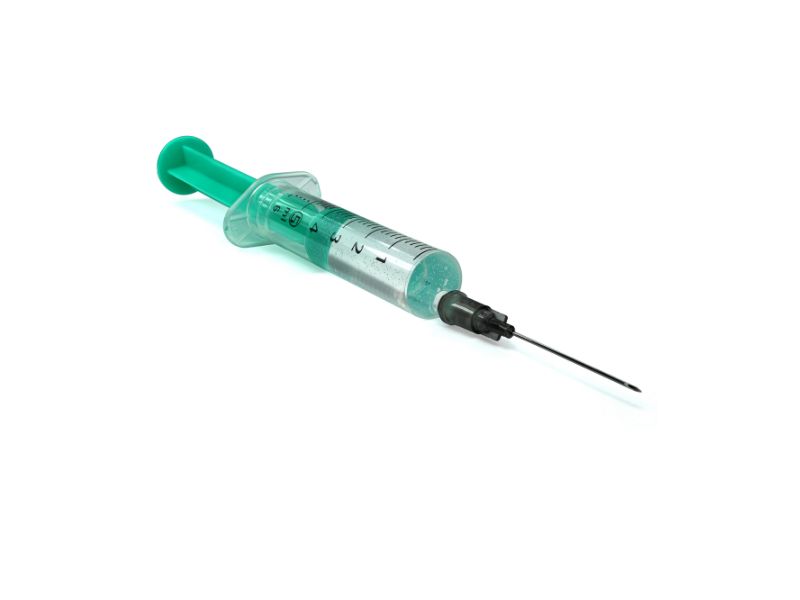
Several people were stabbed with needles at the Street Parade. It is unclear who did this and why. What is the danger of needle spiking from a medical point of view? We asked Dominique Braun, Senior Physician meV at the Clinic for Infectious Diseases and Hospital Hygiene.
Dominique Braun, drugs or sedative substances can be administered through unintentional needle pricks. Apart from that, do the needlesticks also pose a risk of someone deliberately spreading infections?
Theoretically yes, but I consider the risk of someone contracting a disease as small. The probability of infection depends on the infectivity of the respective viruses, i.e. their biological properties. It also plays a role how deep the injury from the needle would be and whether the victim has been vaccinated – for example against hepatitis B. It would also depend on how much blood was in the needle.
If the needles had contained infectious pathogens: Which infectious pathogens could be transmitted in this way and how likely is this?
Hepatitis B is conceivable, less likely hepatitis C and even less likely HIV. The rule of thumb for a needlestick injury with fresh, contaminated blood in a relevant quantity is: for hepatitis B in 300 out of 1000 cases, i.e. 30% probability of transmission, for hepatitis C in 30 out of 1000 cases, i.e. 3% probability of transmission and for HIV in 3 out of 1000 cases, i.e. 0.3% probability of transmission. However, these are only rough estimates from the literature. The individual circumstances of a particular case are not taken into account.
Could someone theoretically deliberately prepare highly concentrated pathogens for other diseases and then administer them by injection?
This would require in-depth knowledge of the preparation and handling of virus media and a high level of criminal energy.
How should How should people affected by needle spiking be treated?
Post-exposure prophylaxis screening is common for needlestick injuries. This involves testing whether the exposed person already had an HIV or hepatitis infection before needle spiking. However, these tests say nothing about a potential infection, as an infection with HIV or hepatitis C can only be reliably ruled out after 12 weeks.
What should you do if you only find out later that you have been stung?
You should contact a specialist at a hospital close to your place of residence – ideally the infectious diseases doctor on duty. If less than 48 hours have passed since the needle stick, HIV post-exposure prophylaxis may be advisable. If the person has been vaccinated against hepatitis B, the vaccination protection can be determined in the blood. If there is protection, there is usually no need for prophylaxis. There is no post-exposure prophylaxis for hepatitis C. In the very rare case of an infection with hepatitis C following a needlestick injury, we have had highly potent and very well tolerated medication available for several years, which can cure a hepatitis C infection in 99% of cases.