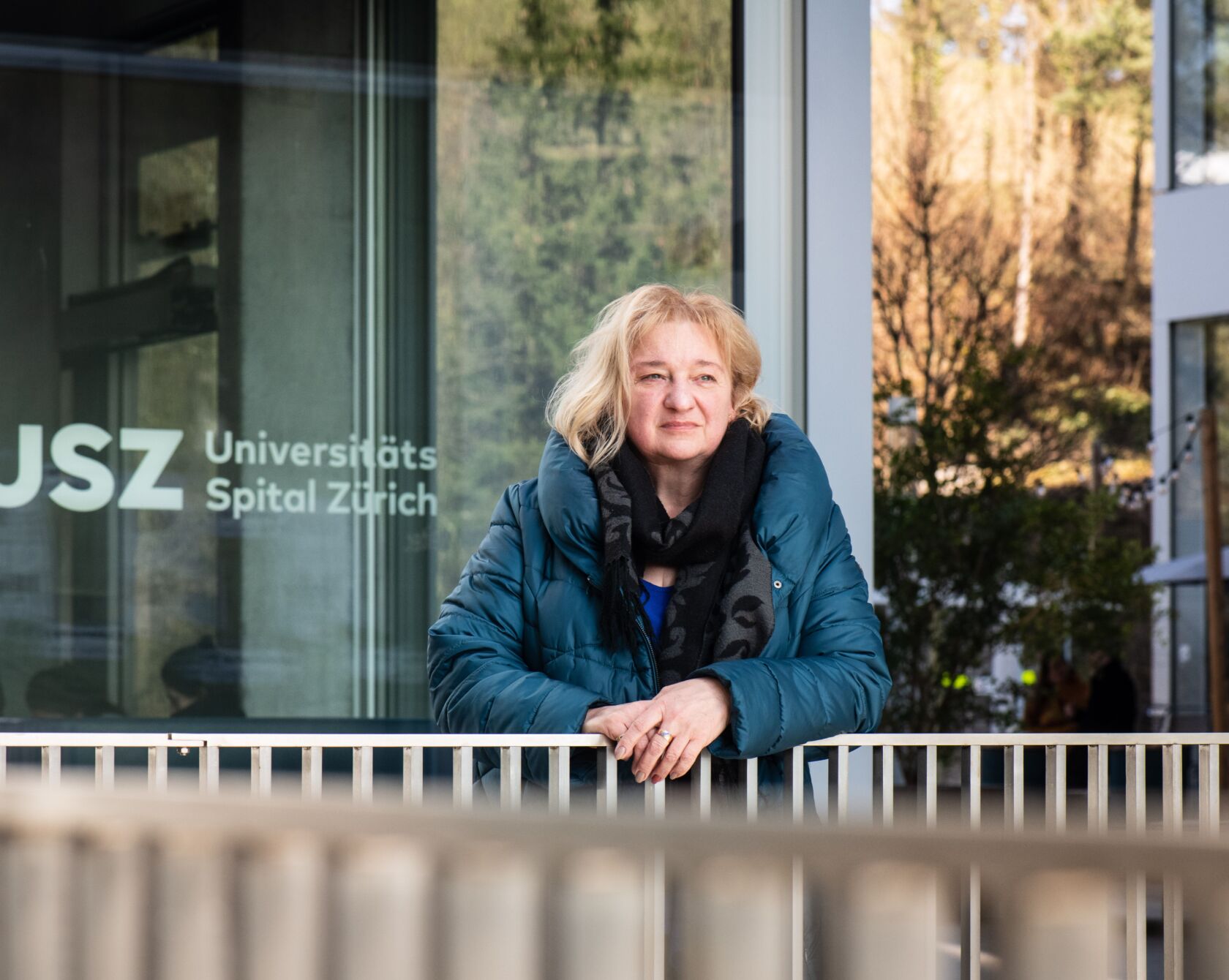
For years, Irena Guazzini dragged herself through the day feeling tired and out of breath at the slightest exertion - a nightmare for the active woman in her professional life. The reason was her sleep apnoea, a condition characterized by breathing interruptions during the night. Two years ago, a tongue pacemaker operation brought the long-awaited relief.
For a long time, I didn’t know why I felt drained and tired. On a trip together, an acquaintance pointed out to me that I “snore as loud as a chainsaw”. I was blindsided, but let myself be persuaded to have the problem checked out. The path led me from my family doctor to a lung specialist in my area. I tried a snoring splint and anti-snoring clips, but to no avail. The classic respiratory therapy device didn’t help either, as it was impossible for me to sleep with it – the face mask was too uncomfortable and the noise too loud. After two more years of sleep deprivation, I was physically and mentally exhausted. A solution had to be found because, in addition to great tiredness and fatigue, breathing interruptions at night can also lead to a lack of oxygen, high blood pressure and a higher risk of heart attacks or strokes.
A weak electrical impulse stops the snoring
When I found out about the USZ’s snoring consultation in 2021 thanks to a colleague, I immediately wrote an email. “I want to finally get my snoring under control, my quality of life has suffered greatly and I’m becoming more and more isolated.” Shortly afterwards, I traveled from my home in Herzogenbuchsee to Zurich for initial investigations. Right from the start, I felt understood and in good hands at the University Hospital’s Department of Ear, Nose, Throat and Facial Surgery. After several nights in the pneumology sleep laboratory and a comprehensive analysis, I was introduced to the tongue pacemaker, a method that is used when other therapies do not work and you meet the requirements, for example not to smoke. The tongue pacemaker is an implant about the size of a five-liver, which was implanted under my skin below the collarbone in an operation lasting around two hours. A cable runs from this along my neck to a nerve in my tongue under my jaw. When I inhale in my sleep, my tongue receives a weak electrical impulse. It moves forward a little and creates more space in the back of my mouth. I can breathe properly, there are no more interruptions and I don’t snore. To ensure that the pacemaker is not active during the day, it is switched off after waking up and switched on again before going to bed. You cannot see the pacemaker from the outside. My scars have healed very well and are barely visible because they are small. I never feel like there’s something foreign in my mouth. Sometimes I feel a certain coldness around the device, but I don’t find it uncomfortable.
“Grosi can now be switched off”
I am very grateful to all the doctors and nursing staff at the University Hospital for their advice and for all my treatment. Since the operation at the USZ, my quality of life has improved massively. My sleep has normalized and I have energy again during the day. Professionally and privately. I go for long dog walks along the Aare and enjoy being active and spending time with my family. I told them about the tongue pacemaker and explained how it works. The grandchildren find the remote control with which I can operate the pacemaker particularly fascinating: “You can now switch Grosi on and off.”