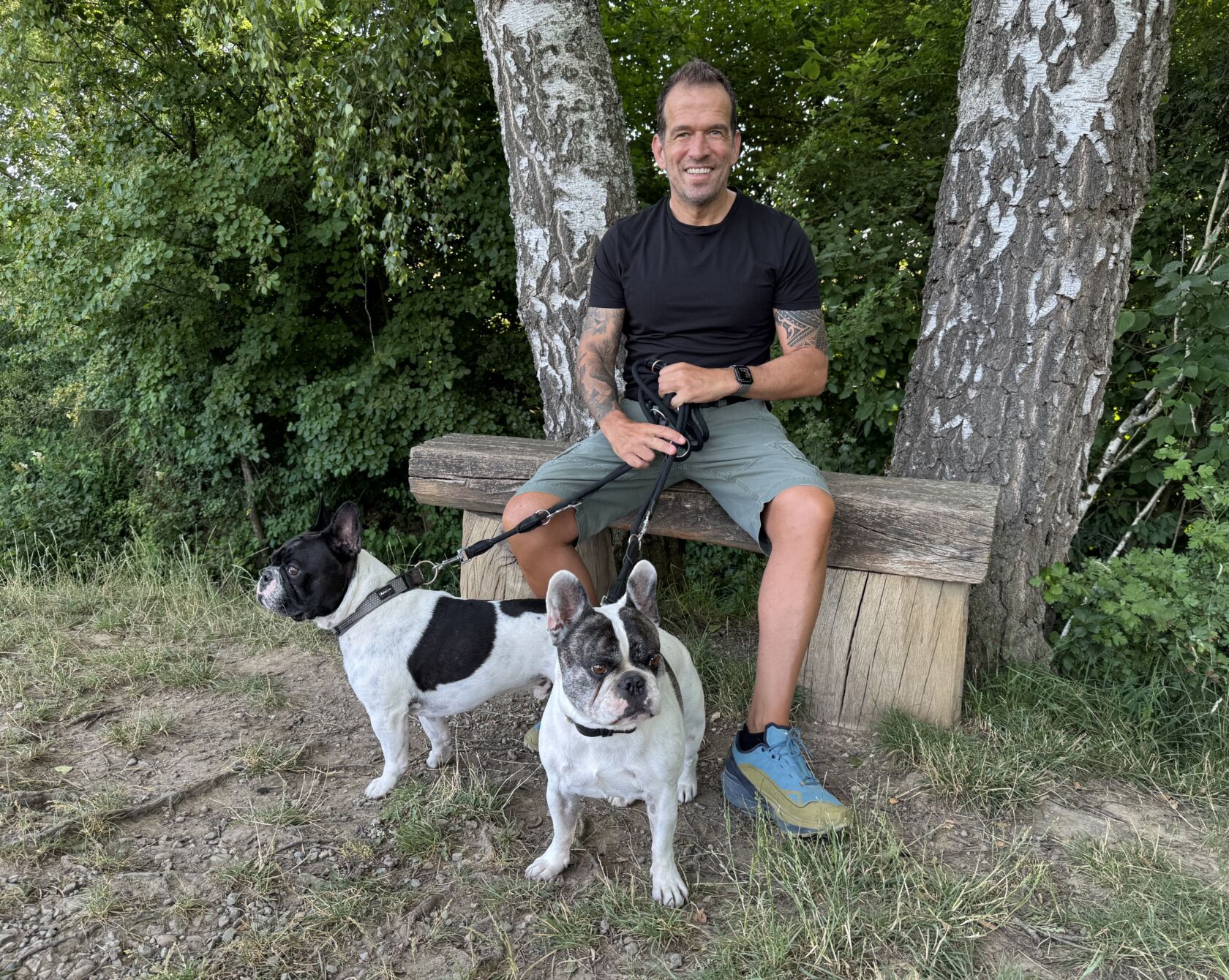
The diagnosis came suddenly: "You have cancer. Incurable." This news in 2024 came as a shock to Sascha Brändle, the sporty entrepreneur. Triathlon? Work? A future! Nothing seemed tangible anymore. Today, 16 months and five therapies later, the 49-year-old looks back on his experiences. He compares this phase of his life to a botched swim start in an Ironman race: "Feet in my face, elbows in my ribs, no air - just chaos". But he also says: "Thanks to cutting-edge medicine and the USZ, I found my way back into calm waters."
The first symptoms I experienced were in my thigh. I contacted my doctor, who referred me to the USZ for further clarification of my pain. To be honest, I didn’t have a good impression of the university hospital – I thought it would be an impersonal factory. But I was wrong. In the outpatient clinic in particular, I experienced a combination of professionalism and humanity that I hadn’t expected: The waiting times were short, the level of expertise was high and I encountered a well-coordinated team. All of this gave me enormous confidence. I was aware that I had a long road ahead of me with my bone marrow cancer diagnosis.
"I knew I needed a highly specialized team now"
The first therapy consisted of a combination of mild chemotherapy, immunomodulators and cortisone – administered in an uncomplicated manner in the outpatient clinic, pain-free and well tolerated. But after three months I had my first relapse: I had a fever and was in so much pain that I had to go to the emergency room. The diagnosis: a tumor on the spine, a broken vertebra and pneumonia. A moment when everything threatened to tip over.
This was followed by second-line therapy with five cytostatic drugs – inpatient, via a central venous catheter, which was very physically demanding and was accompanied by hair loss for the first time. When this treatment didn’t work either, I received a stem cell transplant – probably the most exhausting of all procedures. Even walking 50 meters became a challenge for me.
The next stage was the use of so-called CAR-T cell therapy – a personalized immunotherapy with genetically modified T cells from my own body. The team bridged the waiting time with antibody therapy, which was easy to control but had side effects: I lost my sense of taste and my nails fell out. Stressful – but also a sign of how determined the USZ is to exhaust every option.
At the USZ, I always had confidence in the doctors who treated me. And I quickly realized that we were dealing with cutting-edge medicine and people who would not give up (on me). This also applies to the nursing staff, who give me support in moments of weakness. You always act calmly, professionally adept and empathetic. This expertise in dealing with chemotherapy gave me confidence. I am particularly touched by the respect shown for personal hygiene. In hindsight, I had an unfounded respect for this.
Between hope and a new beginning
In summary, my medical history includes: five different therapies, a femur fracture, three broken vertebrae, several rib fractures, pneumonia, renal insufficiency, cranial neuritis, a back tumor and around 100 days in hospital. Again and again I was in danger of “going under”.
But the water is currently calming down. I find my rhythm. There is hope – great hope. I am currently in a so-called remission. The cancer remains quiet – nobody knows if and when it will return. My doctor said: next week, in ten years or maybe never again. My wife and I have decided to live with one assumption: ten years. We can deal with that – and make plans again.
Before the diagnosis, I was an ambitious consultant with a triathlon background. The illness has changed my perspective. I don’t take myself as seriously as I used to, I appreciate what I have. I have learned to live in the now and that every step, or every crawl, counts.
The return to work is imminent – a challenge that is also associated with uncertainty. Does anybody want me anymore? What else can I do? But I know that by now: I’m tough.
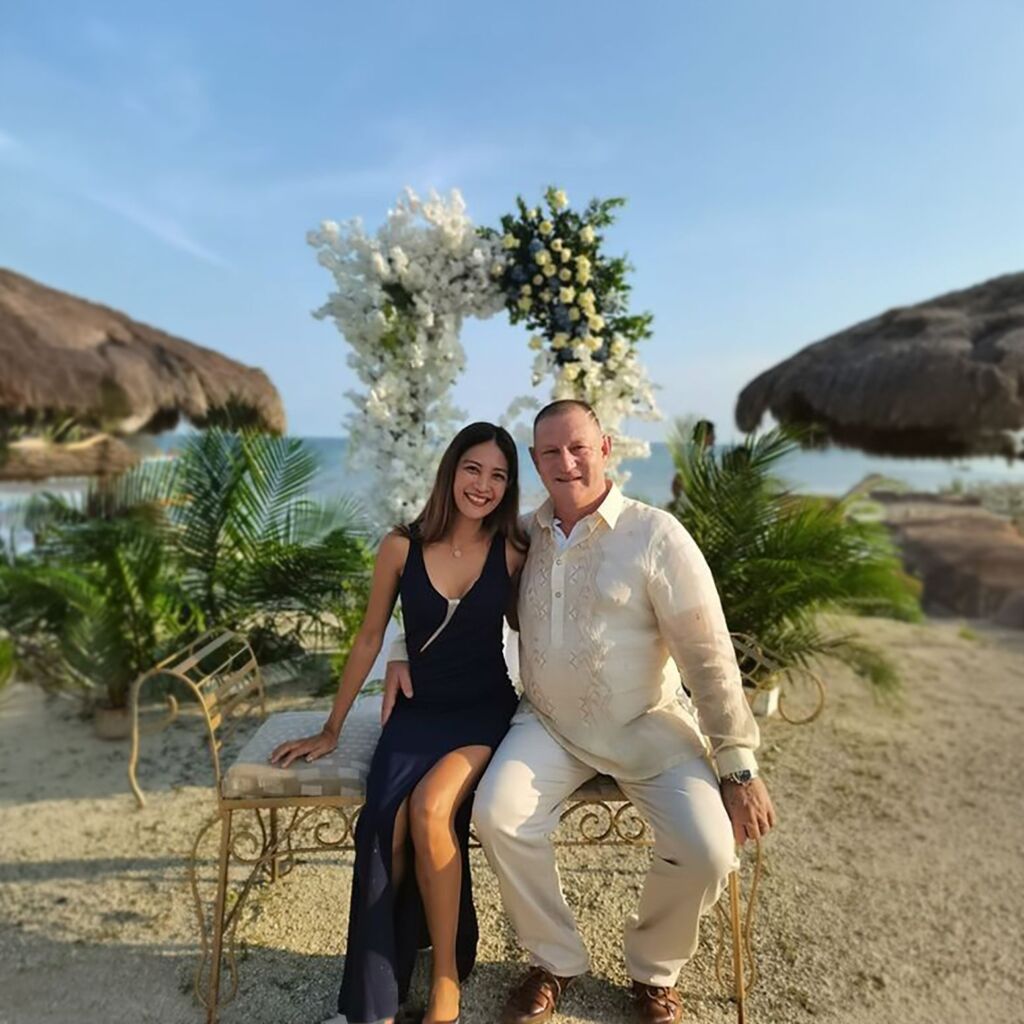
What remains is great gratitude. For my wife, who was and is my lifeboat. For my environment. And for a team at the USZ that convinced me with top-class medicine and supported me as a person – even in the roughest conditions.