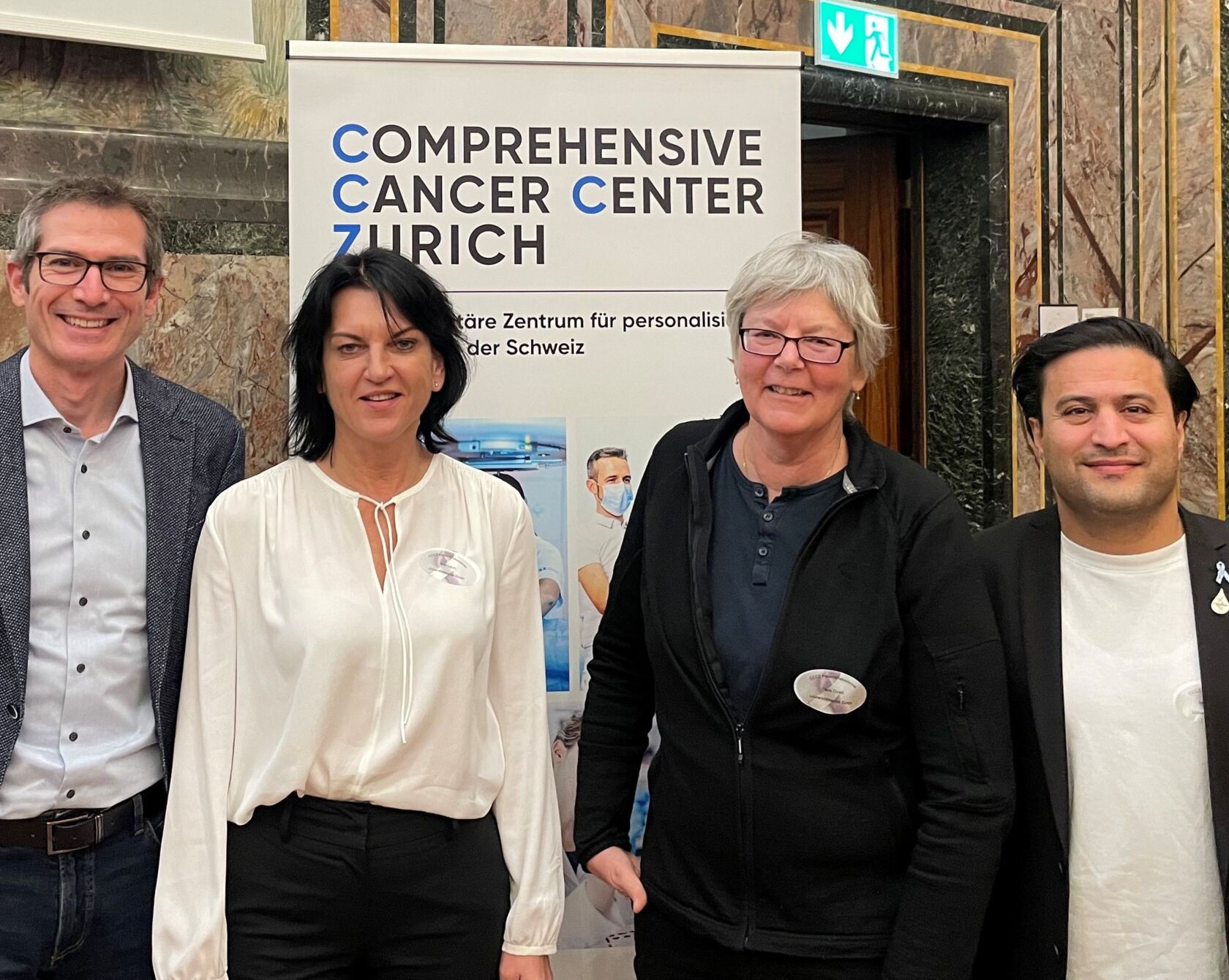
Minimally invasive surgery, organ preservation and innovative drugs were the focus of the Bladder Cancer Patient Academy. The event offered exciting insights into modern treatment options and showed how advances in technology and care can improve the quality of life of those affected.
Focus on holistic support
The event began with a welcome address by Prof. Dr. Matthias Guckenberger, Director of the Department of Radiation Oncology. He emphasized the interdisciplinary cooperation that is essential for the treatment of bladder cancer: “It’s not enough to have just one specialist. We need a team of oncologists, urologists, radiotherapists and nursing staff.” The CCCZ aims to provide patients with comprehensive support not only medically, but also on a personal level.
Minimally invasive surgery: progress through technology
PD Dr. Ashkan Mortezavi presented the advantages of robot-assisted bladder surgery. “With the introduction of the Da Vinci surgical robot, we can now remove and reconstruct the bladder in a minimally invasive way,” he explained. This not only reduces blood loss and pain, but also shortens the recovery time. Studies have shown that patients suffer fewer complications after robot-assisted surgery and are able to return to everyday life more quickly.
Organ-preserving therapy as an alternative
For patients whose bladder cancer is not yet very advanced, trimodal therapy offers an alternative to bladder removal. This combines radiotherapy and chemotherapy to preserve the bladder. Prof. Guckenberger emphasized: “In suitable patients, organ preservation offers the same chance of recovery as surgical removal of the bladder and preserves quality of life.” However, the decision must be made individually and in close consultation with the treating specialists.
New drug approaches for metastases
Prof. Dr. Anja Lorch explained advances in the treatment of metastatic bladder cancer. “Since 2024, we have been relying on the combination of immunotherapy and antibody-drug conjugate,” she explained. A study has shown that this therapy can double the survival time compared to the standard chemotherapy used to date. Despite the varying degrees of side effects that usually occur during the course of treatment, the treatments are generally well tolerated overall. In the vast majority of cases, those affected have a good quality of life.
Support through specialized care
Carla Civelli, an expert in ostomy and continence counseling, spoke about supporting patients who need a urostomy. She emphasized: “Close support before and after the operation helps those affected to feel confident in dealing with their new life situation.” In addition to technical advice, contact with self-help groups also helps to strengthen social integration and promote exchange with people in similar life situations, which can provide those affected with additional support and valuable experience.
The aims of the CCCZ Patient Academies
Clearly understandable information on the latest advances in the diagnosis, treatment and research of cancer. Strengthening decision-making skills: Patients and their relatives should have a better understanding of their treatment options so that they can make informed decisions. Promoting dialog: Direct exchange with experts from oncology, surgery, radiotherapy, nursing and other specialist areas as well as with patients and their relatives. Improve quality of life: Support in dealing with the disease through targeted education and networking
Recording