Dizziness is considered a typical symptom of old age, but a precise clarification is worthwhile. Around one in five cases is "benign positional vertigo", which can be easily treated, says Dr. Stefan Yu Bögli from the Center for Vertigo and Neurological Visual Disorders at the University Hospital Zurich.
Dizziness has many causes. It can occur with stomach complaints as well as after strokes or heart attacks. It is correspondingly difficult to make the correct diagnosis. One form of vertigo could be easily diagnosed and treated, says Dr. Stefan Yu Bögli from the Center for Vertigo and Neurological Visual Disorders at the University Hospital Zurich. “A typical eye tremor is indicative of benign positional vertigo.” This is caused by crystals that become loose in the inner ear, float around and irritate the vestibular system. The therapy involves certain movements of the head, thanks to which the crystals return to their original position. “80 to 90 per cent of patients are free of vertigo after these release maneuvers,” says Dr. Bögli.
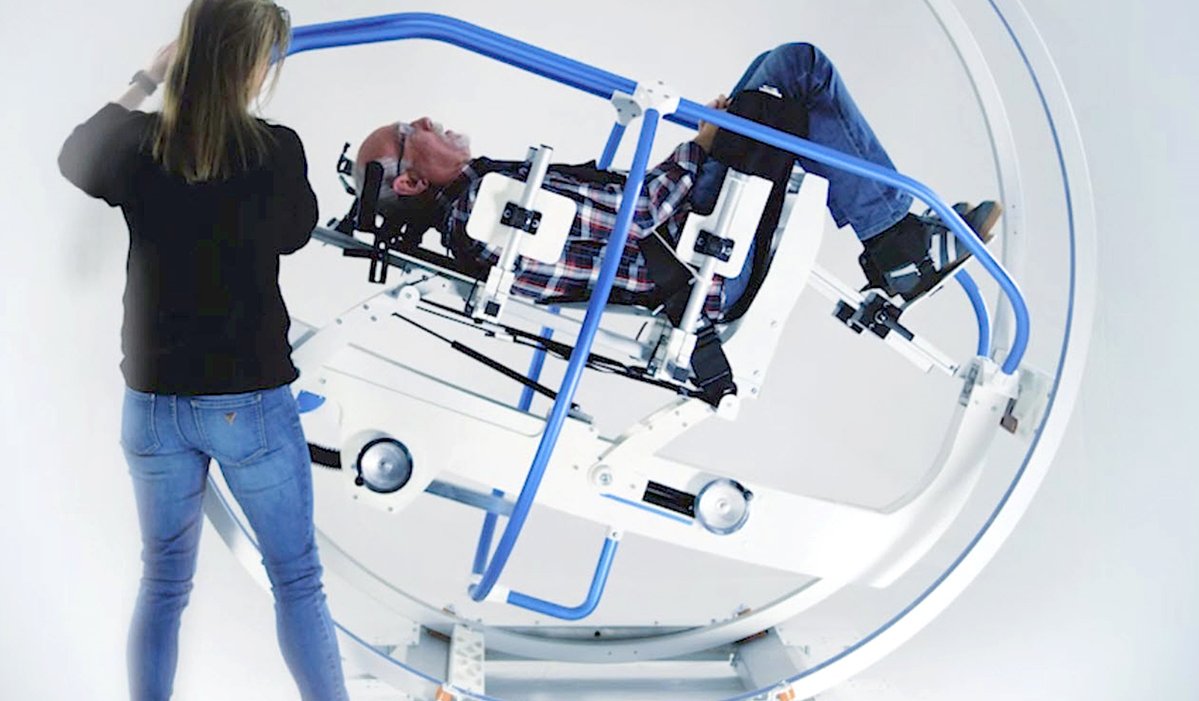
However, older people, who are particularly frequently affected by dizziness, are often too immobile to participate in conventional bedside maneuvers. The solution is a mobile swivel chair on which the patients are strapped in and turned. All examinations are carried out in a sitting position and take no more than 20 to 30 minutes per patient. According to previous experience, benign positional vertigo is diagnosed in around 20 percent of vertigo patients, says Dr. Bögli. They can be helped quickly: therapy also takes place in a swivel chair.
Dizzy bus comes by
Older people in particular sometimes suffer from dizziness – which is often benign positional vertigo. A swivel chair enables simple diagnosis and therapy with so-called liberation maneuvers. However, older people in particular sometimes do not seek help. Professor Dominik Straumann’s team from the Interdisciplinary Center for Vertigo and Neurological Vision Disorders at the USZ came up with the solution with the “vertigo bus”: The vertigo bus transported an adapted, mobile swivel chair to a total of 10 retirement and nursing homes and offered free diagnosis and treatment as part of a one-year pilot project (July 2018 – June 2019). A total of 536 residents were surveyed, 75 of whom stated that they suffered from dizziness. Around 12 percent of those affected had benign positional vertigo, which was immediately treated successfully with the swivel chair. The team provided a neurological assessment and treatment recommendations for people with different types of dizziness, which were also communicated to the family doctors. A publication on the project is in preparation.
The dizziness bus has therefore proved its worth as an outreach therapy service. However, the administrative effort involved in convincing retirement and nursing homes to cooperate was particularly high. The offer will therefore be continued in a different form. In future, the dizziness bus will visit doctors’ surgeries (general practitioners/ENT/neurology), as they do not have swivel chairs but have to perform the maneuvers on a stretcher. The mobile swivel chair could be used to treat patients in these practices in particular, for whom no successful therapy has been achieved to date.
Dizzy bus
The dizzy bus is currently parked in the Circle at USZ Airport. There is also another swivel chair in the Center for Dizziness and Neurological Visual Disorders at the main site of the University Hospital Zurich. On site, the team led by Professor Dominik Straumann can determine whether benign positional vertigo is present. An all-round check provides information about other possible causes. “We are happy to provide further clarifications on referral,” says Dr. Bögli.
Video: SRF report