Frequently asked questions about cochlear implants
Everything you need to know about cochlear implants: tips, advice and answers to frequently asked questions for a safe and comfortable everyday life.
Problems with the cochlear implant
It is best to consult your family doctor first. If he or she suspects a connection with the cochlear implant treatment, he or she will refer you to us. You can also contact us directly in the event of redness or pressure marks on the processor or coil. The Cochlear Implant Center is staffed during office hours. Outside of these hours, you can also report to the ORL polyclinic, but you should expect to have to wait. If in doubt, you should not wear the device for a while to prevent a more serious inflammation.
If otitis media is suspected in the implanted ear, we recommend that you consult an ear, nose and throat specialist immediately.
If the sound processor no longer works properly, please check the device first using the operating instructions and troubleshooting tips below. If it is necessary to replace the processor, please contact us and describe the problem and, if applicable, the error message in the app. We are available during office hours; unfortunately no repair service is possible over the weekend. We will either give you an appointment for a check-up at short notice or we will send you a replacement appliance. Please return the defective device to us. Please note that it is not always necessary to send all components of the appliance for repair. We would therefore appreciate a description of the problem so that the repair costs can be reduced if necessary.
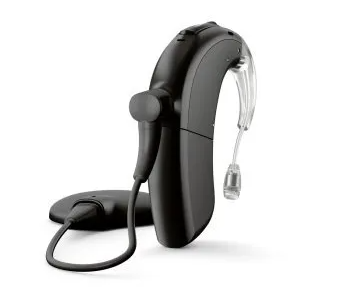
| Advanced Bionics, Naída/Sky CI
|
Naída/Sky CI M90: Instructions and troubleshooting tips |
|---|---|
| Cochlear Nucleus & Kanso
|
User manuals and video instructions |
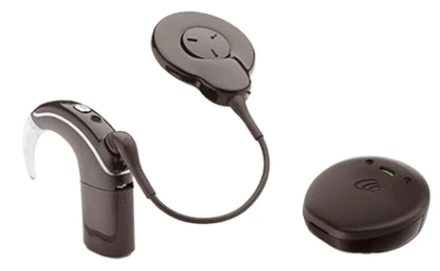
MED-EL Sonnet & Rondo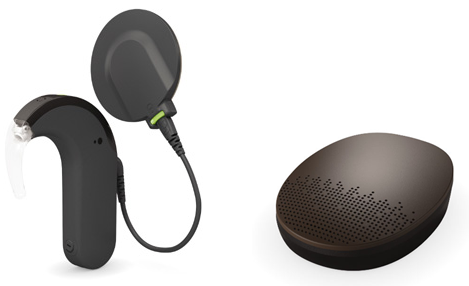 |
Instructions for handling, care and maintenance, troubleshooting |
Precautionary measures for medical examinations
- Yes, caution is advised with certain examinations and interventions.
Information from the manufacturer Cochlear - X-ray examinations and ultrasonic tartar removal are easily possible at the dentist.
- A magnetic resonance imaging (MRI) scan is only possible to a limited extent; for older generation implants (approx. before 2019, see manufacturers below), it should only be performed if no other method can provide the necessary medical diagnosis. The cochlear implant sometimes causes considerable shadowing on the MRI image in the vicinity of the implant, which can lead to a loss of diagnostic information. Examples of images can be found in the manufacturer’s brochures.
Removal of the implant magnet should be considered for examinations in the vicinity of the implant, as otherwise the quality of the MRI image may be impaired.
Cochlear implant wearers must never enter a room containing a magnetic resonance tomograph without taking appropriate precautions. The precautionary measures depend on the manufacturer and implant type.
| Manufacturer | Instructions for the MRI |
|---|---|
| Advanced Bionics | HiRes 90K, HiRes 90K Advantage and HiRes Ultra implants are approved up to 1.5 Tesla with the appropriate bandage. Surgical removal of the magnet is necessary for older implants. HiRes Ultra 3D implants are also approved without a bandage up to 3.0 Tesla (used since the end of 2018). Instructions from the manufacturer Video on applying the pressure bandage |
| Cochlear | With Nucleus 24 implants (used from around 1996), an MRI examination up to 1.5 Tesla may be carried out, provided the head has been bandaged accordingly. With older implants, surgical removal of the magnet is necessary or an MRI is contraindicated. Newer Nucleus Profile Plus and Nucleus Nexa implants are also approved without a bandage up to 3.0 Tesla (used since May 2019). Guidelines of the manufacturer |
| Med-El | With the Maestro system, an MRI up to 1.5 Tesla may be performed, provided the head has been bandaged accordingly. With the Synchrony system, an MRI up to 3 Tesla may be performed; a head bandage is optional. Checklist of the manufacturer |
| Oticon Medical (formerly Neurelec) |
For Neuro and Digisonic implants, an MRI up to 1.5 Tesla may be performed, provided the head has been bandaged accordingly. More information |
The pressure bandage must always be applied over the implant (not over the visible scar). Despite the pressure bandage, there may be discomfort, so that the MRI must be aborted. If you are unsure, we strongly recommend that you have the MRI examination or the necessary bandaging carried out by us. Improper application of the pressure bandage can lead to dislocation of the implant magnet, resulting in revision surgery.
Precautionary measures in everyday life, during sport and when traveling
At the airport, the metal detector can be triggered by the implant. Inform the security staff about the cochlear implant (show the implant ID card). On an airplane, you may be asked to switch off electronic devices during take-off and landing, including the processor and remote control. If in doubt, ask the flight crew.
Don’t forget to take enough batteries or the charger for rechargeable batteries with you in your hand luggage. Spare parts such as a coil cable can also be useful.
Today’s cochlear implant processors are waterproof (IP68). This means that the device should be able to withstand a downpour or splashing around in the children’s bath. For swimming, however, it is better to use a water protection cover, as offered by the manufacturers.
Yes, cylinder diving is also possible up to 25 m or 40 m, depending on the type of implant. To do this, the processor must of course be removed.
Cooking with induction stoves poses no risk to cochlear implant wearers if the implant is kept at an appropriate distance from the hob (> 50 cm). Electric toothbrushes can be used without any problems. Also infrared clinical thermometers.
We recommend that you take out insurance for the cochlear implant processor against damage, loss and theft in Switzerland and abroad.
Listening training and exercise material
We recommend that adult cochlear implant recipients undergo hearing training in the first year after cochlear implant surgery (children are supervised by an audiologist anyway). Hearing with an implant is very different from hearing before, the “new” hearing has to be learned. Regular training will help you learn to process auditory impressions more quickly. How quickly success is achieved is very individual and also depends on how long a severe hearing loss existed before the cochlear implant fitting.
The hearing training takes place externally with a recognized audiologist (hearing therapist), if possible near your place of residence. The audioagogue is provided by Pro Audito. Hearing training is usually applied for from the IV together with the cochlear implant processor (unfortunately, the AHV does not pay for hearing training).
It may be worthwhile to attend communication courses offered by Pro Audito even after the hearing training.
You can do auditory training with various materials, such as audio books or an increasing number of interactive apps.
- Slowly spoken messages
- Rehabilitation materials from Med-El
- Rehabilitation materials from Advanced Bionics
- Hearing training app “Schallquelle CI hearing trainer” for Android and iOS
- App LingoClip: You listen to music and have to hear and insert the corresponding missing text blocks in the displayed text (like karaoke)
Batteries and rechargeable batteries
Batteries can be purchased online or from a hearing aid acoustician. Make sure that you only use batteries that are suitable for cochlear implant systems. Cochlear recommends the “PowerOne IMPLANT plus” batteries.
Important: Do not remove the batteries after removing the sticker. Leave open for 1 minute. Zinc air batteries work with oxygen, so they have to “fill up with air” before they can work. Only then do they have full power. The batteries should be stored in a dry and cool place until they are used. Always replace all batteries at the same time.
Yes, if this is noted on the cost approval for the cochlear implant processor. The flat-rate IV battery allowance for speech processors for cochlear implants is CHF 400 per device per year (the AHV does not pay for batteries). The flat-rate battery fee can be claimed annually by the insured person against an invoice (submission of receipts not required). If you have any questions, please contact the IV office in your canton.
Whether the cochlear implant system comes with a battery compartment or a rechargeable battery depends on the manufacturer. Batteries last longer than rechargeable batteries, but are less well protected against moisture. Only rechargeable batteries can be used with water protection covers, as batteries require air to function. Your audiologist will be happy to advise you on the best solution for you.
Telephony and accessories
|
|
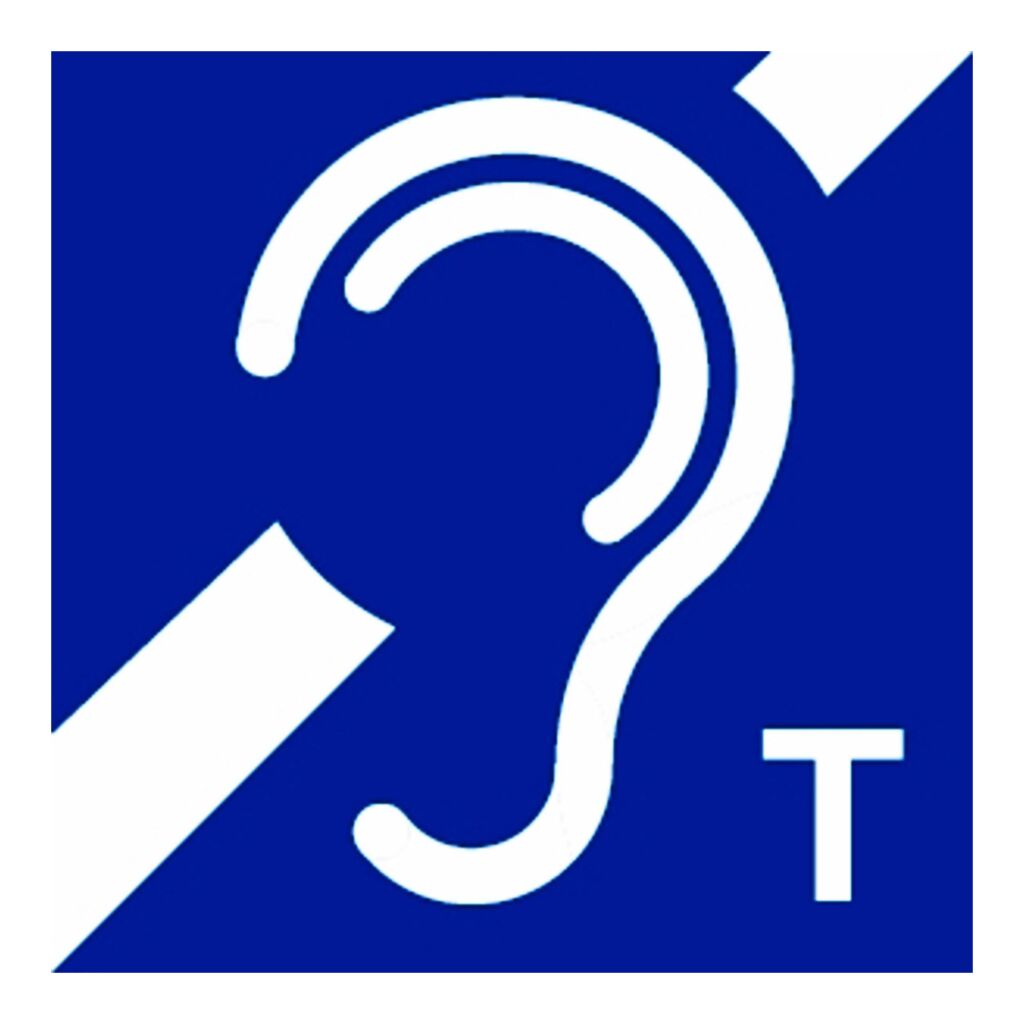
A T-coil or telecoil is built into the cochlear implant processor. In the past, this was usually switched on for telephone calls, but with modern telephones it often no longer works properly. However, induction loops are installed in many lecture halls, churches and other public facilities (also known as ring circuits). They allow you to receive the signal directly with the telecoil in your speech processor. This can attenuate background noise and echoes to improve intelligibility. Such induction loops are also sometimes found at railroad counters, which are marked. |
- Hold the telephone receiver directly to your ear, i.e. to the microphone of the cochlear implant processor, or switch on the loudspeaker of the telephone. This has the advantage that no accessories are required and it works quickly. However, ambient noise can be disturbing.
- The advantage of making calls via Bluetooth is that ambient noise can be muffled and the signal may reach both ears. Depending on the processor generation, the cell phone can be paired directly or via accessories, which must be purchased separately.
We will be happy to advise you on the most suitable option for you.
Various manufacturers offer accessories for wireless transmission of the signal at school or during lectures, but also from televisions, hi-fi systems and cell phones. We will be happy to put you in touch with manufacturers and suppliers who can also advise you.