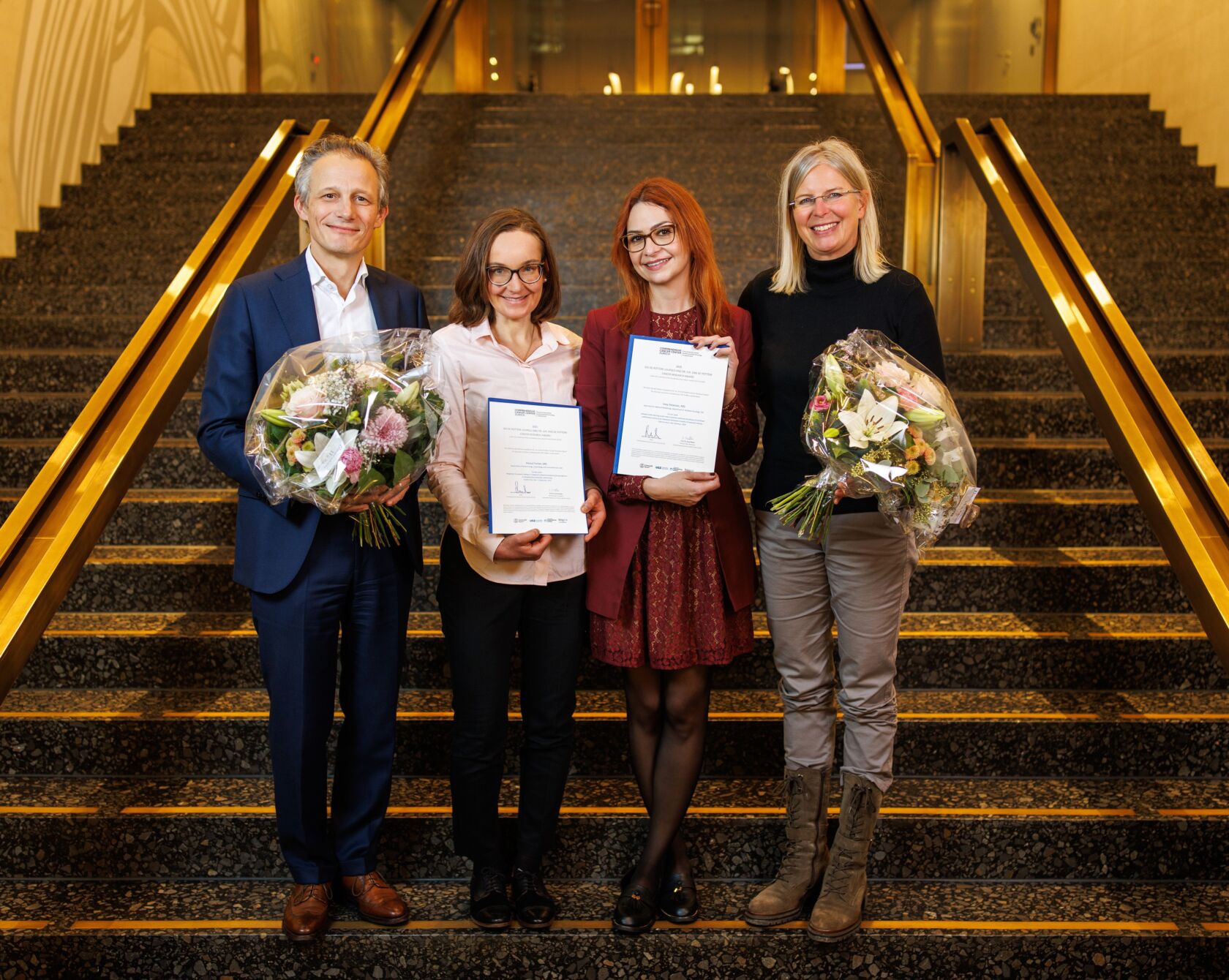
At its 2025 member assembly, the Comprehensive Cancer Center Zurich (CCCZ) honoured two exceptional early-career physician-scientists with the Ida de Pottère-Leupold and Dr. iur. Erik de Pottère Cancer Research Award.
Established by Dr. iur. Erik de Pottère in 1960, the Ida de Pottère-Leupold and Dr. iur. Erik de Pottère Foundation has long supported cancer research at the University of Zurich. Since 2019, the annual award has highlighted outstanding scientific achievements by doctoral candidates, early-career researchers, and physician-scientists within the CCCZ who contribute significantly to basic and clinical cancer research.
Recognising outstanding scientific achievements
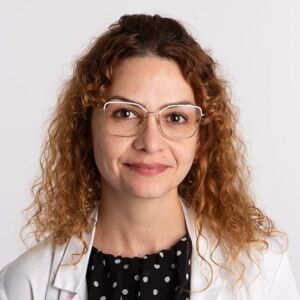
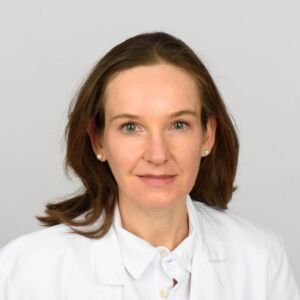
In 2025, the award in the category of Physician Scientists was conferred upon Irma Telarovic, MD, and Alessa Fischer, MD, whose research addresses two highly relevant and challenging areas in oncology: the optimisation of radiotherapy–immunotherapy combinations and the treatment and prognosis of rare neuroendocrine tumours.
Irma Telarovic, from the Laboratory for Applied Radiobiology at the Department of Radiation Oncology, University Hospital Zurich, was honoured for her preclinical work investigating how the timing of tumour-draining lymph node irradiation influences the efficacy of combined radiotherapy and immune checkpoint blockade. Her work shows that delayed irradiation can preserve treatment effectiveness even in metastatic disease models, offering new perspectives for clinical implementation. Reflecting on the motivation behind her research, she emphasises the gap between experimental promise and real-world application:
“While preclinical studies show great promise for the synergistic interaction between radiotherapy and immunotherapy, the effective clinical translation of these findings has thus far been limited. My research focuses on elucidating the key obstacles hindering the success radiotherapy-immunotherapy combinations, with the ultimate aim of identifying readily accessible and easily implementable clinical strategies to enhance patient outcomes.”
Irma Telarovic
Her findings, published in Nature Communications (2024), contribute to an emerging understanding of how radiotherapy and immunotherapy can be optimally combined to improve therapeutic outcomes.
Alessa Fischer, from the Department of Endocrinology, Diabetology and Clinical Nutrition at the University Hospital Zurich, was recognised for her work on metastatic pheochromocytomas and paragangliomas—rare neuroendocrine tumours that are both highly heterogeneous and clinically challenging. Through a retrospective multicentre cohort study, she analysed treatment responses, biomarkers, and long-term patient outcomes, offering valuable evidence to guide clinical decision-making in an area where data remain scarce. She describes the motivation behind her research in clear terms:
“Neuroendocrine tumors are rare and highly heterogeneous, leaving patients with considerable uncertainty in their care. This motivated me to pursue translational research that addresses gaps in prognosis, treatment, and long-term effects, and helps inform the management of patients with tumors such as pheochromocytomas and paragangliomas.”
Alessia Fischer
Her publication, released in the European Journal of Endocrinology (2023), represents one of the few comprehensive analyses of these rare tumours and has already attracted the interest of clinicians and researchers across Europe.