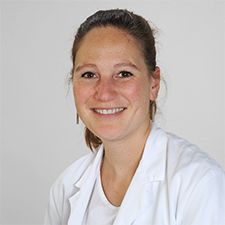
Most congenital metabolic diseases are detected early, often even during newborn screening. Congenital metabolic diseases - often also referred to as metabolic disorders - are chronic diseases. However, the majority of metabolic disorders can be treated well with medication and a specific diet. Regular check-ups are important in order to detect possible complications at an early stage. There is a special consultation hour at the USZ for affected persons. Laura Horka, Senior Physician at the Clinic for Endocrinology, Diabetology and Clinical Nutrition, explains the offer for patients and treating physicians.
Ms. Horka, the Clinic for Endocrinology, Diabetology and Clinical Nutrition offers a special consultation for patients with congenital metabolic diseases. What characterizes these diseases?
We speak of a metabolic disease or disorder when the normal processing of food or reserves in the body is disrupted because a certain enzyme required for a specific metabolic step is not working. As there are many different metabolic steps, there are also many different metabolic disorders with very different symptoms. The symptoms of a metabolic disease often affect several organs. Congenital metabolic disorders cannot be cured, but many metabolic disorders can be treated well with medication or a special diet.
Why and for whom does the USZ offer a special consultation hour for congenital metabolic diseases?
Congenital metabolic diseases are usually diagnosed very early and children with metabolic disorders are cared for by pediatricians. Originally, the consultation was therefore also aimed at adults with congenital metabolic disorders who had simply “outgrown” pediatrics. Most of our patients have a known diagnosis and come to us regularly for a consultation as soon as they reach adulthood and the children’s hospital is no longer responsible for them.
You spoke of most patients with a diagnosis. Does this mean that there are also patients who are first examined at the USZ?
There are always patients in whom symptoms only appear in adulthood or the metabolic disorder is only recognized then. Newly diagnosed adults and an increasing number of patients with unexplained or unclear symptoms therefore also come to the consultation for clarification. In addition, family assessments are carried out for newly diagnosed children. Congenital metabolic disorders are usually inherited. It then makes sense to clarify whether other family members are affected, especially in the case of metabolic disorders that are not so easy to recognize.
Do patients register themselves or are they referred?
Both are possible. Some people register themselves or are referred to us by the Rare Diseases Helpline. As mentioned, most patients are referred by the children’s hospital or by their family doctor for clarification or care in the case of a known diagnosis. Some patients, especially if they live further away, come to the USZ once a year for a check-up. In between, we communicate with the family doctor or directly with the patients, often by e-mail. It is important to us to be easily accessible for you if you have any questions.