Specialized clarification after a first seizure
The First Seizure Unit at the University Hospital Zurich specializes in the structured investigation of such events. It is primarily aimed at patients who have presented to our emergency ward with a first-time suspected seizure.
Why is rapid clarification important?
Studies show that early, structured neurological assessment after a first seizure significantly improves care.
A quick specialized assessment:
- reduces unnecessary or premature medication treatments
- shortens the time to a clear diagnosis
- Reduces the risk of further injuries due to unexplained seizures
- Prevents unnecessary repeated emergency visits
- Improves safety in everyday life and driving suitability
The aim is to create clarity at an early stage – objectively, soundly and without over-therapy.
What happens in the First Seizure Unit?
After the emergency treatment, the patient is admitted to hospital for further clarification if medically appropriate.
Depending on the situation, the stay usually lasts two to three working days. If further examinations are necessary, the clarification may take a little longer.
The diagnostics include, among other things:
- a detailed neurological interview about the event
- a differentiated classification of possible causes (e.g. epileptic seizure, circulatory event, functional event, sleep-related disorder)
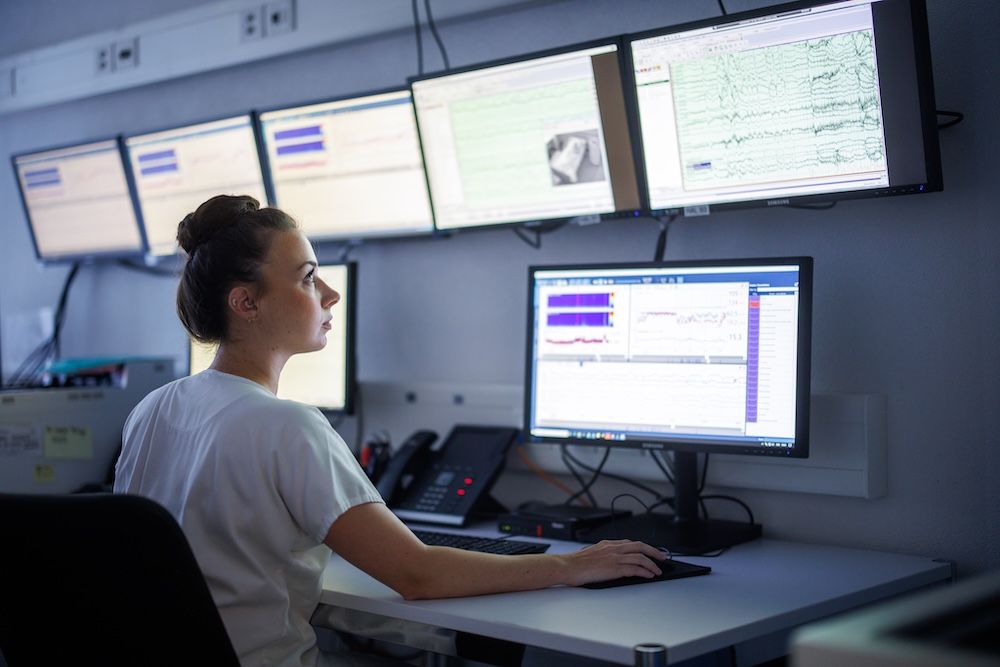
- an EEG examination (measurement of brain waves), if necessary as a long-term video EEG
- an MRI examination of the brain according to a special epilepsy protocol
- Targeted laboratory or other additional examinations, if necessary
Drug therapy is not started automatically. Whether treatment is necessary is decided individually and carefully.
Therapy for epilepsy
Not every first seizure means epilepsy
A one-off event has various possible causes.
Not every person with a first seizure has epilepsy.
A central aim of our work is to differentiate between epileptic and non-epileptic events and to realistically assess the individual risk of further seizures.
Comprehensive information and security
We discuss this in detail before discharge:
- the diagnosis made
- the risk of recurrent seizures
- Possible triggers and how to avoid them
- a clear emergency plan
- Questions about fitness to drive and work
- Safety aspects in everyday life
You will receive specific recommendations so that you know how to behave safely in everyday life.
Aftercare
Depending on the findings, a planned follow-up is carried out in our epilepsy consultation. If there is no epilepsy and no therapy is necessary, structured follow-up is also possible.
Our claim
The First Seizure Unit connects:
- Rapid availability
- Structured diagnostics
- interdisciplinary cooperation
- Scientifically sound decision-making
- Personal, comprehensible advice
Our goal is clarity – and security for you.