After we have carried out an ICSI, we carefully remove a few cells from the resulting embryos on the fifth or sixth day of development (blastocyst stage). We hand these cells over to specialized geneticists at the University of Zurich for examination. We freeze the blastocysts until the result of the genetic test is known. As soon as the result is available, we will plan the next steps together with you. For an embryo transfer, the lining of the uterus is prepared with hormone tablets (oestrogen) so that the embryo has ideal conditions for implantation.
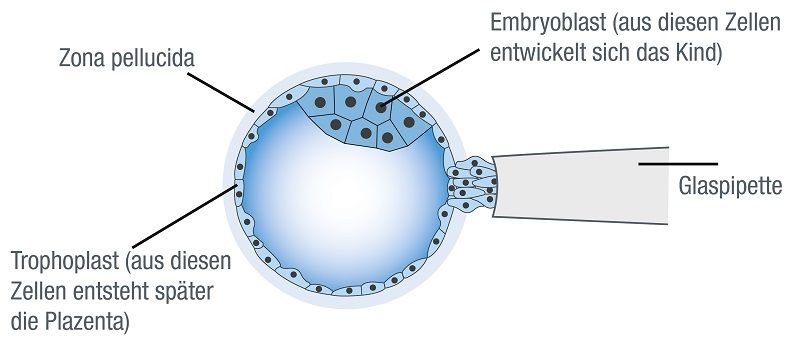
Embryo in the blastocyst stage: removal of several cells from the trophoblast for preimplantation genetic diagnosis.
With the use of PGD we can, among other things:
- avoid the transmission of the most serious genetic diseases that run in families.
- improve the chances of pregnancy and birth of an embryo transfer.
- reduce the risk of miscarriage.
PGD is subject to strict legal regulation in Switzerland. We must therefore examine each individual case to determine whether it is medically appropriate and whether we are permitted to carry out PGD in accordance with the provisions of the Reproductive Medicine Act.
If we use PGD to prevent the transmission of severe, familial genetic diseases, we will refer you for genetic testing and counseling as part of the preparation process. Psychological coaching can make it easier for you to deal with this situation and thus help to relieve the pressure.
Even with the most careful approach, misdiagnoses can occasionally occur. If you want to rule out this risk, you can have a chorionic biopsy or later an amniocentesis (examination of the amniotic fluid) carried out after the onset of pregnancy in the 12th week of pregnancy to confirm the diagnosis.