For patients
Do you suffer from dizziness and do not yet have a confirmed diagnosis? We will be happy to help you. Register directly for a consultation here.
Depending on the clinical picture, dizziness is treated with different methods. Physical, medicinal, psychotherapeutic and - only in selected cases - surgical measures are used.
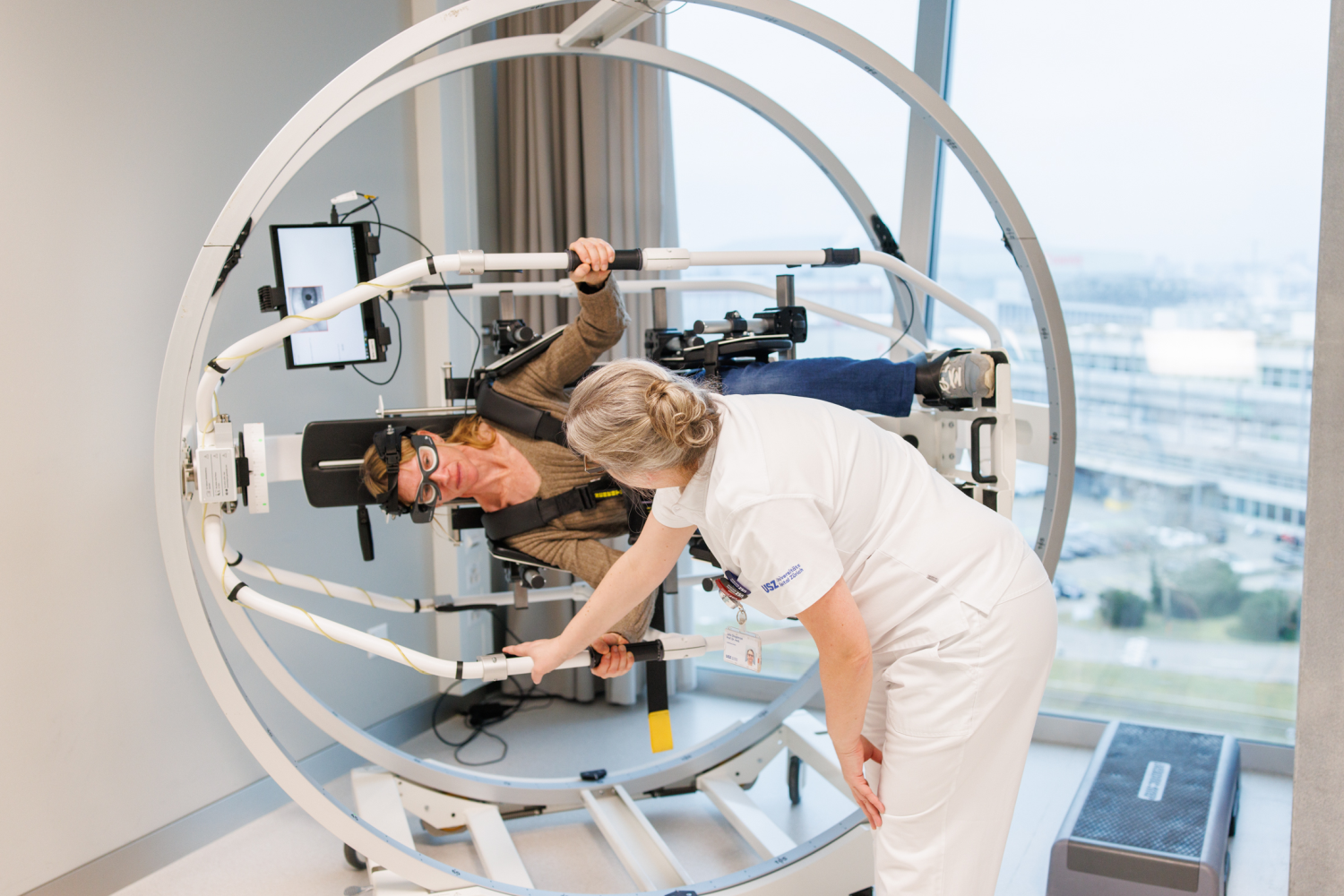
For certain types of dizziness, special exercises can help to improve balance. Specific physiotherapy can help with dizziness, especially when everyday activities cause problems and the quality of life is restricted.
Specific balance training leads to an improvement in compensation mechanisms at brain level in the event of balance disorders. Special exercises are carried out for the vestibular system, for example to promote the replacement of missing vestibular information by the other systems. Furthermore, in the special case of benign positional vertigo, the release maneuvers lead to freedom from symptoms within a few days in more than 90 % of all cases if carried out correctly.
Depending on the cause, medication can be used to treat dizziness. A basic distinction must be made between medication for the symptomatic acute treatment of dizziness, nausea and vomiting (e.g. antivertiginosa) and medication for the long-term treatment of chronic or recurrent dizziness to alleviate the symptoms or to prevent attacks of dizziness.
For selected diseases, such as Meniere’s disease, it is possible to inject medication directly into the middle ear through the eardrum, from where it can then pass into the inner ear.
Dizziness can also be caused by eye problems. If the eyes do not work together properly or if there are difficulties in focusing, this can have a negative effect on the balance system. In this context, neurological visual disorders are clarified and, if necessary, suitable treatment is prescribed.
Psychological illnesses can trigger dizziness or be secondary to dizziness. Accordingly, their treatment is of particular importance. Treatment usually consists of cognitive behavioral therapy with desensitization through self-exposure, possibly in combination with pharmacotherapy.
Surgical treatment is an option for selected conditions, e.g. semicircular canal dehiscence syndrome. Surgical treatment for vertigo is carried out by the Clinic for Ear, Nose, Throat and Facial Surgery.
Sufficient fluid intake, a healthy diet and regular exercise can help to alleviate dizziness. Reducing caffeine and alcohol as well as a regular daily rhythm with sufficient sleep can also be helpful.
Do you suffer from dizziness and do not yet have a confirmed diagnosis? We will be happy to help you. Register directly for a consultation here.
Simply refer your patient to our dizziness consultation online.