The femoral hernia often occurs after weight loss and pain without protrusion is often the first sign. Incarcerations are more common than with inguinal hernias. A femoral hernia is diagnosed by means of a physical examination, sometimes imaging examinations are necessary.
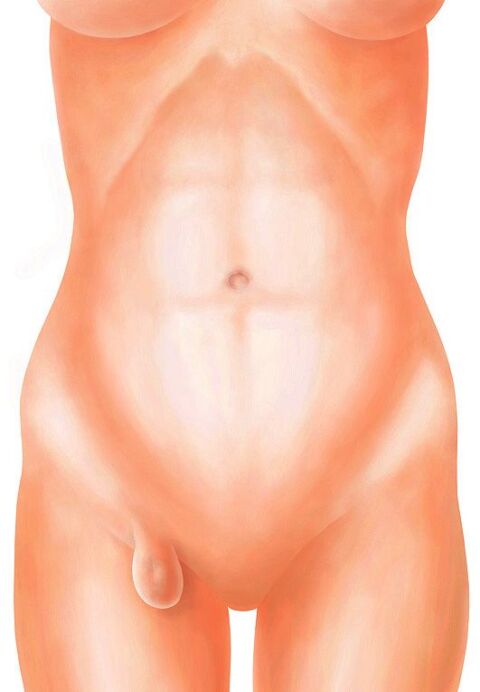
Surgical techniques
The choice of surgical technique depends on various factors such as previous operations, bilateral hernia, additional hernias and the patient’s wishes. The operation is planned individually, as the possible surgical techniques each have their advantages and disadvantages.
We usually use one of the following techniques:
- In the minimally invasive Total Endoscopic Extraperitoneal Plastic (TEEP) procedure, a small incision is made below the navel. Further dissection opens up a space in front of the peritoneum in the abdominal wall. The inguinal region is visualized from the inside using a camera and special instruments and the hernia sac is removed from the hernial orifice. A sufficiently large mesh is inserted and fixed in the correct position in the opened space. This closes the hernia and also strengthens the other weak areas of the groin.
- In open surgery according to Fabricius, a short transverse incision is made over the hernia sac on the thigh. The hernia sac is reduced and the hernia ring is closed with individual stitches, taking care not to constrict the large leg vein.
Possible complications
- General complications: Allergic reaction, thrombosis, urinary retention
- Surgical complications: Bleeding, fluid accumulation, infection, recurrence of the hernia