Overview: What is chemotherapy?
Chemotherapy is a very important treatment option for people with cancer. It helps with various types of cancer, such as breast, bowel or pancreatic cancer. Cancer patients are given various cytotoxins, so-called cytostatics. Doctors usually combine several chemotherapeutic agents in order to increase the effectiveness of cancer treatment.
As a rule, cancer patients receive several cycles of chemotherapy at certain intervals. The body can recover during the breaks in between. There are different chemotherapy regimens depending on the type, spread and aggressiveness of the cancer.
The drugs act throughout the entire body (systemically ) and target different weak points of the cancer cells. They prevent them from dividing and multiplying or kill them. Cytostatic drugs attack cells that divide and multiply rapidly. These include cancer cells, but also healthy cells, such as those of the hair or oral mucosa. This is also the reason for the hair loss suffered by many cancer patients undergoing chemotherapy. Other side effects such as inflammation in the mouth are therefore not uncommon. Today, however, we are able to greatly reduce the side effects.
Chemotherapy: adjuvant, neoadjuvant, palliative
Chemotherapy can be differentiated according to other criteria:
- Adjuvant chemotherapy – as support for other cancer treatments to reduce the risk of relapse
- Neoadjuvant chemotherapy – before surgery to shrink the tumor and make it more operable
- Palliative chemotherapy – the aim is not to cure the cancer, but to stop or slow down its progression or alleviate symptoms.
Which chemotherapy for whom?
There is no “one” chemotherapy that helps all cancer patients equally. Which cytostatic drugs oncologists select and the frequency with which they administer them depends on various factors, for example
- Type of cancer, size, spread and aggressiveness of the tumor, special characteristics of the cancer cells.
- The patient’s age, general state of health, existing underlying illnesses and personal wishes and expectations all play a role. For example, younger and healthy people usually tolerate chemotherapy better than older people who are suffering from other illnesses.
Oncology specialists use these criteria to determine the course of chemotherapy. They consider which cytostatic drugs, in which combination and dosage, should be used. Body weight and height, age and general condition are important factors in calculating the appropriate dose of medication.
Chemotherapy procedure
Inform yourself well about the procedure and the side effects of chemotherapy. Then you will be better prepared for the upcoming therapy and know what to expect. Not everyone develops side effects to the same extent. The individual cycles can also vary in terms of side effects.
The course of chemotherapy can be described as follows:
- You can have chemotherapy on an outpatient basis in a specialized oncology clinic. You then go home again (usually after a few hours) and recover there. Sometimes inpatient chemotherapy is necessary, e.g. if it is very intensive and planned at short intervals. However, older people or those in poor health may also need to be hospitalized for chemotherapy.
- Oncologists administer chemotherapy in cycles. There are therefore days on which you receive medication and treatment-free phases. Many different regimens are known – depending on the type of cancer. Examples: Six cycles of chemotherapy with a three-week break in between to allow the healthy body cells to recover. Dose-dense regimens, on the other hand, mean that you go to chemotherapy once a week for 18 weeks, for example.
- Before the cytostatic drugs are administered, the blood values are checked during each chemotherapy cycle. Among other things, the number of leukocytes (white blood cells), erythrocytes (red blood cells) and thrombocytes (platelets) is important. Many cytotoxins also impair blood formation and dampen the immune system.
- You will also be given anti-nausea medication, so-called antiemetics, on the day of chemotherapy before the cytostatics. They are very effective and act, for example, on the vomiting center in the brain.
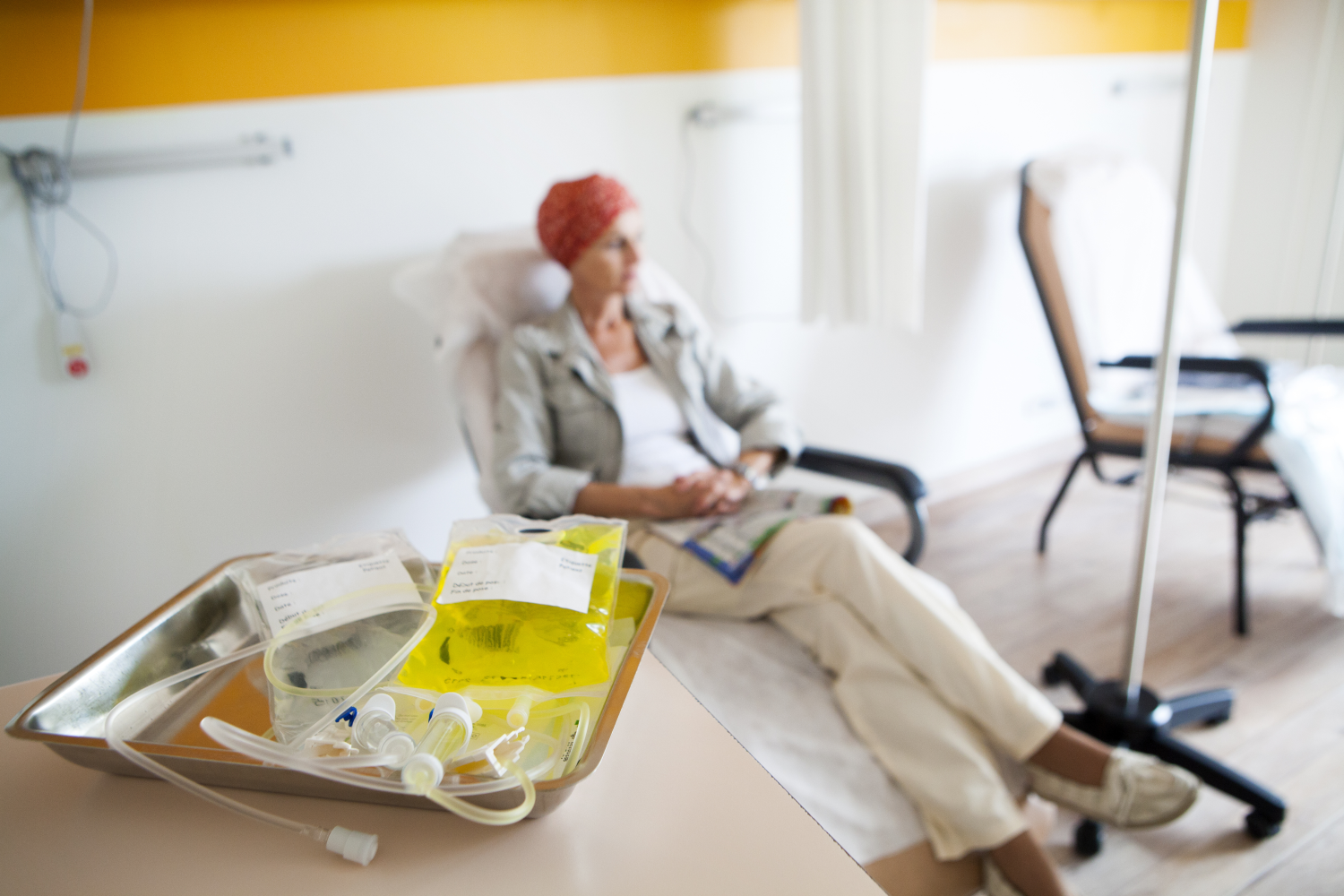
- Chemotherapy is usually given as an infusion – i.e. as a liquid in the vein. They can quickly distribute the cytostatic drugs in the body via the bloodstream and attack the cancer cells. Chemotherapy always affects the entire body, i.e. “systemically” (as opposed to locally = locally). There are also chemotherapies in the form of tablets that are used for certain types of cancer, such as colorectal cancer.
- During chemotherapy, you usually sit comfortably in an armchair that can be adjusted. You can sleep, read, relax and listen to music, work on the computer or talk to other patients.
- The duration of chemotherapy can range from minutes to several hours. The infusion usually enters the body slowly and drop by drop. In addition, several infusion bags with cytostatic drugs are sometimes administered one after the other – depending on the type of chemotherapy. Preparation and follow-up work also takes time.
- Afterwards you can go back home and relax. If possible, take a few steps in the fresh air, as exercise is good for some people afterwards.
Preparation: tips for the time before chemotherapy
Before starting chemotherapy, there are still a few important points to consider, for example
- Before the start of chemotherapy, a so-called “port” is often implanted. It is usually implanted near the collarbone, sometimes also on the arm. The port catheter enables direct access to the vein. The port remains in place throughout the chemotherapy. Some time after the end of the treatment, you can have it removed again as part of a minor operation.
- Have your teeth and gums checked by your dental practice before chemotherapy and have them restored if necessary. There should be no caries or inflammation. Pay attention to good oral and dental hygiene during chemotherapy.
- Chemotherapy can have an effect on fertility. This is particularly important for young women and men who have not yet started or completed their family planning. Get professional advice. It is now possible to freeze egg and sperm cells in advance.
- Talk to your doctor about whether and which vaccinations are necessary (e.g. B. influenza, corona virus etc.).
- Think about how you will get to the doctor’s surgery or clinic. Be sure to organize this in advance. Cancer patients are better off not driving a vehicle themselves, but letting themselves be driven. There is also the option of ambulance transport.
- Before chemotherapy, think about how you want to deal with hair loss. Find out about alternatives, such as caps, hats, scarves or a wig. There are specialist stores for this. Our nursing staff can support you with this.
- Today, there are also good solutions for eyelashes or eyebrow hairs that are falling out, such as heavy make-up and eyebrow tattoos. Seek advice beforehand.
Aftercare: Tips for the time after chemotherapy
The following tips can be helpful immediately after chemotherapy:
- Let us pick you up. However, some people find it pleasant to walk home. Exercise is not only good for the body, but also for the mind and soul. It depends on your well-being and state of health whether this is advisable. Check with your doctor beforehand to be sure.
- Make sure you maintain good hygiene because you are more susceptible to infections after chemotherapy. In times of the coronavirus pandemic, most people have internalized appropriate hygiene measures and social distancing rules anyway. Keep away from people who are ill. If possible, avoid areas and places that are particularly crowded, such as public transport. Wash your hands frequently and regularly with soap. Wearing a mask also keeps pathogens at bay and reduces the risk of infection. Family members and friends should also pay attention to good hygiene.
- Do not smoke and avoid alcohol, as this puts additional strain on your body. He already has enough to do with cell toxins. If this is not possible for you, you should seek advice from doctors and care professionals.
- Make sure you relax sufficiently and do not overexert yourself.
- You can be physically active and do sport, depending on the situation, but
- If you do not feel physically fit, ask for help with household chores. You may already be looking for suitable household help for the time during and after chemotherapy.
Aftercare after chemotherapy
As part of the follow-up care, it is possible to check whether the chemotherapy was successful. Doctors also look for signs of a relapse (recurrence) and ask you about symptoms, possible side effects and long-term consequences of the treatment. This refers not only to the physical, but also to the mental and emotional state.
Physical examinations, blood tests and imaging procedures, e.g. an ultrasound, are also used. This can be used to detect liver metastases, for example. If cancer settling is suspected, medical experts also use computed tomography (CT), magnetic resonance imaging (MRI = magnetic resonance imaging) and positron emission tomography (PET).
Follow-up care takes place at certain intervals, which doctors will determine with you. Initially, the follow-up intervals are shorter, but later they become longer and longer. You can continue your follow-up care at the same place where you underwent chemotherapy, i.e. in a clinic or specialist practice. The family doctor’s practice or other specialist practices can also be involved in aftercare if necessary.
The University Hospital of Zurich offers holistic care
At the Comprehensive Cancer Center Zurich (CCCZ), people with cancer receive not only the medical expertise of a university, but also holistic care. The CCCZ is a joint oncology center of excellence of the University Hospital Zurich and the University of Zurich, including the Balgrist University Hospital and the University Children’s Hospital Zurich.
This includes cancer diagnostics as well as individual treatment concepts with surgery, chemotherapy, radiation, targeted therapy and immunotherapies. These are tailored to the type of cancer in question and to the individual cancer patient.
It is now known that cancer not only affects the body, but also the psyche, everyday life and work. In most cases, family members also suffer. Special counseling and treatment services offer holistic support that addresses physical, emotional and psychosocial factors. There is also the opportunity to take part in clinical studies. They can thus benefit from the latest scientific findings and new therapeutic approaches.