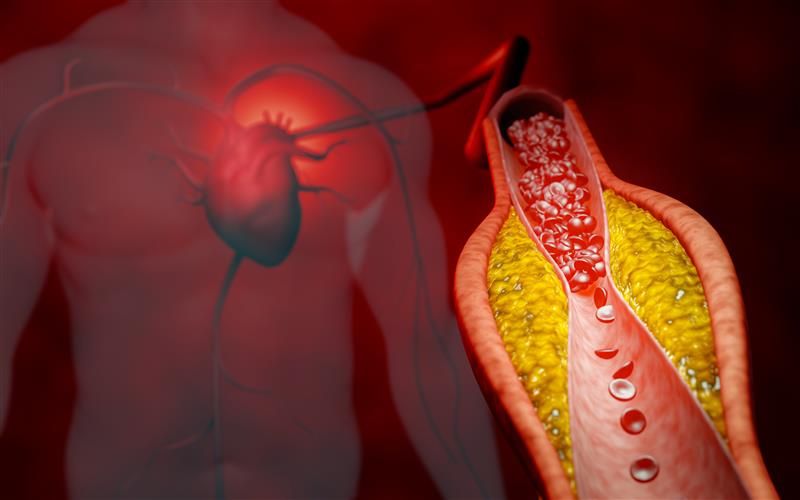
High cholesterol levels do not automatically pose a risk. However, knowing your levels and taking action in good time will protect your heart and blood vessels in the long term. Preventive care helps to identify risks early on – even if you still feel completely healthy.
Cholesterol is essential for life. It helps build cells, is a basic building block of many hormones, and plays a key role in fat digestion. Our brain, for example, consists of a quarter of cholesterol. It only becomes problematic when there is too much of it in the blood. Then so-called LDL cholesterol can be deposited on the walls of blood vessels, causing narrowing or, in the worst case, a blockage and thus a heart attack or stroke.
Smoking, lack of exercise, obesity, diabetes, or chronic inflammation further increase the risk. Such unnoticed inflammation in the body, especially when combined with elevated LDL cholesterol, promotes the formation of deposits in the arteries. That is why we also measure the sensitive inflammation value hsCRP as part of our preventive medical checkups – it shows whether silent processes are taking place in the body that can put strain on the heart and blood vessels. In most cases, it takes a little more than just elevated cholesterol to make it a risk factor. Reason enough to take action early on.
For individuals with familial lipid metabolism disorders, we consult our specialists in this field.
When predisposition plays a role
For some people, the cause lies in their genes. Familial lipid metabolism disorders lead to permanently elevated cholesterol and triglyceride levels. In combination with unhealthy lifestyle habits, this can lead to the formation of vascular deposits even at a young age. In such cases, diseases such as heart attacks and strokes often occur in immediate family members. Preventive medical checkups help to identify such risks at an early stage. Based on the results, we provide individual advice on how to adjust diet and lifestyle and whether medication is advisable. In these cases, it is particularly important to quit smoking, exercise regularly, and achieve a normal weight.
Prevention means seizing opportunities
Thorough preventive healthcare involves more than just a simple blood test. For example, we determine different types of cholesterol and triglycerides. We also measure specific proteins in the blood that indicate how well fat metabolism is functioning. In addition, we check long-term blood sugar levels to detect diabetes at an early stage.
With a painless ultrasound examination, we can visualize the arteries in the neck and detect early signs of changes or deposits. In combination with laboratory values, information about diet and lifestyle, as well as medical history and family history, we can accurately assess your personal risk of heart attack and stroke.
If cholesterol levels are too high, cholesterol-lowering drugs – known as statins – may be considered. They help to stabilize deposits and prevent new ones from forming. In combination with a healthy diet, regular exercise, and avoiding nicotine, the risk can be significantly reduced.
Cholesterol is therefore not the enemy, but an important companion that should be kept in balance. Knowing your levels can go a long way toward staying healthy into old age.