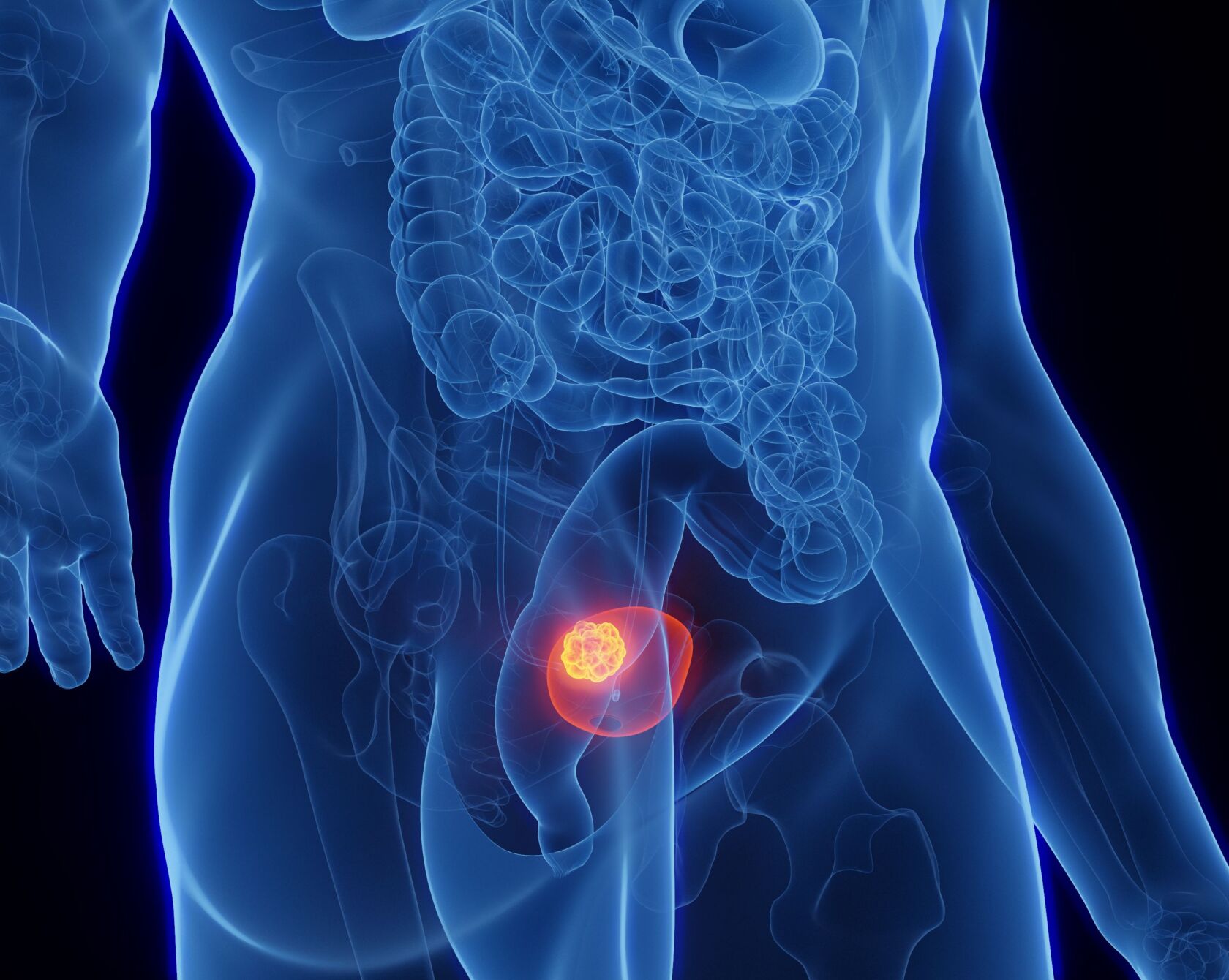
Adjuvant instillation therapy has proven successful in patients with non-muscle-invasive bladder cancer (NMIBC). In cases of BCG failure, the new combination therapy with gemcitabine and docetaxel offers a promising alternative that can also enable bladder preservation.
Adjuvant intravesicular instillation therapy is an effective treatment option for many patients with non-muscle invasive bladder cancer (NMIBC). In instillation therapy, immunotherapeutic or chemotherapeutic agents are introduced directly into the bladder in liquid form via a soft catheter instead of being administered orally or intravenously. This method maximizes the effectiveness of the treatment while minimizing potential side effects, as the medication does not have to pass through other parts of the body to reach the bladder.
During instillation therapy with Bacillus Calmette-Guérin (BCG), the bladder is flushed with bacteria that stimulate the immune system and thus act as immunomodulators. It is the most effective instillation therapy to date. Nevertheless, treatment failure can occur and recurrences in the bladder can occur. In the event of BCG failure, a radical cystectomy is usually recommended as the next stage of treatment. A new alternative salvage instillation therapy is now available for patients who prefer bladder preservation or are not suitable for surgery.
Combination therapy with gemcitabine and docetaxel as a new alternative to BCG
Gemcitabine and docetaxel are chemotherapeutic agents that can be introduced into the bladder as an alternative to BCG as part of instillation therapy. Gemcitabine is an antimetabolite, a class of drugs that interferes with the ability of cancer cells to divide by attacking certain substances in the cell at certain stages of the division process. Docetaxel (Taxotere®) is a plant-derived antimicrotubular agent that inhibits the ability of cancer cells to proliferate by disrupting the microtubule structures within the cell. A combination of these two drugs showed a higher tumor-free rate compared to administration alone.
“The combination therapy with gemcitabine and docetaxel opens up new possibilities for patients for whom BCG therapy fails or is not an option: a real advance in the treatment of non-muscle-invasive bladder cancer.”
PD Dr. med. Ashkan Mortezavi
When is instillation therapy with gemcitabine and docetaxel recommended?
Instillation chemotherapy with gemcitabine and docetaxel is rarely used as first-line treatment for bladder cancer. The therapy is usually recommended for patients who do not respond to treatment with Bacillus Calmette-Guérin (BCG) or cannot receive it due to intolerance or immunosuppression.
Combination therapy with gemcitabine and docetaxel at only two sites in Switzerland
The chemotherapeutic agents gemcitabine and docetaxel have been approved by the FDA (Food and Drug Administration) and Swissmedic for the treatment of various types of cancer since the 1990s. Gemcitabine has long been approved for intravsical administration in bladder cancer in Switzerland. However, combination therapy with docetaxel has only been used worldwide as first-line therapy for BCG failure for a few years.
Completed and ongoing studies and experience at the largest bladder cancer centers worldwide show higher cure rates than known alternatives with good tolerability. These results are also emphasized in the EAU (European Association of Urology) guidelines for bladder cancer. However, it should be noted that the combination of gemcitabine with docetaxel is currently classified as “off-label” in Switzerland due to the lack of approval for intravesical application. Patients must be informed accordingly and administration should be carried out under strict observation and quality control at specialized centers. Due to the lack of a patent and the low price of the drugs, it is unlikely that an application for approval will be submitted in the near future given the limited financial incentive and the small number of cases. In Switzerland, the therapy is currently available at the University Hospitals of Zurich and Basel. The combination preparation is prepared specifically for each patient in the hospital pharmacy.
Bladder cancer expertise at the USZ
The highly specialized bladder cancer team at the USZ consists of highly qualified urologists with many years of experience and in-depth training in the diagnosis and treatment of bladder cancer. The urology department works closely with experts from various disciplines in an interdisciplinary tumor board to ensure tailored, evidence-based treatment for each patient. At the University Hospital Zurich, the latest developments and changes in medical guidelines are implemented together with proven diagnosis and treatment options.