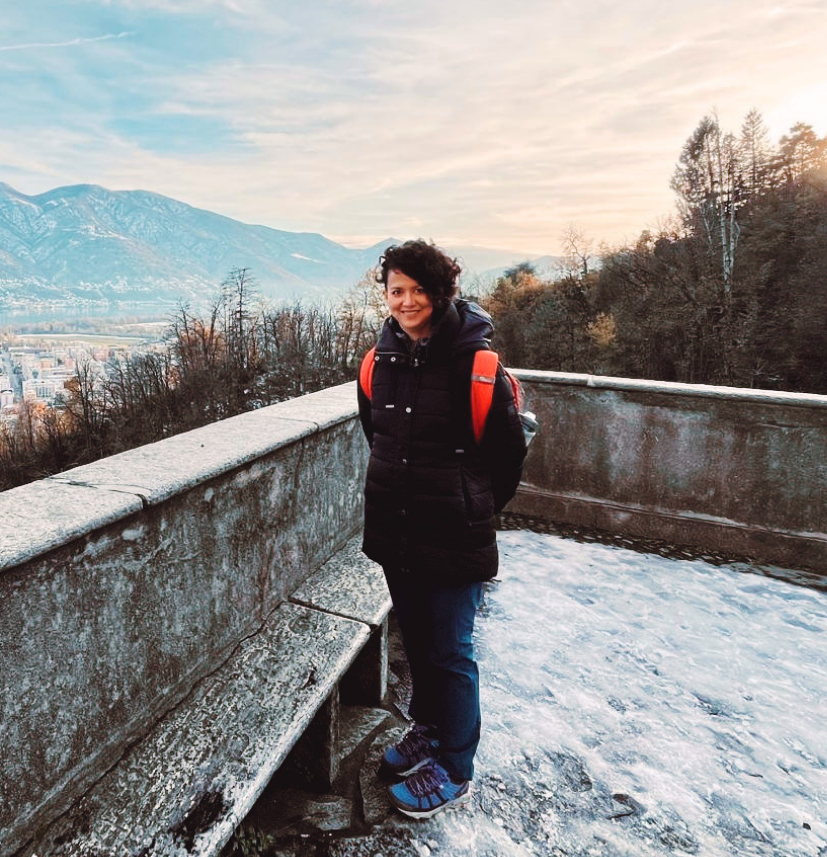
When Diana Bustos Ordoñez was diagnosed with Parkinson's at the age of 31, her life was thrown off balance. She shares her experiences on International Parkinson's Day on April 11. A report on the courage to change and the importance of trust in medicine.
The diagnosis in January 2014 was a major turning point in my life. At the age of 31, a chronic neurological disease is not expected. The first few months were characterized by great uncertainty. I consulted specialists in several countries, always in the vain hope that the diagnosis would turn out to be a mistake. Only gradually was I able to accept the diagnosis for myself.
Finding the right companion
When I moved to Switzerland in 2022, finding the right medical support was crucial. A referral finally led me to the University Hospital Zurich. From the very first appointment, I experienced an atmosphere that was engaging and appreciative. The team took time to answer my questions, listened attentively and actively involved me in every step.
This combination of professionalism and empathy gave me the feeling for the first time in a long time that I was really in good hands. This trust is also the reason why I remain loyal to the USZ, even though I now live in Ticino. I regularly travel from Bellinzona to Zurich for my inspections.
The decision in favor of deep brain stimulation
When the Parkinson’s medication no longer worked well, the possibility of deep brain stimulation (DBS) was discussed. Initially, that was a big mental step for me. An operation on the brain, especially when the patient is awake, naturally triggers respect. However, the comprehensive information and close, personal support at the USZ helped me to take this step.
The operation has massively improved my everyday life. It is one of the best experiences of my life. The procedure literally made me myself again, which I would now describe as a rebirth. My movements are more controlled again, I can carry out many activities independently again and no longer need Parkinson’s medication. Deep brain stimulation is not a cure, but it gives me back a great deal of quality of life, security and freedom.
Better quality of life in everyday life with Parkinson’s
Parkinson’s is a part of my life, but I no longer let the disease drive me. I have learned to be more patient and to be more aware of my own pace. Despite the challenges, I discover new interests and find ways to develop myself further. The diagnosis taught me to be more mindful of my resources.
Courage and orientation for those affected
A Parkinson’s diagnosis brings with it many changes, but it does not mean that a fulfilling life is no longer possible. Expert yet humane support provides orientation and stability. My advice to other sufferers is to remain open to new treatment options and to find an environment that supports you on this path.
I am deeply grateful to the neurology and neurosurgery team at the USZ. At a time of great uncertainty, they gave me exactly the stability and orientation I needed to find my own way with the illness.
Treatment options at the USZ
Parkinson’s is one of the most common neurological diseases. Although Parkinson’s disease is not curable, proven and novel medications and advanced treatments provide relief.