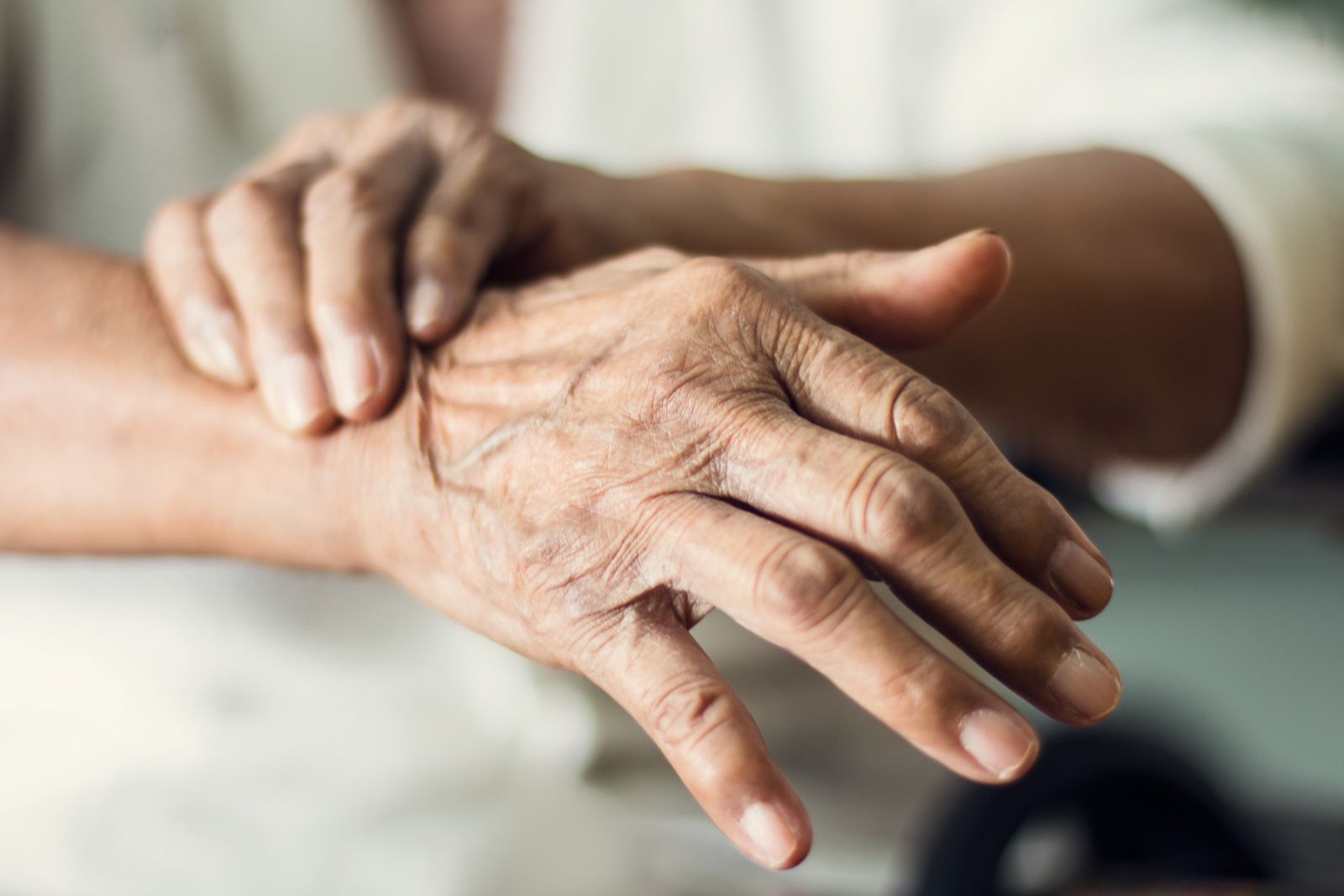
Parkinson's is one of the most common neurological diseases. Even though Parkinson's disease cannot be cured, medication and modern therapies make it possible to alleviate symptoms and improve quality of life.
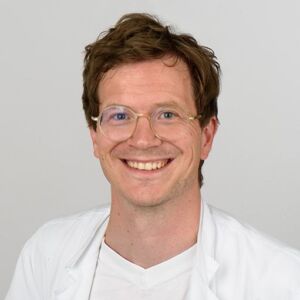
Fabian Büchele is a senior physician in the Department of Neurology at the University Hospital Zurich and a specialist in the treatment of Parkinson’s disease.
Mr. Büchele, what happens in the brain and body with Parkinson’s disease?
When a person suffers from Parkinson’s disease, certain nerve cells in the brain gradually die. These are mainly cells that produce dopamine, a hormone-like messenger substance that is necessary for nerve cells to communicate well with each other. The dopamine deficiency leads to a disruption in this communication, which in turn triggers a range of symptoms. This primarily includes impaired movement, especially with slowness of movement and muscle stiffness. In around 70 percent of cases, tremors, which many people associate with Parkinson’s, also occur.
How does the disease develop?
The disease also leads to disorders in the nervous system, which supplies the internal organs. People with Parkinson’s therefore also suffer from non-motor disorders. Constipation, loss of sense of smell and dreams at night can occur, and as the disease progresses, other sleep problems, blood pressure disorders, mood swings, memory problems and general pain. Of course, not all symptoms occur equally in everyone affected. The disease usually begins gradually: with tremors, slowness or sleep disturbances. Without treatment, the symptoms become more severe and distressing over time. Everyday tasks such as fastening buttons or pouring a glass of water are no longer possible, and the risk of falling increases due to unsteadiness when walking. Fortunately, we now have numerous therapies to significantly improve the quality of life.
How is Parkinson’s diagnosed?
At a later stage, the diagnosis is usually not so difficult: the combination of typical symptoms and the reaction to certain medications give good indications of the disease. Recognizing Parkinson’s disease early is more difficult. Here the abnormalities are usually more subtle. You may notice that your handwriting has changed, brushing your teeth is more difficult than before or your sense of smell is impaired.
There is still no blood test or imaging of the head that simply spits out the diagnosis. We are therefore primarily dependent on the clinical questioning and physical examination of patients. Imaging procedures such as magnetic resonance imaging (MRI ) are then only used to rule out alternative causes, as Parkinson’s disease itself does not produce an inconspicuous image on a standard MRI.
What happens if the initial clarifications are inconclusive?
Then the so-called DatScan can be helpful. The dopamine-producing neurons, or their deficiency, can be visualized using a weakly radioactively labeled contrast agent. In case of doubt, this can confirm the suspected clinical diagnosis, although this is often not necessary in everyday life. In addition, the DatScan does not differentiate between different Parkinson’s diseases, for example between typical Parkinson’s disease and the so-called atypical Parkinson’s syndromes, which are generally more aggressive. We sometimes carry out an examination in the sleep laboratory to look for typical abnormalities in night-time sleep that help us to differentiate between the two.
So you should go to the doctor if you notice any changes?
Yes, clarification is always indicated in the event of abnormalities. Also to rule out the possibility of another illness. It is best to contact your family doctor, who can then initiate further examinations.
Does an early diagnosis have an influence on the therapy and the course of treatment?
Parkinson’s cannot be cured and its progression cannot be influenced by medication. However, we can treat the limitations and thus significantly improve the quality of life at an early stage. It is not uncommon for those affected to have already come a long way before the diagnosis is made and to suffer greatly from the uncertainty. An earlier diagnosis provides certainty here.
Which therapies are used?
Especially drugs that replace the missing dopamine. Over the course of many years, patients may experience so-called motor fluctuations or the tremors can no longer be adequately controlled with medication. At the USZ, we can then offer Parkinson’s patients further options, including deep brain stimulation, a “brain pacemaker” that helps against motor deficits and tremors. There are also pumps that continuously supply the brain with dopamine via a tube from the small intestine. Focused ultrasound also helps against tremors. This specifically heats and kills overactive nerve cells and the tremors improve immediately.
Deep brain stimulation
The team at the USZ has been successfully performing deep brain stimulation since 2009 and is now by far the largest center for deep brain stimulation and functional neurosurgery with the most procedures per year in Switzerland.
Who is affected by Parkinson’s?
Parkinson’s is one of the most common chronic diseases of the nervous system. Around 15,000 people in Switzerland suffer from it, with men being affected slightly more often than women. Most people are over 60 years old when they are diagnosed, but younger people can also be affected. As a rule, it is not known why exactly this person develops the disease. It is possible that a genetic predisposition has been inherited. Many of these patients develop the disease before the age of 40 and close relatives are also affected.
Where does research into the causes of Parkinson’s disease stand?
The exact cause and the trigger that leads to the changes in the brain and thus to Parkinson’s is still not known, although intensive research is being carried out. Today, however, it is becoming increasingly clear that there is no one Parkinson’s disease with one cause and one trigger. Rather, we are probably dealing with many different causes and triggers. This also explains why no two Parkinson’s diseases are the same.
So there is no indication of how to take targeted preventive action?
Unfortunately not. There is evidence that people who exercise a lot have a lower risk of developing Parkinson’s later in life and that a meat-free or low-meat Mediterranean diet has a positive effect on the risk. Studies from Zurich, in which the USZ is also involved, show a connection between good deep sleep and a better prognosis. General health-promoting measures, i.e. a good diet, sufficient sleep and regular exercise, are therefore recommended in any case.
Dr. med. Fabian Büchele is a senior physician in the Department of Neurology at the University Hospital Zurich and a specialist in the treatment of Parkinson’s disease.