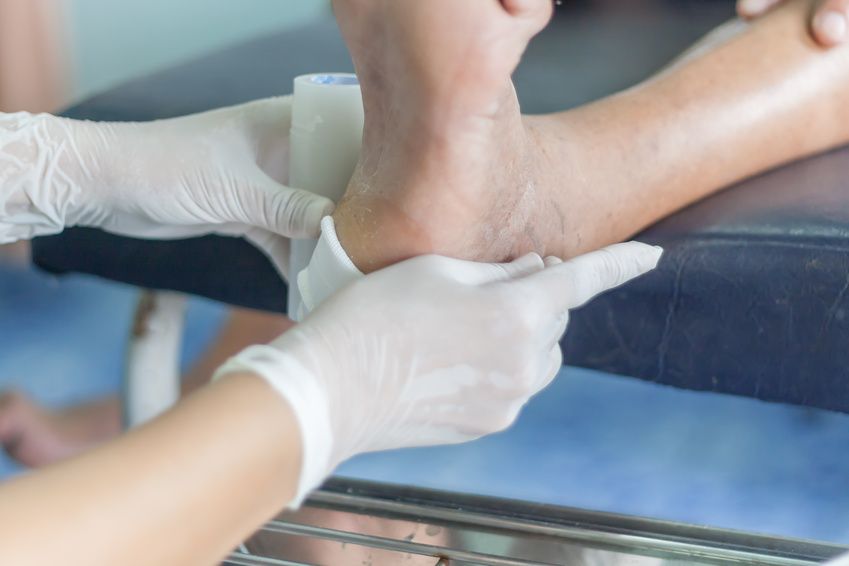
Anna S. is 81 years old. She lives alone. She still has the small household under control and looks after herself and her 15-year-old cat. Only my legs don't really want to do it anymore. She feels it especially in the morning, getting up is sometimes painful until the blood circulates properly again. Anna S. has diabetes mellitus. Then, during a routine check-up at her GP's, the bad news: Anna S. has an open wound on one of her feet that has already become infected. Anna didn't even realize it herself. The family doctor sends her as an emergency to the wound consultation at the USZ for wound treatment.
Poor wound healing as a risk
Normally wounds heal spontaneously. The prerequisite for this is good blood circulation in the affected area. Only when a wound refuses to heal after several weeks of adequate treatment is it referred to as a chronic wound.
Diabetes mellitus can be a reason for this, as diabetes leads to an increasing arterial circulatory disorder. To make matters worse, diabetes damages the nerves.
This is why patients often do not even notice open areas. If these wounds are in places that are difficult to access, e.g. on the sole of the foot, they can remain undetected for some time, become infected and eventually lead to deep ulcerations. Professional wound advice and care is urgently needed in such cases to prevent the worst from happening.
Treating wounds is a matter for experts
At the USZ, complex cases are discussed in a weekly interdisciplinary wound consultation. The specialists from various disciplines – angiologists, dermatologists, but also vascular surgeons and orthopaedic surgeons as well as wound experts – discuss the individual cases and determine an individual treatment plan. In some cases, nutritional advice or physiotherapy is also provided to ensure comprehensive treatment. Wound experts from the nursing department play a central role in further care. They look after patients for weeks or even months and are often one of the most important caregivers for them during the healing process.
Sina Bächler is a wound expert at the USZ and describes what fascinates her about wound treatment:
“Wound treatment is a very complex task. Every wound is different, we have to consider many factors in every situation, constantly adapt the treatment and take the healing process into account. This is the only way we can achieve wound healing. We often care for our patients over a long period of time. As wound consultants, we also support the departments with wound assessment and wound care. We see some patients again afterwards for follow-up care at the outpatient wound center.