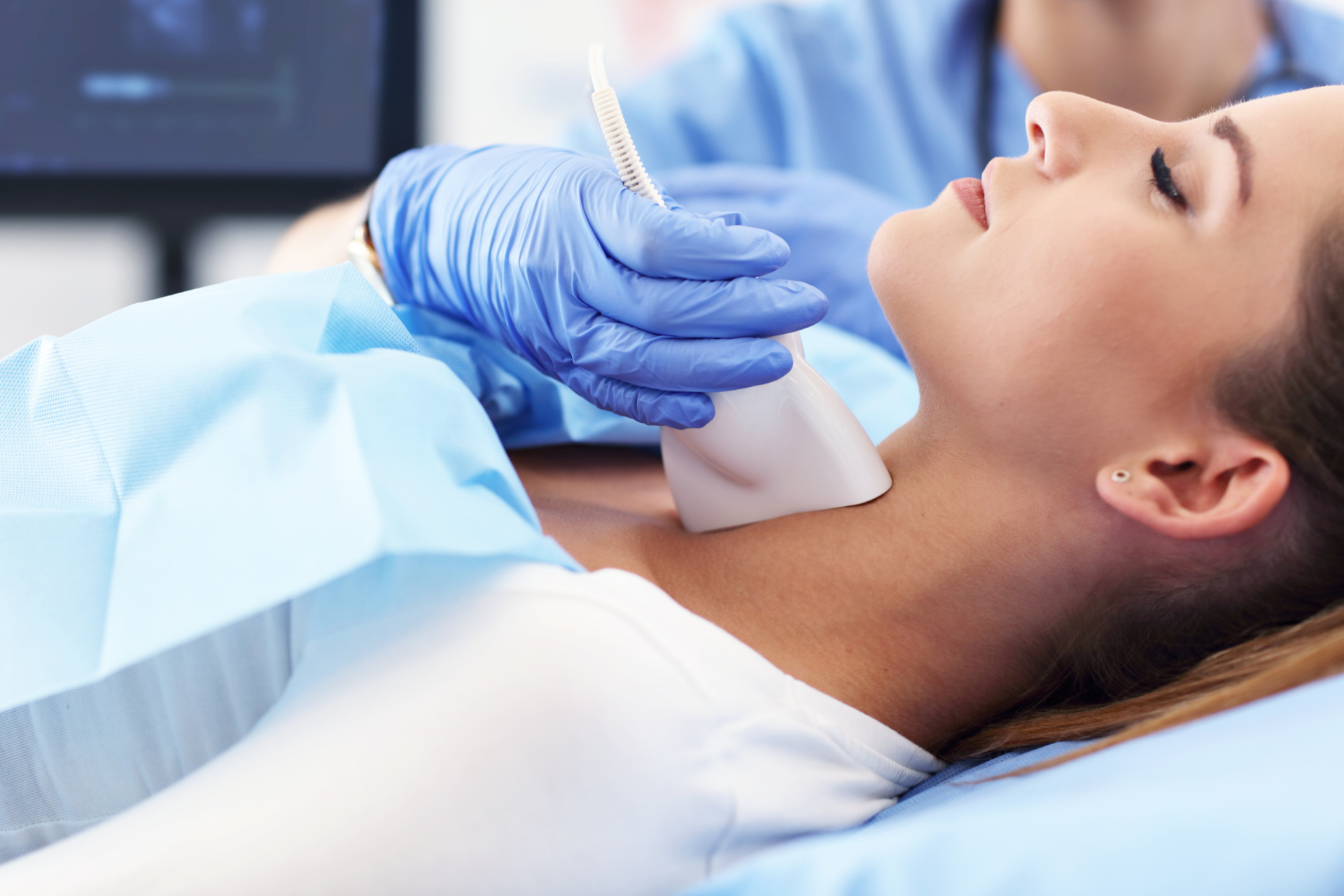
What is hypothyroidism?
In hypothyroidism, insufficient amounts of the iodine-containing thyroid hormones T3 (triiodothyronine) and T4 (thyroxine) are produced and released. There is therefore a thyroid hormone deficiency. The body needs these hormones to regulate metabolism. In the case of a deficiency of T3 and T4, many metabolic processes therefore only run at a reduced rate. This can result in a wide variety of complaints.
Hypothyroidism: frequency and age
Hypothyroidism is one of the most common hormone-related diseases. About one in 3,000 to 4,000 children is born with hypothyroidism (congenital hypothyroidism). In the majority of cases, however, hypothyroidism develops in the course of life (acquired hypothyroidism). With increasing age, the frequency of the disease increases. Women are affected more frequently than men. This is probably related to hormonal and immunological factors that favor autoimmune diseases in women.
Hypothyroidism: causes and risk factors
Depending on where the reason for the thyroid’s lack of hormone production lies, a distinction is made between primary, secondary and tertiary hypothyroidism:
Primary hypothyroidism
The reason for this by far the most common form of hypothyroidism is found in the thyroid gland itself – functioning thyroid tissue is damaged or destroyed for a variety of reasons. In most cases, the reason is Hashimoto’s thyroiditis. This is a chronic inflammation of the thyroid gland based on an autoimmune reaction, i.e. a misregulation of the immune system: the body’s defense system attacks thyroid tissue. This entails a prolonged inflammation, in the course of which the tissue is gradually destroyed. Thus, the thyroid gland can produce less and less hormones – hypothyroidism develops.
Other possible causes of primary hypothyroidism include.
- inflammation of the thyroid gland caused by other factors (viral, drug-induced in certain cancer therapies)
- Chronic iodine deficiency (e.g. due to a diet low in iodine, lack of use of iodized table salt or increased iodine requirement during pregnancy and breastfeeding)
- Surgical removal of the thyroid gland (in whole or in part), for example in the case of hyperthyroidism or thyroid cancer
- Radioiodine therapy (taking radioactive iodine to treat hyperthyroidism or thyroid cancer).
- certain medications, for example thyreostatics (for hyperthyroidism), amiodarone (for cardiac arrhythmia), lithium (for mental disorders)
- Radiation therapy to the head or neck, usually for cancer (such as thyroid or laryngeal cancer).
- Hereditary diseases that affect the production or secretion of thyroid hormones (congenital hypothyroidism)
Secondary hypothyroidism
This rare form of hypothyroidism is caused by a disorder in the pituitary gland. This brain region stimulates hormone production in the thyroid gland via its own hormone (TSH = thyroid-stimulating hormone). However, this signal is absent if the pituitary gland secretes too little TSH due to a disease (for example, a tumor).
TSH values at a glance
The level of the TSH value provides information on how actively the thyroid gland is working. Normal TSH values in adults are usually between 0.4 and 4.0 mU/l (milli-units per liter). An elevated TSH value indicates an underactive thyroid gland (hypothyroidism), while a low or suppressed TSH value is typical of an overactive thyroid gland (hyperthyroidism).
A repeatedly elevated TSH value above 10 mU/l is usually an indication of an underactive thyroid requiring treatment. The exact assessment is always carried out in conjunction with the measured fT4 and fT3 values in order to correctly assess thyroid function.
Tertiary hypothyroidism
Tertiary hypothyroidism is due to a dysfunction of the hypothalamus – another brain region involved in the complex regulatory circuit between the brain and the thyroid gland. The hypothalamus produces the hormone TRH (Thyrotropin Releasing Hormone). It stimulates the pituitary gland to release TSH, which in turn stimulates thyroid hormone production. This means that if the hypothalamus releases too little TRH, for example due to a tumor or inflammation, the production of thyroid hormones is ultimately also reduced. However, such tertiary hypothyroidism is rare.
Hypothyroidism symptoms
The symptoms of hypothyroidism are very diverse and can vary from individual to individual. The severity of the disease plays a role, as does the age of the person affected. As thyroid hormones influence the entire metabolism, a deficiency can affect many areas of the body – from energy balance and circulation to skin, hair and mood.
Adult symptoms

Adults with hypothyroidism usually suffer from an acquired form of the disease. Possible symptoms include:
- Exhaustion, weakness, reduced efficiency
- listlessness, apathy, depressiveness
- Sensitivity to cold
- reduced sweat production
- slowed heartbeat and thus low pulse rate
- slight to moderate weight gain
- Constipation
- Concentration and memory disorders
- slowed thinking or speech
- dry, brittle hair
- cool, dry, scaly skin, orange-yellowish discoloration (especially on palms and soles)
- pasty swelling of the skin, especially on the face and around the eyes (more on this in the section “Myxedema and myxedema coma”)
- dull expression
- hoarse voice, swollen tongue
- enlarged thyroid gland (“goiter” = goiter)
- slowed reflexes
- Cycle disorders, limited fertility
- Erectile dysfunction
Myxedema and myxedema coma
The doughy skin swellings seen in many hypothyroid patients, especially around the eyes but also on other parts of the body, are called myxedema. They are caused by the pathological deposition of special carbohydrate compounds (glycosaminoglycans) in the subcutaneous tissue. A rare but life-threatening complication of severe hypothyroidism is myxedema coma. It occurs especially in older sufferers whose hypothyroidism has been untreated or inadequately treated for years. If an additional stress (for example infection, hypothermia, myocardial infarction, accident, surgery) is then added, this can become a trigger factor and trigger a myxedema coma.
Its symptoms include:
- Myxedema (not present in every myxedema coma!).
- extreme weakness
- severely lowered body temperature
- slowed, respectively too shallow breathing
- slowed heartbeat
- slowed, weakened reflexes
- increasing drowsiness up to coma
Emergency myxedema coma
A myxedema coma is a medical emergency (emergency medical call 144) that requires the fastest possible intensive medical treatment – the risk of the affected person dying is high!
Hypothyroidism: prevention, early detection, prognosis
Symptoms in seniors and senior citizens
In older people with hypothyroidism, basically the same symptoms as in other adults are possible. However, their symptoms are often not very pronounced and are easily overlooked or simply blamed on age. In addition, older people with hypothyroidism may also develop less typical symptoms, such as weight loss, confusion, or decreased appetite.
Symptoms in children
Babies born with hypothyroidism show the following symptoms:
- Drinking Laziness
- Constipation
- Lack of movement
- prolonged neonatal jaundice
If left untreated, the child’s further mental and physical development will be delayed. Possible consequences include short stature, impaired speech development, hearing loss, mental retardation and delayed puberty.
Hypothyroidism during pregnancy
Hypothyroidism can manifest itself in different ways during pregnancy and requires special attention. Hormone production by the thyroid gland increases during this phase of life in order to meet the increased needs of mother and child. If the thyroid gland cannot adequately compensate for this additional demand, hypothyroidism can develop or worsen.
Possible signs include severe tiredness, sensitivity to cold, dry skin, concentration problems or unexplained weight gain – complaints that can sometimes overlap with normal pregnancy symptoms. Regular blood tests (TSH and fT4) are therefore particularly important.
Well-adjusted drug treatment with thyroid hormones is safe during pregnancy and is crucial for the healthy development of the child. With good control, the pregnancy usually proceeds without complications.
Hypothyroidism diagnosis at the USZ
If we suspect acquired hypothyroidism in a child or adult based on the symptoms described in the initial consultation (medical history), a blood test can provide clarity. Such an examination is also routinely carried out on newborn babies in order to be able to treat any congenital hypothyroidism at an early stage. In the blood test, the focus is initially on the concentration of the thyroid-stimulating pituitary hormone TSH (control hormone from the pituitary gland that stimulates the thyroid gland to produce hormones (T3 (triiodothyronine) and T4 (thyroxine)). If its blood value is elevated, this indicates hypothyroidism. Then it depends on the concentration of fT4, i.e. “free” thyroxine (not bound to a protein). The combination of these values shows whether the cause lies in the thyroid gland itself (primary hypothyroidism) or – much more rarely – in the hormonal control by the pituitary glandThe combination of both measured values is interpreted as follows:
- TSH increased, fT4 decreased: There is a manifest hypothyroidism, more precisely: a manifest primary hypothyroidism. In this case, the thyroid gland itself does not function sufficiently, although there is enough of the control hormone TSH.
- TSH elevated, fT4 normal: latent hypothyroidism is present, i.e. a “hidden” hypothyroidism with (still) normal thyroid hormone concentration. Over time, this can develop into manifest hypothyroidism – but it doesn’t have to.
- TSH decreased, fT4 decreased: This combination is indicative of secondary hypothyroidism. In this case, the cause is not in the thyroid gland itself, but in a disorder of the hormonal control of the pituitary gland or the higher-level hypothalamus.
By the way: The second thyroid hormone (triiodothyronine, T3) is not suitable for diagnosing hypothyroidism – its measured value is often normal in primary hypothyroidism.
Thyroid Consultation
The thyroid consultation at the Department of Endocrinology, Diabetology and Clinical Nutrition treats patients with diseases of the thyroid or parathyroid glands.
Hypothyroidism: prevention, early detection, prognosis
Hypothyroidism cannot be prevented in all cases, but a conscious lifestyle and regular check-ups can reduce the risk and detect a possible disease at an early stage. It is particularly important to pay attention to thyroid health if you have a family history of thyroid problems or hormonal changes.
Nutrition for an underactive thyroid
You can prevent hypothyroidism caused by iodine deficiency by making sure you have a sufficient iodine intake. How much iodine the body needs depends mainly on age. Pregnancy and lactation also influence the iodine requirement. The main source of iodine in Switzerland is table salt fortified with iodine. Cow’s milk and products made from it also contribute to the iodine supply in this country, especially for children. According to studies, Swiss schoolchildren are generally sufficiently supplied with the important trace element.
In contrast, many young children, women of childbearing age, pregnant women and breastfeeding mothers consume less iodine than recommended. To detect congenital hypothyroidism early, all newborns are tested for hypothyroidism (blood test). If the test is positive, drug therapy can be started immediately to ensure the healthy development of the child.
In addition to an adequate iodine intake, general nutrition also plays a supporting role. A balanced, nutrient-rich diet with a sufficient intake of selenium, iron and zinc is recommended, as these trace elements are important for the conversion and action of thyroid hormones.
Hypothyroidism: progression and prognosis
The course of hypothyroidism depends on its cause. Hypothyroidism due to autoimmune thyroiditis (chronic lymphocytic thyroiditis, Hashimoto’s thyroiditis) is the most common: symptoms develop only gradually. This is because thyroid tissue is destroyed only slowly. In addition, the remaining thyroid gland can compensate for cell loss for a long time by increasing hormone production. After a certain point, however, this is no longer possible. The amount of hormone produced is then no longer sufficient, so that symptoms increasingly develop.
However, with the intake of thyroid hormones, the disease can usually be managed without any problems. Symptoms may appear more quickly in acquired hypothyroidism of a different cause, such as when the thyroid gland must be partially or completely removed due to a tumor. Here, too, the missing amount of hormone must be replaced with medication. Then, as a rule, complaints such as constipation, fatigue and dry skin disappear. In the case of congenital hypothyroidism, hormone replacement therapy must be started as soon as possible after birth. Otherwise, there is a risk of severe growth and development disorders.
Interdisciplinary thyroid center
Eight specialist disciplines work together regularly at the Thyroid Center of the USZ. Experts from nuclear medicine, endocrinology, the ORL clinic, visceral surgery, pathology, radio-oncology, oncology and interventional radiology meet weekly at the thyroid report. This is where the patient’s findings are presented and quickly assigned to the relevant specialist clinic.
Treatment of hypothyroidism
The treatment of hypothyroidism aims to compensate for a relevant deficiency of thyroid hormones and restore metabolic balance. In most cases, this is done with medication that replaces thyroid hormones and is dosed individually. This so-called hormone replacement therapy restores the normal hormone concentration in the blood.
The type and dosage of medication depends on the cause and severity of the illness as well as the age and general condition of the person affected.
Details of the treatments
FAQ on the topic of hypothyroidism
Typical signs are persistent tiredness, weight gain, sensitivity to cold, constipation and dry skin. Concentration problems, depressive moods or slower speech can also occur.
People with untreated hypofunction can appear tired, puffy and pale. Typical symptoms are doughy swellings on the face – especially around the eyes – dry skin and brittle hair. The eyes may appear slightly swollen, but do not protrude.
A relevant thyroid hormone deficiency is usually treated with replacement therapy (levothyroxine), which compensates for the hormone deficiency. The dosage is adjusted individually. An improvement usually occurs after a few weeks.
Medication must not be changed or discontinued without medical advice. Thyroid hormones (e.g. levothyroxine) should be taken in the morning on an empty stomach and with a little water – at least 30 minutes before breakfast – as food, coffee or milk can impair absorption in the intestine.
In the case of untreated hypofunction, the skin often becomes cool, dry and flaky in the long term. In some cases, yellowish-orange discoloration or pasty swellings occur, particularly on the face, hands and feet.
If left untreated, severe hypofunction can lead to a life-threatening myxedema coma, especially in older people. This is a medical emergency that must be treated immediately. Overall, this serious complication is extremely rare.
Without treatment, the risk is increased, as a hormone deficiency can affect the development of the embryo. However, if the hypothyroidism is detected early and treated with thyroid hormones, there is no increased risk.
Hashimoto’s thyroiditis is an autoimmune disease in which the immune system attacks the thyroid gland. Hypothyroidism is often the result of this inflammation, but can also have other causes.