Energy management and climate protection
We are reducing the proportion of energy obtained from gas and oil and are continuously cutting our energy consumption. Between 2017 and 2024, we implemented around 450 improvement measures in this area.

Technikzentrale am USZ: Hier wird Wärme aus der Abluft der Lüftung zurückgewonnen.
Less fossil energy
Today, the USZ covers its electricity requirements almost exclusively with wind energy. We also use heat in the form of hot water and steam. This heat is used, for example, to heat or sterilize surgical instruments. Two thirds of the heat comes fromCO2-neutral sources. Gas and oil are only used to cover peak loads during the day and in winter. Our district heating provider ewz has set itself the goal of reducing the proportion of fossil fuels from 22 percent to zero by 2040.
Increase energy efficiency
In 2008, the USZ signed a target agreement with the Canton of Zurich in which the hospital undertook to achieve an annual increase in energy efficiency of 1.5 percent. In 2024, the USZ was able to reduce electricity consumption by 0.6% – despite an increase in treatment cases of more than 5 percent. This means that we have once again exceeded the cantonal target for increasing energy efficiency.
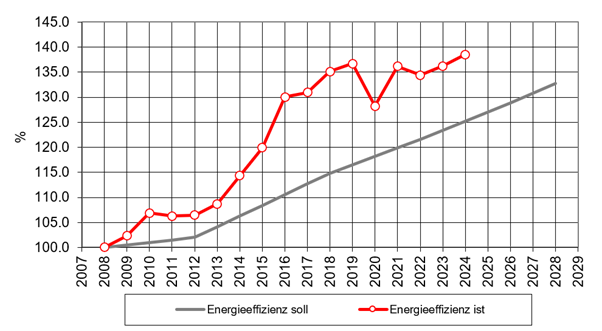
Energy efficiency results from the amount of energy consumed in relation to the hospital services provided. External factors such as the outside temperature also influence energy efficiency. The decrease in 2020 can be attributed to the increased ventilation requirements caused by the coronavirus pandemic and the reduction in hospital services. In 2022, the decrease is due to the warmer summer and the associated increase in cooling capacity.
Systematic improvements
The USZ is highly committed to the sustainable use of energy. The activities in this area are based, among other things, on the six principles for dealing with energy that the hospital management adopted in 2016. In 2017, USZ was the first Swiss hospital to receive ISO 50001 certification for its energy management system from SQS. The certification scope covers the entire USZ Campus (energy-relevant core area).
Reduce energy consumption
Between 2017 and 2024, we implemented around 450 measures to reduce energy consumption, including
- Replacement of light sources with LEDs
- Replacement of ventilation systems
- Better energy recovery (e.g. waste heat from appliances that is used for heating)
- Replacing appliances with more energy-efficient models
- Insulation of building facades
- Reduction of room temperatures
- Raise employee awareness (switch off appliances, ventilate correctly, etc.)
Contact energy management
Own solar power production
The USZ’s first solar system was installed on the roof of the NORD2 building at the end of 2024. The plant will have a maximum output of 500 kWp and is expected to produce 470 MWh of green electricity from renewable solar energy per year. The generation, equivalent to the average annual consumption of around 100 four-person households, can be used completely and directly by the USZ.

Exemplary Energy & Climate Initiative
Since 2024, the USZ has been part of the Exemplary Energy and Climate (VEK) federal initiative within the group of university hospitals. In the initiative, providers of publicly relevant services and institutional investors make their contribution to the federal government’s Energy Strategy 2050 and the Paris Climate Agreement of 2015. The ambitious goals of the USZ include increasing energy efficiency by 17% by 2030 (in relation to the reference year 2018/2019), increasing the proportion of renewable energies to 62% and expanding in-house electricity production. The objectives are supported by 15 joint and four hospital-specific measures, for example in the areas of mobility, data center operations and procurement. Measures and a reduction plan to achieve net zero emissions are also being drawn up. The initiative publishes an annual status report on the progress of the work.
Carbon footprint
In order to identify emission-intensive activities and derive targeted reduction measures, the USZ prepares an annual greenhouse gas balance sheet that includes all direct and the most relevant indirect emissions. The Greenhouse Gas Protocol (GHG), the international standard for calculating greenhouse gas emissions, is applied.
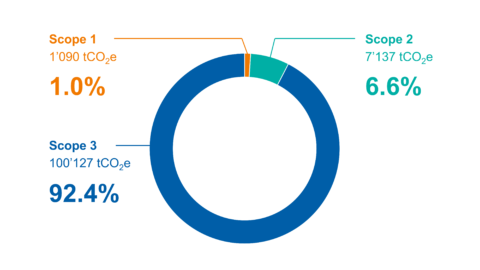
In hospital operations, direct greenhouse gas emissions are mainly caused by the combustion of fossil fuels, the use of medical gases and the escape of coolants. Such “Scope 1” emissions largely come from heating systems, some of which are still operated with fossil fuels at various locations. The emergency power systems available in the event of a power failure are also powered by diesel.
The consumption of purchased energy in the form of electricity or district heating generates furtherCO2 emissions, which are allocated to “Scope 2”. These indirect, energy-related greenhouse gas emissions depend not only on consumption but also on the regional energy supply situation. Almost 100 percent of the electricity purchased comes fromCO2-neutral wind energy. Most of the heat purchased comes from ewz’slow-CO2 district heating network.
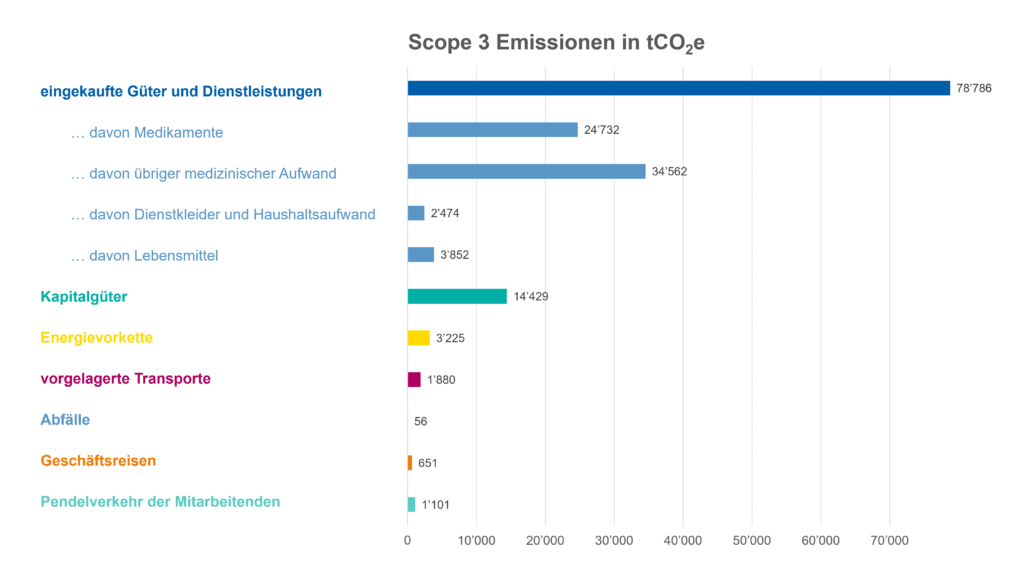
Indirect emissions also occur in the upstream and downstream value chain of the USZ. For service companies such as hospitals, these “Scope 3” emissions usually have the greatest impact on the climate. For example, the manufacture and transportation of products procured by the USZ (e.g. medical consumables, medicines, work clothing or medical technology) generates large quantities of greenhouse gases. At the end of their service life, these products have to be disposed of properly, which in many cases results in further emissions. Other relevant “Scope 3” emissions relate to catering and mobility.
“Scope 3” emissions also make up a considerable proportion of the total climate footprint at the USZ. However, this does not make the reduction of “Scope 1” and “Scope 2” emissions any less important. In these areas, the USZ can implement climate-friendly measures largely on its own. In parallel, further measures will be developed in the future with the aim of reducing emissions in the value chain. As these measures are not within the direct sphere of influence of the USZ, a joint commitment with suppliers and business partners will be key.
Heat measures in existing buildings
In the older buildings of the University Hospital Zurich in particular, room temperatures rise sharply during hot spells in summer. Thanks to the commitment of numerous participants from different areas, technical and structural measures could be implemented in particularly exposed areas. The buildings along the MITTE1|2 construction site are particularly affected by high room temperatures, as efficient room ventilation is only possible to a limited extent at times. Various technical measures were implemented in different wings, such as the installation of recirculating air cooling units, the installation of ceiling fans and the use of underfloor heating for passive cooling. In addition to the technical measures, organizational measures such as the use of night cooling, avoiding direct sunlight or reducing internal heat sources have a major effect on the indoor climate. The implementation of indoor climate measures is extremely complex due to a wide range of requirements relating to monument and fire protection, cantonal energy legislation and hospital hygiene requirements for air conditioning units and fans. Air conditioning measures tend to conflict with ongoing energy-saving measures and climate protection efforts. However, adjustments to longer and warmer periods of heat are essential to ensure the health protection of employees and a good recovery environment for patients. The aim is to achieve a good balance between increased comfort for patients and staff and rising energy requirements.