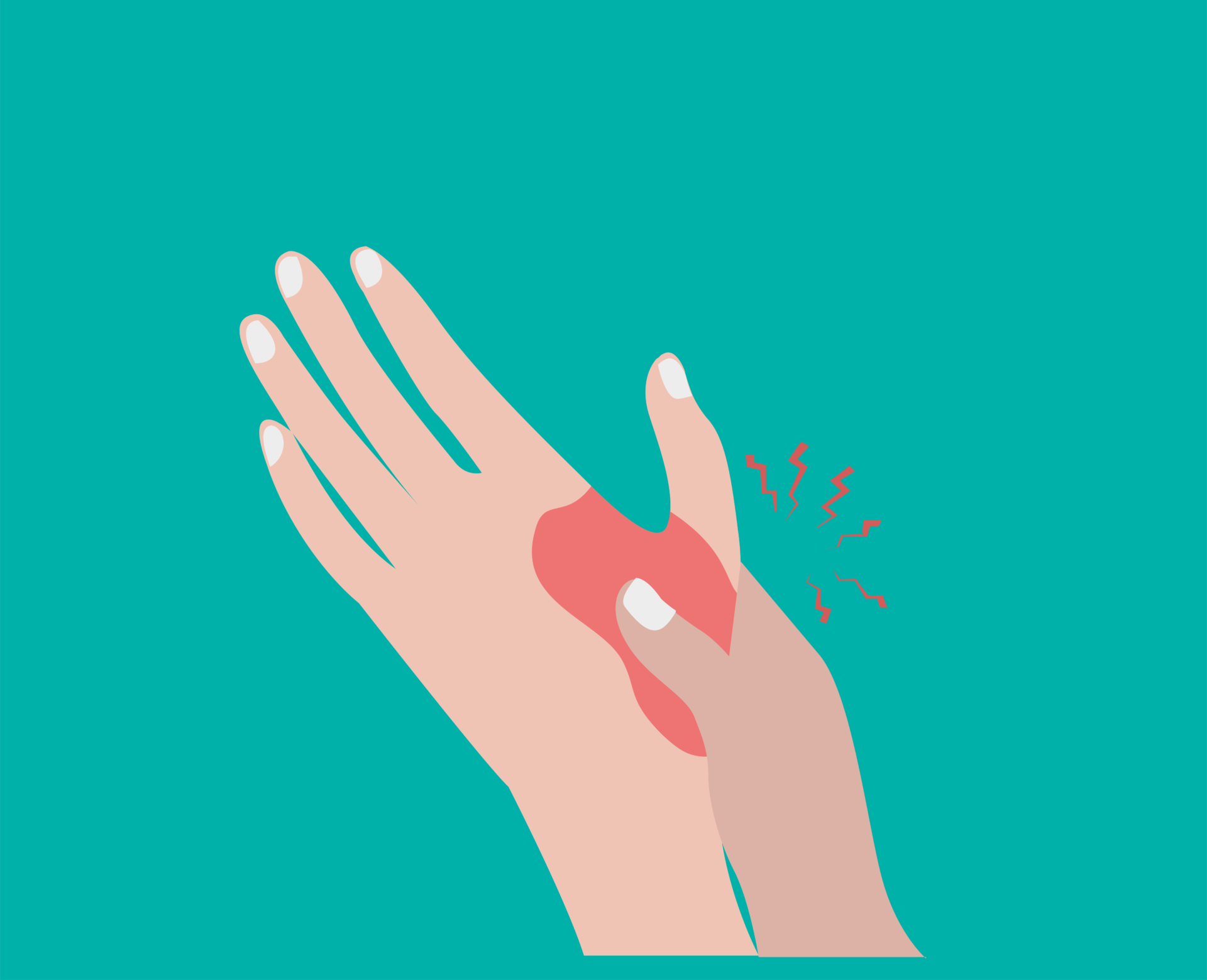
What is osteoarthritis of the thumb saddle joint?
In thumb saddle joint arthrosis, also known as rhizarthrosis, the cartilage covering is damaged or depleted, resulting in inflammation with swelling and pain, particularly when the joint is under strain.
Osteoarthritis of the thumb saddle joint: causes and risk factors
In principle, the cartilage in any joint can wear down over the years due to daily mechanical stress. Rhizarthrosis is the most common degenerative disease of the hand due to the high load on the thumb saddle joint. Women are more frequently affected than men. Other causes can be inflammatory diseases of the rheumatic type, metabolic disorders(gout and the like) or the consequences of accidents that lead to incorrect loading of the joint.
Symptoms: Complaints develop slowly over time
As a rule, complaints develop slowly over time. Symptoms of rhizarthrosis are pain in the area of the base of the thumb, which mainly occurs during gripping movements. The pain can often be triggered by twisting movements, such as opening a bottle, turning a door handle or a key. Gripping force is reduced. Over time, the joint often becomes unstable and the base of the thumb becomes deformed (subluxation of the joint). At the same time, the incorrect loading and evasive movements can lead to additional malpositions of the thumb, such as hyperextension of the metacarpophalangeal joint of the thumb or a reduction in the spread of the thumb. Depending on their extent, these must also be treated during any surgery.
Osteoarthritis of the thumb saddle joint: diagnosis
The diagnosis of osteoarthritis of the thumb saddle joint is made on the basis of the patient’s medical history, clinical examination and X-ray images.
Procedure
For mild symptoms, the thumb can be immobilized using an appropriate splint, and medication can be prescribed, such as an anti-inflammatory pain reliever. This can help reduce swelling and pain. In addition, cortisone injections can be administered into the joint. If there is painful instability of the thumb saddle joint that would eventually lead to osteoarthritis of the joint, arthroscopic—i.e., minimally invasive—debridement, or joint stabilization via ligament reconstruction using a tendon as a preventive measure. Patients with chronic pain who do not respond to the conservative treatment options mentioned require surgical treatment. Various surgical techniques have been developed for this condition. In the most commonly performed surgery, the joint is replaced with a small prosthesis (similar to a reverse hip replacement). If another joint in the thumb is affected or if the bone quality does not allow for the prosthesis, the trapezium bone (os trapezium)—which, together with the metacarpal bone, forms the saddle joint—is removed. To prevent the thumb from slipping toward the wrist, it is flexibly secured in its original position using a wrist tendon strap, thereby preserving mobility. In addition to this procedure, there are other surgical options that may be considered, depending on the stage of the disease. Your hand surgeon will advise you on the best option for you
Follow-up Care
After surgery, the limb is immobilized in a cast for two weeks. Next, a removable splint is fitted, which must be worn during the day for another two to four weeks. At the same time, hand therapy begins with mobilization of the thumb. A splint should be worn at night for about two to three months after the surgery to help stabilize the thumb’s position. Full strength is regained after three to four months.