Procedure
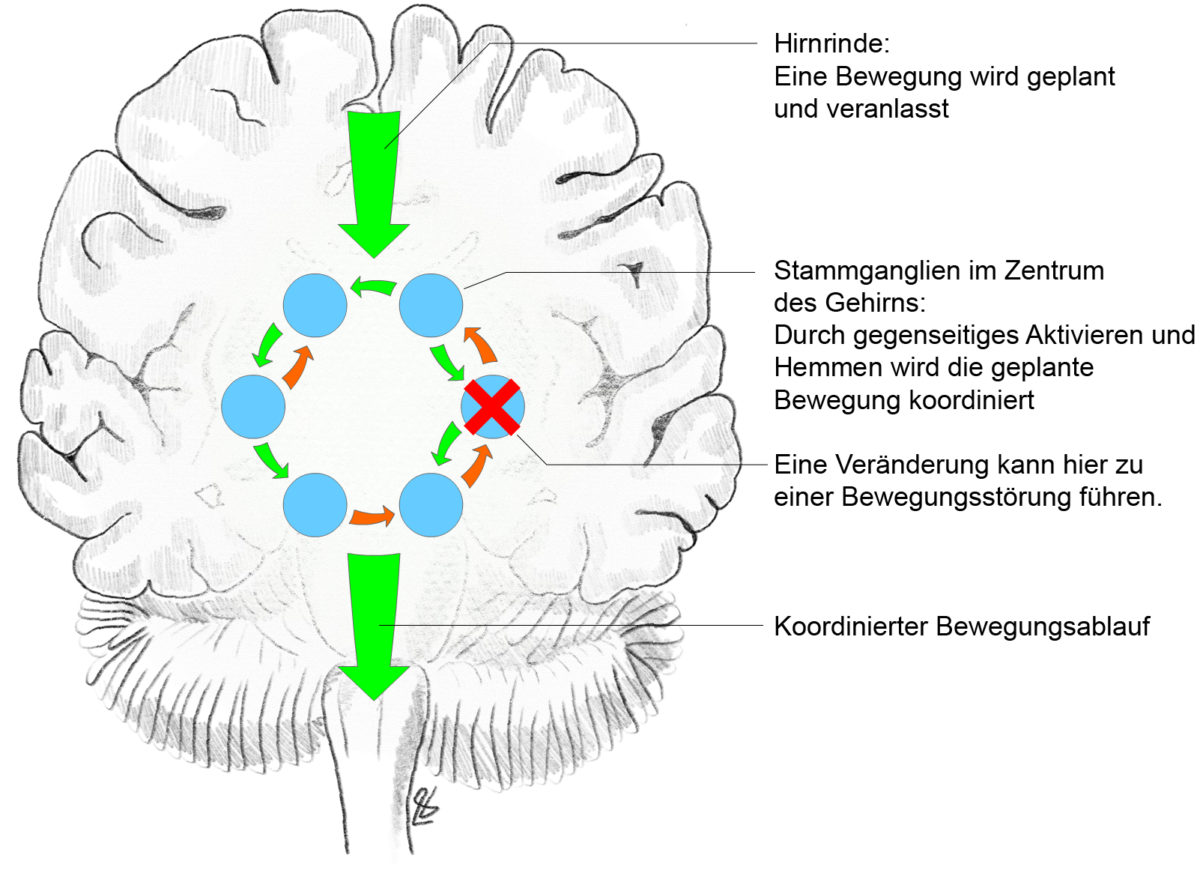
If a disease (e.g. Parkinson’s disease) leads to an imbalance in this fine-tuning, various disorders of the body’s movement sequences occur. In Parkinson’s patients, this is usually a slowing of movements, with or withouttremors. Other patients suffer from an isolated tremor, while others suffer from prolonged muscle tension(dystonia), which leads to misalignments in joints (e.g. torticollis or writer’s cramp). These are just a few examples of movement disorders that are based on the faulty coordination of individual brain regions.
By influencing (usually inhibiting) another site in these basal ganglia, it is possible to largely eliminate the imbalance.
The first and most important treatment for a movement disorder is, of course, the administration of medication. These can often successfully control the disorders described above for a long time.
At some point, a point is reached where medication alone is no longer sufficient to achieve a satisfactory treatment result. Side effects of long-term therapy often occur and a reduction in medication is desirable. In such cases, surgical therapies are an effective option.
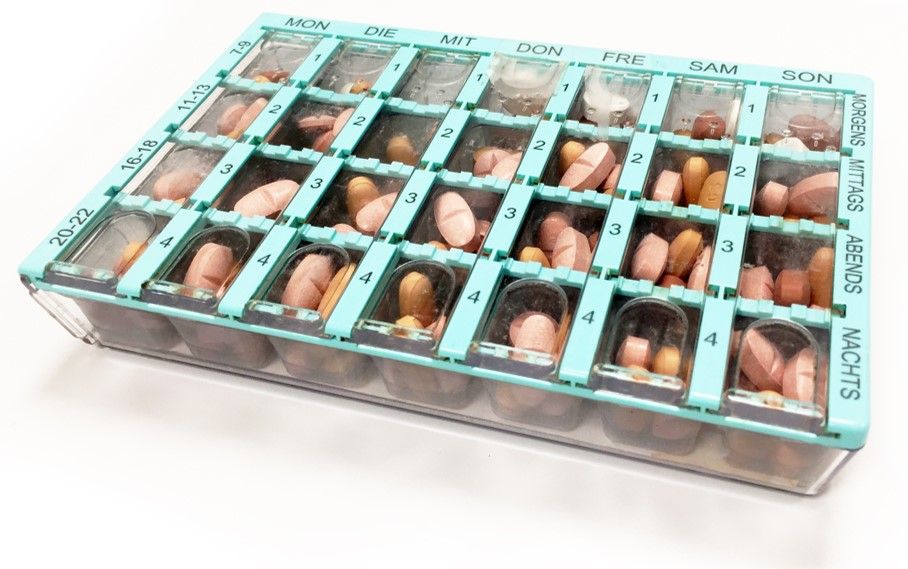
Medication dispenser of a Parkinson’s patient with an advanced disease
Each of these treatments has its strengths and weaknesses and not all are suitable for treating the same complaints. Your doctor will take a close look at your symptoms and recommend one or more of the techniques listed here based on his or her experience.
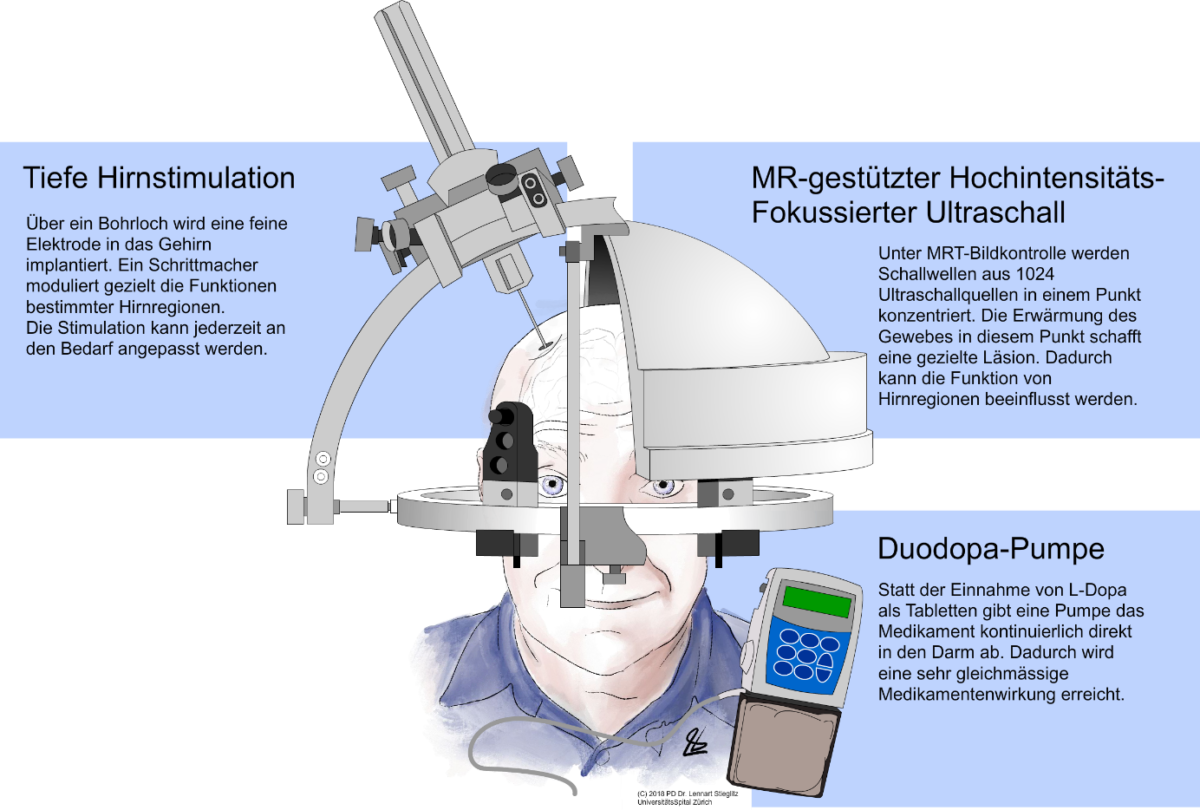
- Deep brain stimulation
A fine electrode is implanted into the brain via a drilled hole. A pacemaker specifically modulates the functions of certain brain regions. The stimulation can be adapted to requirements at any time. - MR-supported high-intensity focused ultrasound
Under MRI image control, sound waves from 1024 ultrasound sources are concentrated in one point. Heating the tissue at this point creates a targeted lesion. This can influence the function of brain regions. - Duodopa pump
Instead of taking L-Dopa as tablets, a pump continuously releases the medication directly into the intestine. This achieves a very uniform medication effect.