Autoimmune disease or not? This is not entirely clear in the case of neurodermatitis. What the disease has to do with the immune system and how it is treated.
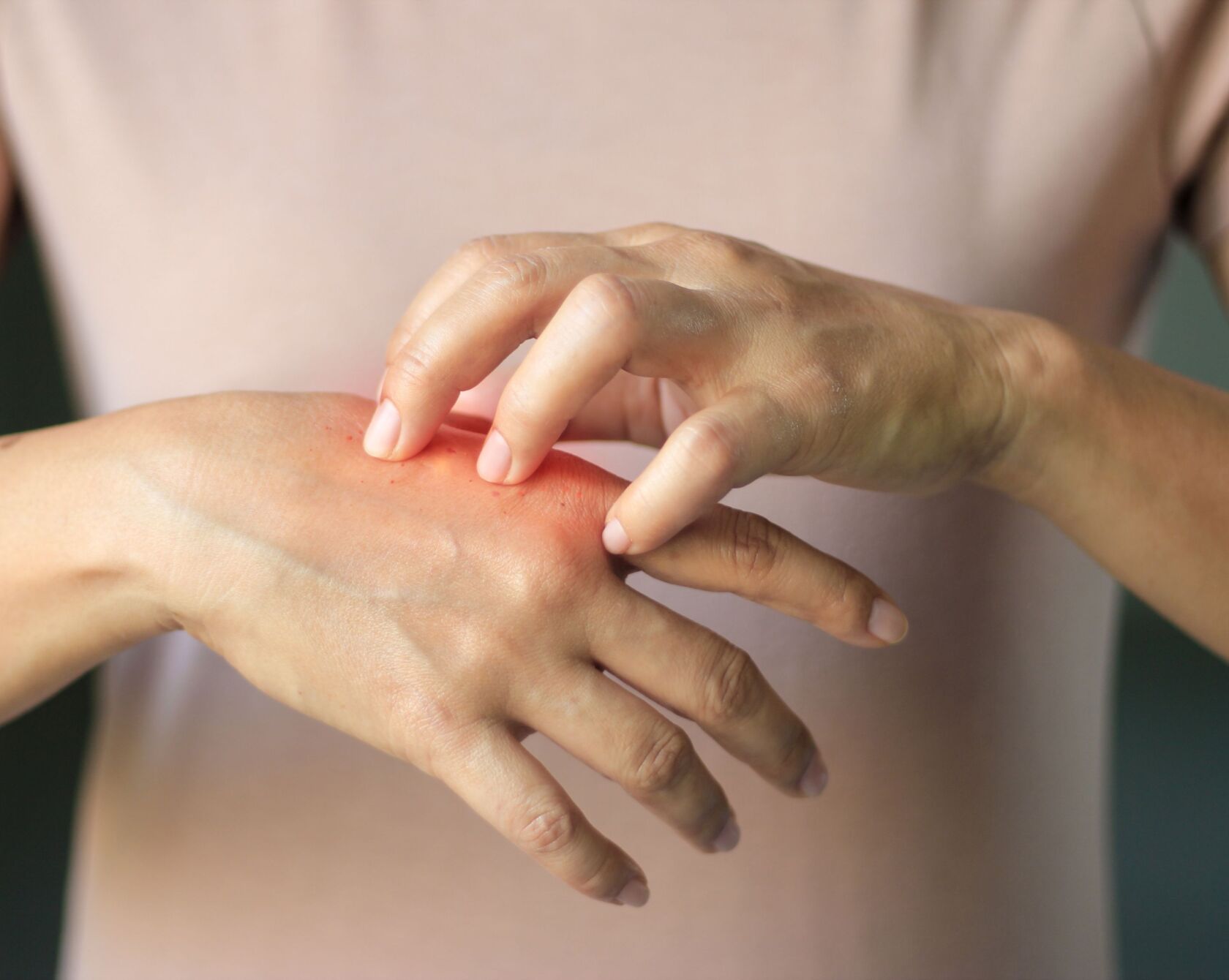
The skin disease atopic dermatitis, also known as atopic eczema, often occurs together with other allergic diseases such as hay fever, house dust allergy, asthma or food allergies. The main symptoms are severe itching, dry skin and red, scaly eczema. These typically occur chronically, in episodes. Environmental factors such as the climate – dry air, little UV radiation – or air pollution can exacerbate the symptoms.
How the disease develops is still only partially understood. Various factors are being discussed as causes. Above all, there is a hereditary component: children whose parents suffer from atopic dermatitis have a significantly higher risk of also developing the disease. “Atopic dermatitis is an allergic form,” explains dermatologist Claudia Lang, “the severe reaction of the skin is a combination of barrier dysfunction, overactivation of immune cells and incorrect colonization of skin bacteria”.
In many neurodermatitis patients, specific antibodies to Malassezia (a type of yeast that is part of the normal human skin flora) can be detected in higher concentrations. This can cross-react with the body’s own cell components and thus trigger an immune reaction. There is still no consensus among experts as to whether atopic dermatitis should be regarded as an autoimmune disease. However, experts are increasingly assuming that this is because it is basically an overreaction of the immune system, as is also the case with classic autoimmune diseases such as lupus.
Basic therapy on the skin
In allergy-prone people, the immune cells tend to falsely identify completely harmless substances from the environment (pollen, animal dander, food) as enemies and fight them off by means of inflammatory processes. This results in a targeted immune response with an increase in special immune cells that are found in mucous membranes and on the skin. In atopic dermatitis sufferers, these mechanisms, together with genetic factors, lead to a disruption of the protective film, through which microorganisms can easily penetrate and in turn intensify the reaction.
The basic therapy for neurodermatitis sounds simple: “The skin needs moisture. The body should therefore be moisturized at least once a day. You can use a normal body lotion for this,” explains Claudia Lang. “The cream must be pH-neutral,” adds Karin Grando. The care expert heads the neurodermatitis care consultation at the USZ. “Because the disease is triggered by the immune system, which can also be affected by other factors such as stress, relapses can unfortunately occur again and again, even if basic care is carried out perfectly. That’s why we advise those affected in the care consultation in detail and very individually.”
Is it not possible to reprogram the immune system so that it no longer reacts so violently and the inflammation stops? “Unfortunately, this is not yet completely possible, but modern therapeutic approaches are now moving in this direction,” says Claudia Lang. “If someone has a severe, acute flare-up, we can prescribe systemic steroids (cortisone tablets) in the short term.” Cortisone has a general immunosuppressive effect. This results in rapid relief. In the longer term, the same immune-suppressing drugs can be prescribed as are used for organ transplant patients. Simply in a lower dosage.
Targeted against the immune system
So-called biologics have a targeted effect on the immune system. “Biologics are antibodies that inactivate messenger substances or receptors involved in the inflammatory process,” explains Claudia Lang. In recent years, biologics have been approved for atopic dermatitis patients. “It is an interleukin inhibitor,” says Claudia Lang. Interleukins mediate communication between the specific cells involved in atopic dermatitis. “The biologic inhibits the interleukins and thus reduces the immune response”. Because it has a very targeted effect, patients who are treated in this way have no greater risk of catching more infections.
However, only a few patients receive this therapy. Claudia Lang explains why: “Neurodermatitis itself is common, but a severe form is not. Biologics are only prescribed to severely affected patients”. They must have undergone untargeted immunosuppressive therapy as initial therapy. Only if this does not help will the biologic be covered by health insurance. “The itching responds very well to this therapy,” says Claudia Lang. “However, patients must be aware that basic skin care remains the same”. Atopic dermatitis is not yet curable. However, targeted therapies such as biologics offer hope. “Perhaps one day we will understand the immune system so well that we will be able to cure atopic dermatitis,” hopes dermatologist Claudia Lang.