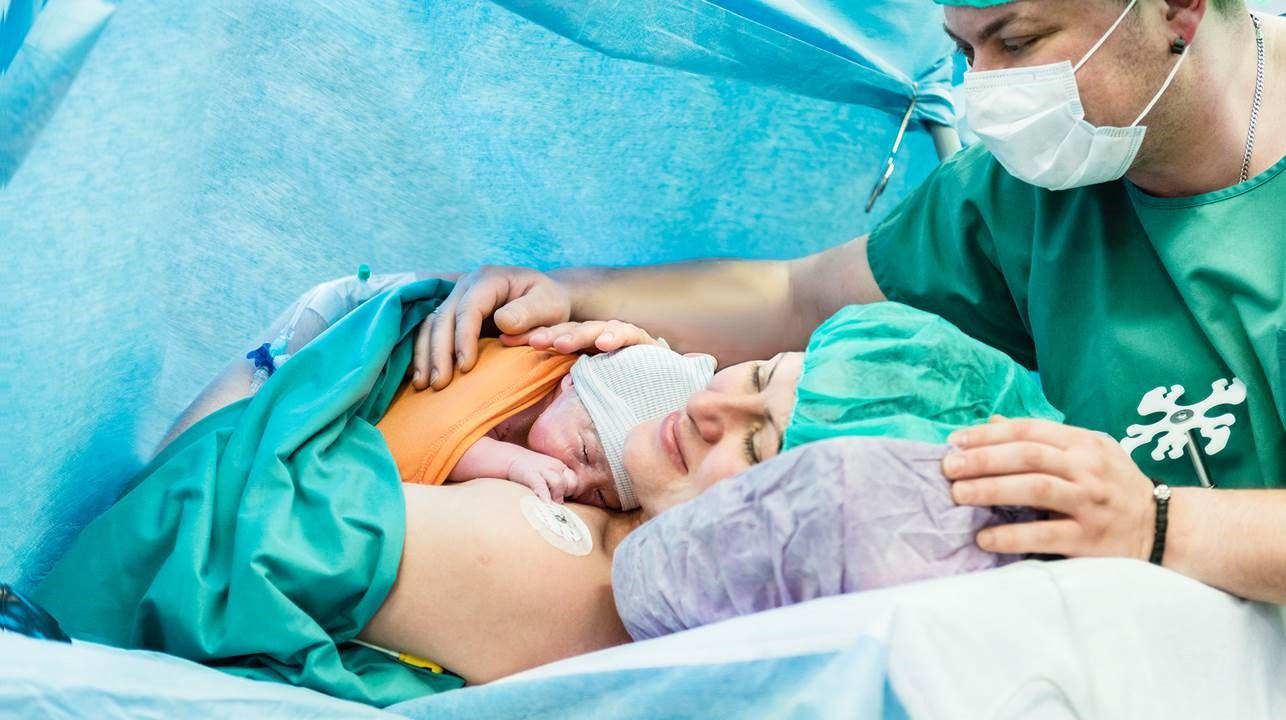
Caesarean section

During a caesarean section, the mother's abdominal wall and uterus are surgically opened and the baby is born as an “abdominal birth”. There are two types of caesarean section: the planned caesarean section, which is planned in advance, and the emergency caesarean section, which is performed in the event of acute complications during the birth.

Procedure - how a caesarean section is performed

Planned caesarean section

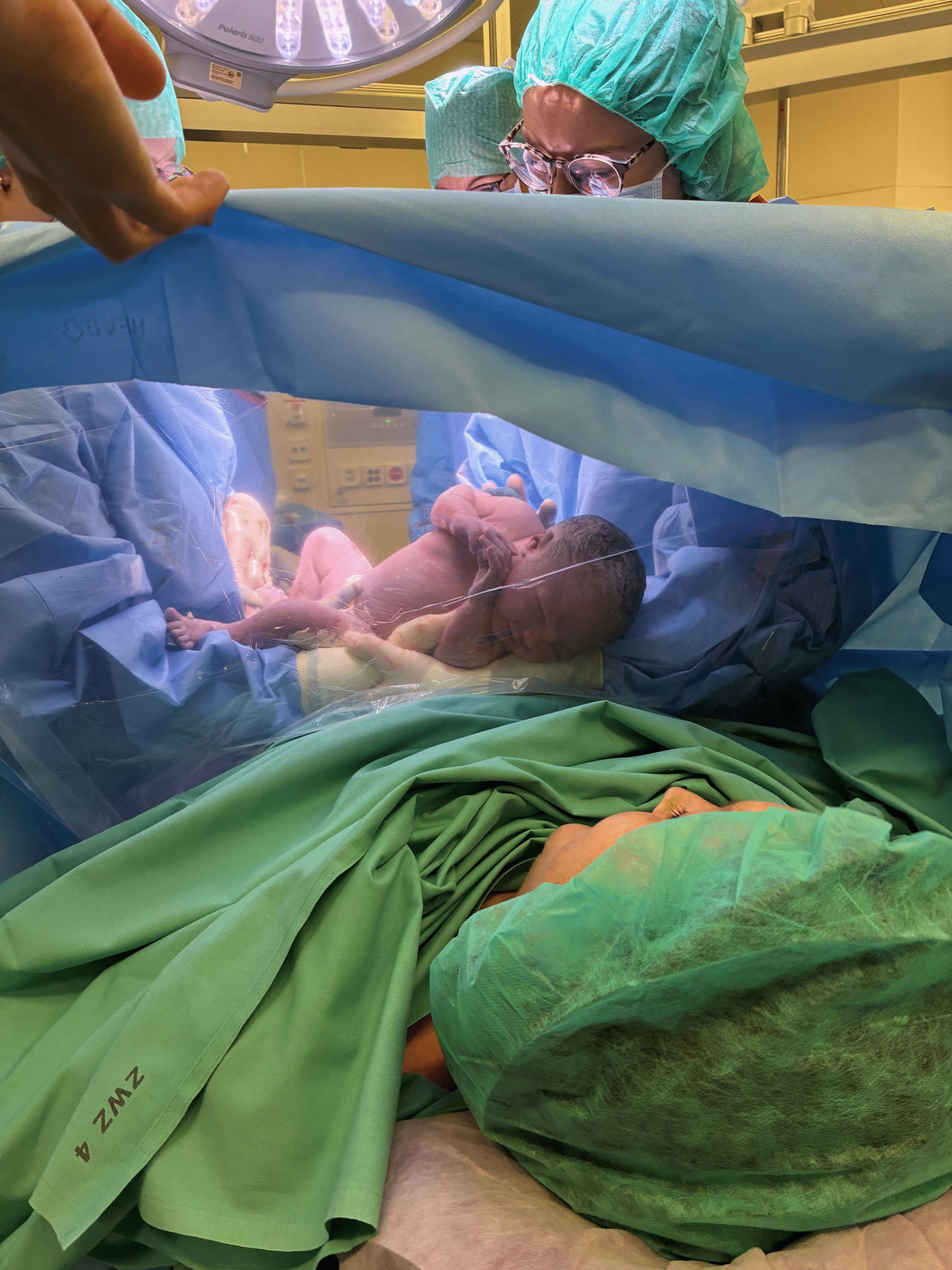
The planned caesarean section begins with careful preparation. You will discuss all the details and risks of the procedure with your doctor. In the operating room, you will be given regional anesthesia to prevent pain during the procedure. The operating area is covered with a “window drape”, which gives parents the opportunity to experience the birth directly and up close if they wish (see below). The obstetrician makes a transverse incision in the lower abdomen and uterus and carefully develops the baby. In medical terminology, developing means that the baby is carefully lifted out of the open uterus. This is the actual moment of birth. The uterus and all subsequent layers are then closed with a suture. The duration of a first planned caesarean section is usually around 30 minutes.

If the baby is well, it is placed on the mother’s breast as soon as possible to establish intensive skin contact and promote the first bond between mother and child.

“This first almost skin-to-skin experience strengthens the bond between mother and child and also supports the start of breastfeeding. It is a special start to life together.”
Prof. Dr. med. Nicole Ochsenbein-Kölble, Clinic Director and Head of Obstetrics

Emergency caesarean section

In contrast, an emergency caesarean section is performed if acute complications arise during the birth and an immediate delivery is required. This may be the case in the event of problems such as placental abruption, birth arrest or fetal distress. Emergency caesarean sections are usually performed under general anesthesia or rapid regional anesthesia to ensure a quick delivery and protect the lives of mother and child.

At the USZ, the decision delivery time takes only about nine minutes. This means that the decision to perform an emergency caesarean section is made within these nine minutes and the baby is delivered by caesarean section. This is well below the target of 15 minutes set by the Canton of Zurich.

Preparation for the caesarean section

Thorough preparation is essential for both types of caesarean section. During the planned caesarean section, you and the medical team (obstetrician, midwife and anesthetist) will discuss all the details of the procedure. We also carry out some tests to check the condition of mother and child. You must not eat or drink anything for a few hours before the caesarean section.

In an emergency caesarean section, rapid decision-making and communication between the medical treatment team and you as parents is of the utmost importance.

Aftercare

Aftercare following a caesarean section is crucial for your recovery. They usually stay in the USZ’s postnatal ward for three to four days so that we can monitor wound healing and their state of health. You should get enough rest and avoid strenuous physical activity. The wound should also be kept clean and protected from infection. Our nurses and midwives will support you with breastfeeding and caring for your baby.

What parents say about us

  • Leah H.

    We were in a private room for a caesarean section at the USZ: great care from a competent team of midwives.
  • Martina F.

    We would also like to express our special thanks to the nursing team on the ward. They looked after me so lovingly and competently after the caesarean section that I not only learned to breastfeed our son in the 4 days on the ward, but also became so physically fit again that we were able to walk home from the hospital.
  • Sebastian M.

    Our little sunshine was born at the USZ and we always felt that we were looked after both professionally and lovingly! From the early morning admission by the midwives to the caesarean section and the care on the ward, everything was really wonderful! Highly recommended without reservation!

Frequently asked questions about caesarean sections

Many mothers report that the sectio window gives them an increased feeling of being an active part of the birth – an experience that they find very touching and enriching. A study by Charité Berlin (Armbrust et al., 2016) shows that parents who experience a so-called family-centered cesarean have a significantly more positive perception of the moment of birth.
Mothers and fathers report a more intensive emotional bond and greater satisfaction.

Since 2023, the University Hospital Zurich has been offering the so-called C-section window – an opportunity to experience the moment of birth live, even during a caesarean section. Through a transparent, sterile cloth, mother and father can see the moment their child is born – a unique moment full of emotion. Since then, over 90% of caesarean sections at the USZ have been performed with a window.

For patients

Feel free to contact us for an initial consultation or have your gynecologist refer you to us.

Tel. +41 44 255 50 42
Self-registration

For referrering physicians

University Hospital Zurich
Klinik für Geburtshilfe / Kliniksekretariat
Raemistrasse 100
8091 Zurich

Tel. +41 44 255 51 03
Patient registration form

Regularly awarded specialist clinic

The Department of Obstetrics at the USZ was recognized as the best specialist clinic in Switzerland by the “Handelszeitung” in collaboration with the market research company Statista and regularly occupies top positions in national comparisons. The positive reviews from medical experts in particular underline the clinic’s high reputation throughout Switzerland. The clinic’s new premises are also making an impact: the equipment in the birthing rooms scores highly as a “standout treatment”.

Responsible Department

Related diseases