Mohs surgery: fewer relapses and smaller scars

White skin cancer often grows with small extensions that are not visible from the outside. If it is cut out, it often leads to relapses or unnecessarily large scars. These disadvantages can be minimized with the help of Mohs surgery.

Overview

White skin cancer is still on the rise in Switzerland. The number of cases has tripled in the last 30 years – to around 30,000 per year today. Skin cancer is most commonly operated on as an outpatient procedure under local anesthesia. The main alternative is radiation. Large tumors sometimes require more complex therapy.
 

Dermatologische Chirurgie

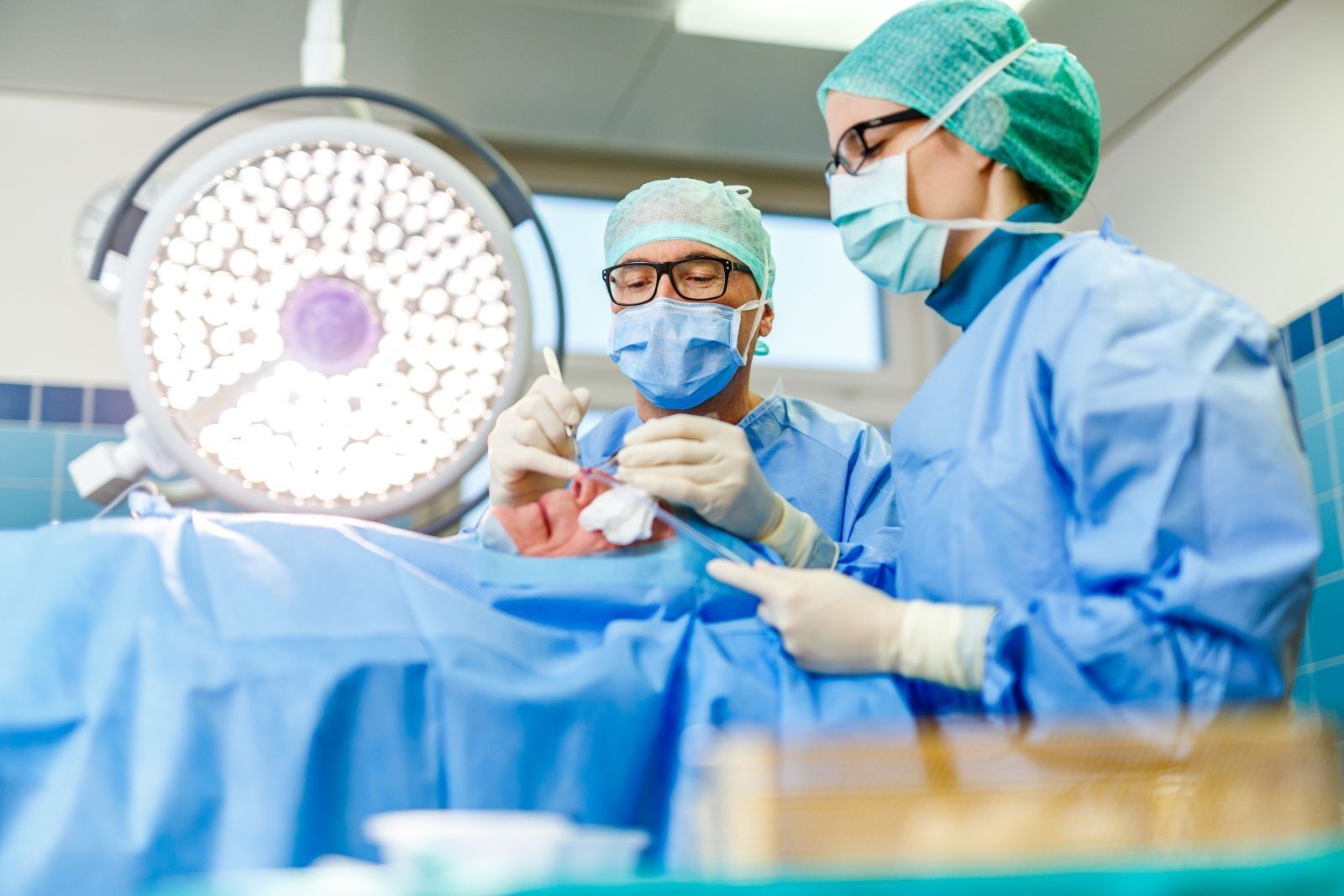
During surgery, it is extremely important to remove the entire skin cancer, as otherwise the tumor can quickly recur. However, this is not so easy because skin tumors have the property of growing with fine extensions that are not visible from the outside. To be on the safe side, the tissue is therefore often cut out with a large safety margin – which leaves traces in the form of unnecessarily large scars. As skin cancer mainly occurs in sun-exposed areas such as the face, neck or arms, many sufferers find such scars unsightly.

In such cases, Mohs surgery can be a worthwhile alternative. The tumor is cut out at a relatively close distance, after which the piece of tissue at the edges of the cut is examined microscopically. If tumor remnants are found, another operation is performed at this site. These steps are repeated until no more tumor remnants are found. This procedure has two decisive advantages: Firstly, there are far fewer relapses: instead of around 5 to 25 percent of patients (depending on the type of tumor), only 1 to 5 percent have to be operated on again later due to a relapse. Secondly, the aesthetic result is better, as only as much tissue is removed as necessary.
Suitable for infiltrative, malignant tumors

According to Jürg Hafner, Senior Physician in the Department of Dermatosurgery, Laser Medicine & Aesthetics and Phlebology, Wounds at the USZ, the method is suitable for around one in three patients with white skin cancer.

Skin cancer - symptoms and treatments

“Once the tumor has been completely removed, we plan the wound closure individually: depending on the location and size, the wound can be closed directly, reconstructed with a skin flap or graft or – in selected cases – left open to heal. The aim is to achieve a reconstruction that is functionally safe and aesthetically as inconspicuous as possible.”

Dr. Christian Greis, Senior Attending Physiciant and Head of department


Patient brochures

Various patient brochures are available for download as PDF files. You can also order printed copies of the brochures.

Explanatory videos

Mohs surgery of a skin cancer that was completely removed at the first attempt

Mohs surgery of a laterally incompletely removed skin cancer. A re-excision is necessary, which is then examined using Mohs surgery.

Mohs surgery of an incompletely removed skin cancer. A re-excision is necessary, which is then examined using Mohs surgery.

Most frequently asked questions

Mohs surgery is a surgical procedure to remove white skin cancer. The removed tissue is examined microscopically at the edges of the incision. If tumor remnants are still visible, targeted follow-up surgery is performed – step by step, until no more tumor is detectable.

In classic excision, the tumor is usually removed with a safety margin. In Mohs surgery, the tissue is removed as sparingly as possible and the margin is controlled. The aim is to remove as little healthy tissue as possible while still completely eliminating the tumor.

There are two main advantages: the risk of relapse may be lower and often less healthy tissue needs to be removed. Depending on the situation, this can improve the esthetic result.

It is particularly suitable for infiltrative tumors (with extensions) and in situations where tissue preservation is particularly important – for example on the face, nose, lips, ears or other functionally or aesthetically sensitive areas. Whether Mohs is appropriate depends on the tumor type, histological findings and location.

Depending on the findings, Mohs can be used for certain forms of basal cell carcinomas (basal cell carcinomas) and squamous cell carcinomas (spinaliomas), for example – especially if they grow infiltratively or if there is an increased risk of recurrence.

The tumor is usually removed under local anesthesia. The tissue at the edges of the incision is then examined microscopically. If tumor remnants are found, resection is performed at precisely this point with millimeter precision. These steps are repeated until the tumor is completely removed.

This can vary because the operation and microscopic control can be carried out in several stages. The procedure is often completed in at least two operations in one morning, in some cases it takes longer – depending on how many control steps are required.

Mohs surgery is often performed on an outpatient basis. The treatment team will clarify in advance whether outpatient treatment is possible in your case.

During the procedure, the local anesthetic usually ensures that you do not feel any pain. A feeling of pressure or tension may be possible. Depending on the location, you may experience soreness or tightness after the procedure; the team will advise you on suitable pain treatment.

Depending on the size and location, the wound is sutured directly, reconstructed or – in selected cases – left open to heal. In the case of complex localizations, collaboration with other specialties may be useful.

Scars cannot be completely avoided during surgery. Since as little healthy tissue as possible is removed with Mohs, the cosmetic result can be more favorable in many cases. The final appearance of the scar depends, among other things, on the location, tumor size, wound closure and individual healing.

As with any operation, bleeding, infection, impaired wound healing, temporary swelling or changes in sensitivity may occur. The treatment team will inform you individually about the risks and what to do after the procedure.

You will be given specific instructions in advance; as a rule, you do not need to be sober. If you are taking blood-thinning medication, please discuss this at an early stage – you should only make changes after consulting your doctor.

You will receive instructions on wound care and check-up appointments. In addition, regular skin checks are important because people with white skin cancer may have an increased risk of further skin tumors.

If Mohs surgery is medically indicated, the costs are usually covered by compulsory health insurance (depending on the deductible and excess). The exact clarification takes place during planning and administration.

Depending on the procedure, a referral from your general practitioner or a dermatologist may be advisable. The dermatology clinic will inform you about the appropriate procedure and the required documents (e.g. the histology report).

Responsible professionals

Jürg Hafner, Prof. Dr. med.

Senior Physician, Vice Director of Department, Department of Dermatology

Tel. +41 44 255 25 33
Specialties: Dermatology/venereology (SIWF/FMH), Dermatosurgery, Mohs Surgery (ESMS), Angiology (SIWF/FMH), Phlebology (USGG/SIWF)

Christian Greis, MBA, Dr. med.

Senior Attending Physician, Department of Dermatology

Tel. +41 44 255 11 11
Specialties: Dermatosurgery (Mohs surgery), Laser medicine & aesthetics , Telemedicine & artificial intelligence (digital dermatology)

Stephan Nobbe, Dr. med.

Senior Attending Physician, Department of Dermatology

Tel. +41 44 255 25 33

Fabio Bertoldo, Dr. med.

Attending Physician, Department of Dermatology

Tel. +41 44 255 11 11

Carla Murer, Dr. med.

Attending Physician, Department of Dermatology

Tel. +41 44 255 11 11

Mirjam Nägeli, Dr. med.

Senior Attending Physician, Department of Dermatology

Tel. +41 44 255 11 11
Specialties: Extracorporeal photopheresis, Head of immunosuppressed consultation hours, inpatient consultations, Head of NonMelanomaSkinCancer

Natalie Anasiewicz, Dr. med.

Attending Physician, Department of Dermatology

Tel. +41 44 255 11 11

Franziska Wenz, Dr. med. (RO)

Attending Physician, Department of Dermatology

Tel. +41 44 255 11 11
Specialties: Dermatosurgery, Laser medicine & aesthetics , General dermatology & telemedicine

Johanna Ziegler, Dr. med.

Attending Physician, Department of Dermatology

Tel. +41 44 255 11 11
Specialties: ,

Corsin Seeli

Attending Physician ad interim, Department of Dermatology

Fabienne Fröhlich, Dr. med.

Attending Physician ad interim, Department of Dermatology

Tel. +41 44 255 11 11
Specialties: Dermatosurgery (Mohs surgery), LC-OCT

For patients

Send a photo of the affected skin area and fill out the short questionnaire. Within 24 hours on weekdays, you will receive a reliable diagnosis from our experts. Your data will be transmitted to us encrypted and treated confidentially.

To the online consultation

For referrering physicians

Easily assign your patient online.

Patient registration form

Request an online consultation

You continue to care for your patient yourself – we support you with a specialist assessment as part of an online consultation with our dermatology clinic.

Start online consultation
Tel. +41442553155

Responsible Department