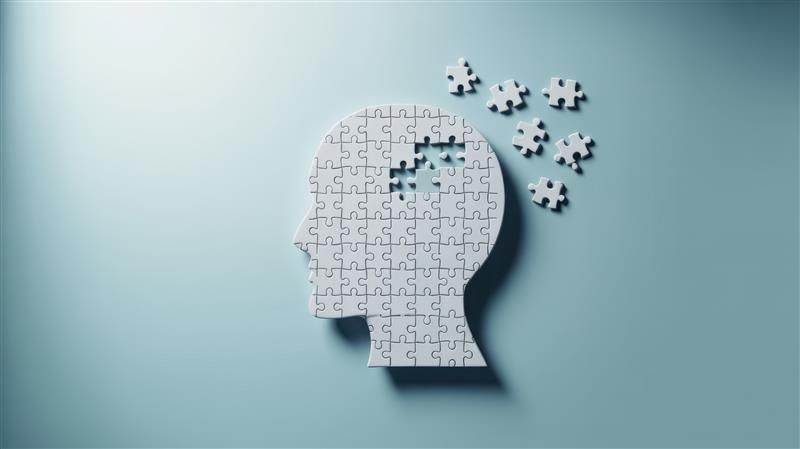
The brain is never fully developed, it changes throughout life. Nerve cells and their connections in the brain are constantly renewing themselves. Even entire areas of the brain can be transformed. This can be influenced by sleep and meditation, among other things.
Have you ever not slept for more than two days in a row? Many people notice it after just one short night: sleep deprivation affects the brain and the whole body. You are not rested, have difficulty concentrating and may be easily irritable. “You can’t survive without sleep,” sums up Christian Baumann. The neurologist has been researching sleep and its influence on the human brain for almost 20 years. “We can see that sleeping is extremely important for brain development simply by the fact that babies sleep so much,” he explains.
But what exactly happens during sleep? During the day, when the brain is working, many new connections are formed between nerve cells. “These synapses are tidied up during the night,” explains the neurologist. The strong, important connections remain and irrelevant connections are dissolved. In technical terms, this is called synaptic downscaling. While the brain is working, waste products are constantly being produced. Experts assume that there is a kind of outflow system, the glymphatic system. “We suspect that this is particularly active during deep sleep,” explains Christian Baumann. This further tidies up the brain.
The brain is strengthened during sleep
Sleeping is also important for learning. “The sequence of different sleep phases leads to the brain being consolidated, i.e. strengthened,” says Christian Baumann. That’s why it’s easier to remember what you’ve learned if you memorize it the evening before an exam. The effect is even better if learning is combined with an olfactory, acoustic or sensory stimulus – i.e. if you inhale a scent, listen to music or are touched while learning and then apply the same stimulus again during deep sleep. For example, recall of what has been learned is significantly better in people who inhaled a rose scent during learning and then during deep sleep than in people who were not exposed to any scent.
“For optimal brain development, performance and recovery, it would probably be better if we slept more.”
Measuring and influencing sleep
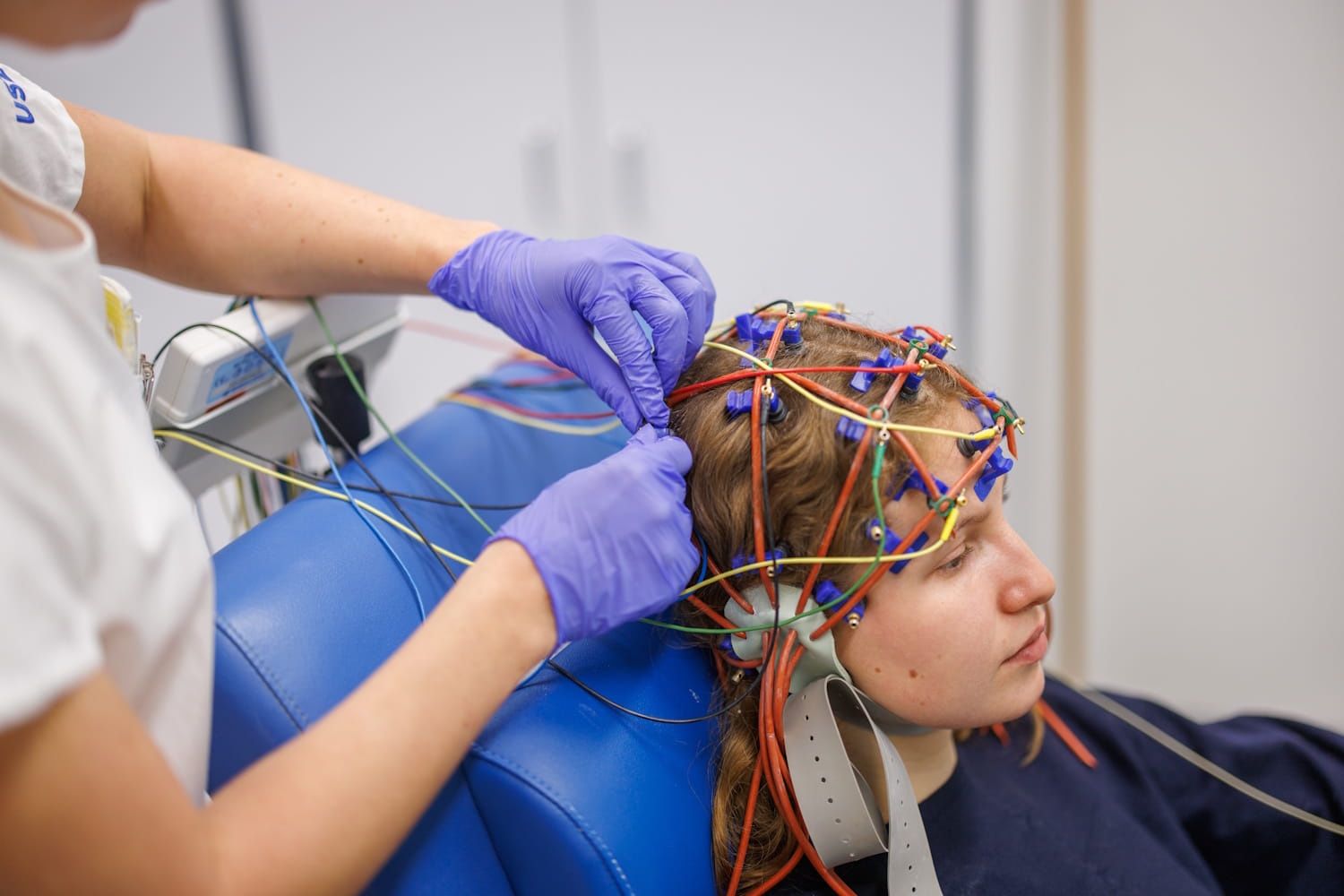
But what if you don’t sleep well? There are countless apps that can be used to measure and improve sleep. Christian Baumann is skeptical: “Apps can probably determine when someone is asleep. But they can’t reliably determine whether sleep is good or what stage it is in.” Brain waves need to be measured for this. This is exactly what SleepLoop does. The device, which looks like a headband, measures brain activity during sleep in real time. During deep sleep, a soft sound is played at the right moment of brain activity. This targeted stimulation synchronizes the neurons in the brain more strongly, making the person’s sleep deeper. SleepLoop is still under development. The concept is to be used for Parkinson’s patients, among others. The hope is that the disease will progress more slowly due to better sleep.
Meditation changes the brain
In addition to sleep, regular meditation is also said to have an effect on the brain. This originally spiritual practice is increasingly being studied scientifically. The results are striking: “Various studies indicate that intensive meditation can increase the gray matter in the brain,” says Claudia Witt, Director of the Institute for Complementary and Integrative Medicine.
The gray matter contains the cell bodies of nerve cells and controls perceptual processes and motor performance. Why gray matter can increase through meditation is still unclear. Even the morphology, i.e. the structure of the brain, is said to be able to change through meditation. A 2014 review by researchers from Canada and Germany came to the conclusion that intensive meditators show changes in eight regions of the brain. These include regions in which emotions are regulated, one’s own experiences are perceived and body perception is located. There is also evidence that neuroplasticity – the brain’s ability to regenerate and restructure itself – is increasing. But much is still unclear: “Research into meditation is still in its infancy,” says Claudia Witt.
“Studies indicate that intensive meditation can have a positive effect on the brain.”
Reduce stress with mindfulness
In the USA, over 250 clinics offer introductory courses in meditation for patients. Meditation is also used at the USZ: “At our institute, we work a lot with what is known as Mind Body Medicine,” explains Claudia Witt. Mindfulness-based methods are integrated there because they have been shown to be effective in studies. Mindfulness is a special form of attention in which people practise becoming more aware of and accepting their external and internal experiences in the present moment. “We use mindfulness-based meditation for various illnesses, such as chronic pain or as a supportive measure for cancer patients,” says Claudia Witt. The main aim is to improve well-being, but also to reduce stress.
Brain: structure, function, diseases
The brain is the central organ of the nervous system. It controls movements and sensory perceptions and enables thinking, memory, language and emotions. Many vital functions such as breathing and circulation are also regulated in the brain.