Breast cancer treatment has made great strides in recent years. New diagnostic options and a better understanding of tumor biology now make it possible to provide increasingly targeted care. This approach places greater emphasis on each woman's individual situation, from risk assessment through diagnosis to treatment.
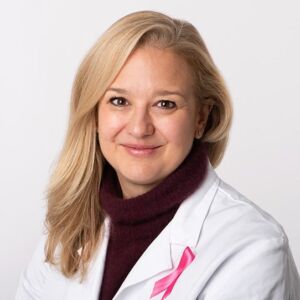
“Today, personalized medicine doesn’t begin with treatment, but rather with individual risk assessment and early detection,” says PD Dr. med. Claudia Rauh of the Breast Center at the University Hospital of Zurich.
Early detection, more targeted evaluation
A key component of modern breast medicine is individualized risk assessment. Family history, genetic factors, or pre-existing medical conditions can influence the risk of developing a disease and play an important role in planning preventive and early detection measures.
Modern imaging techniques such as mammography, ultrasound, and MRI are available for diagnostic evaluation. The range of diagnostic services at the USZ is complemented by spiral computed tomography of the breast (mammary CT), which provides a high-resolution three-dimensional image of the breast tissue. The USZ is currently the only center in Switzerland that offers this innovative diagnostic method. New developments, such as ultra-fast MRI, further expand diagnostic capabilities. In addition, women with a suspected hereditary predisposition receive genetic counseling. The goal is to identify and classify abnormalities as early and accurately as possible and to plan the next steps on an individual basis.
Interdisciplinary Collaboration as a Strength
Today, the treatment of breast cancer requires close collaboration among different medical specialties. At the USZ’s certified breast center, specialists in gynecology, radiology, (radio)oncology, pathology, and other disciplines work together to evaluate each case, with the support of specialized nursing staff (BCCN). Interdisciplinary discussion lays the foundation for well-informed treatment recommendations and seamless care throughout the entire treatment pathway.
Among other areas, the practice has particular expertise in breast cancer in young women and in cases of the disease during pregnancy. These rare and challenging situations require a high degree of specialization and close coordination among the professionals involved.
From Tumor Biology to Treatment Decisions
Breast cancer is not a single disease. Tumors can differ significantly in their biological characteristics. Accordingly, molecular analyses and precision medicine approaches are becoming increasingly important.
Complex cases are discussed at the USZ during the molecular tumor board. There, clinical, pathological, and molecular information is synthesized to tailor treatment recommendations as precisely as possible to the specific clinical situation.
“By closely integrating various disciplines, we can specifically apply our growing understanding of tumor biology to inform treatment decisions,” says Claudia Rauh.
Research as Part of Care
As a university medical center, the USZ combines patient care, research, and teaching. New scientific findings, as well as innovative diagnostic and therapeutic methods, are directly incorporated into clinical practice. At the same time, eligible patients can benefit from clinical trials and gain access to new treatment approaches.
More Than Just Diagnosis and Treatment
Modern breast cancer care involves much more than just medical evaluations and treatments. Specially trained breast care nurses support patients throughout the various stages of the disease and serve as consistent points of contact. Supplementary support services help ensure a holistic approach to care.
The USZ Breast Center thus covers the entire spectrum, from risk assessment and early detection through diagnosis to treatment and follow-up care. The focus is on interdisciplinary care that combines modern imaging, precision medicine, and university-based research.