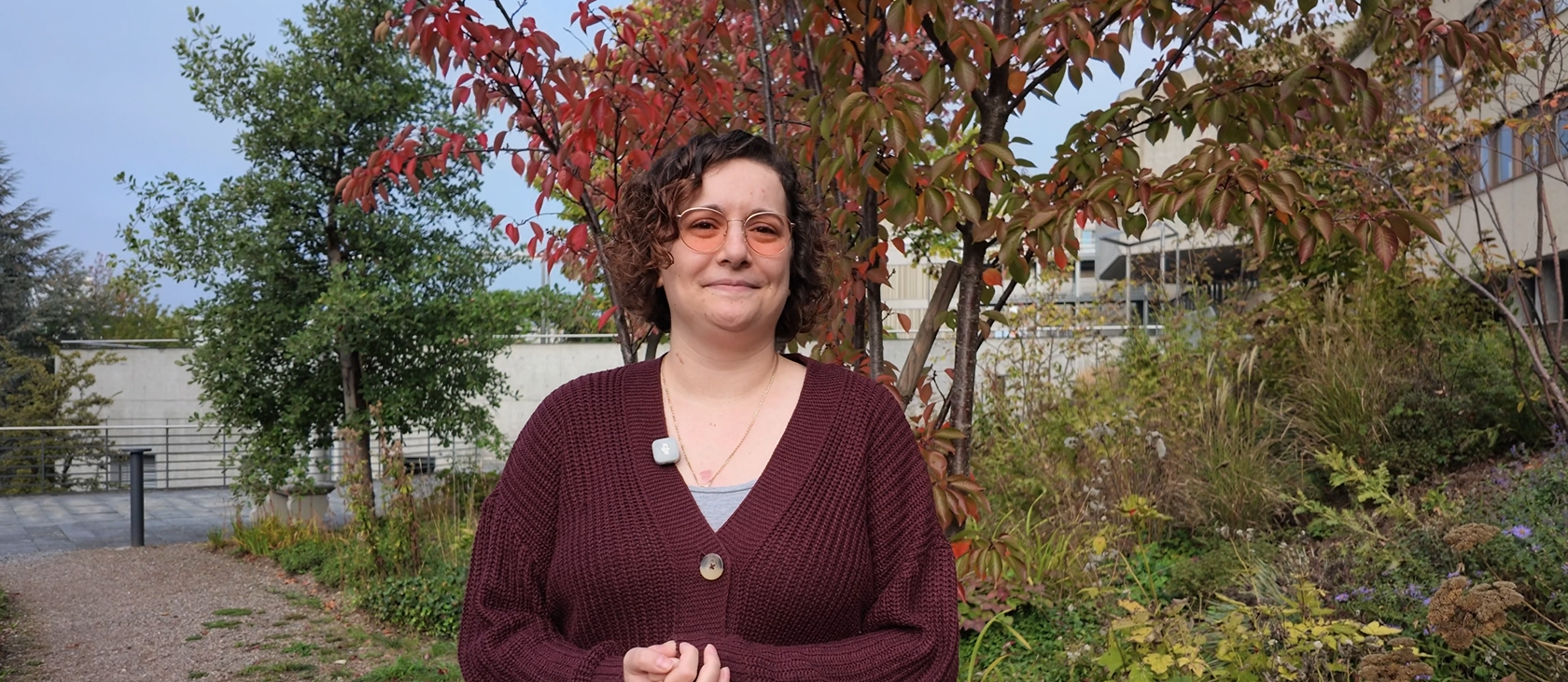
At age 22, Cheyenne suffered a stroke. To mark World Stroke Day, she shares a personal account of this life-changing experience in a video and discusses the symptoms, the cause of her condition, and her treatment journey at the University Hospital of Zurich. Her story illustrates how important collaboration among different medical disciplines can be when dealing with complex medical conditions.
Strokes are often associated with older age. In fact, however, they can affect people of any age. In Switzerland alone, thousands of people suffer a stroke every year. There can be a variety of underlying causes, ranging from classic risk factors to rare underlying medical conditions. In Cheyenne’s case, a genetic heart condition led to her stroke. Her story illustrates how important it is to understand the individual causes of a disease and to take a holistic approach to patient care.
Typical warning signs of a stroke include sudden speech difficulties, paralysis, vision problems, or dizziness. In such situations, every minute counts, as a rapid diagnosis and treatment can be critical. At the Zurich Stroke Center, specialized teams support patients from the acute phase through rehabilitation.
A Focus on Interdisciplinarity
Especially when dealing with complex medical conditions, expertise from various specialties is often required. For Cheyenne, this close collaboration continues to play an important role to this day. At the University Hospital of Zurich, she sees how different specialists contribute their knowledge and work together to assess her individual situation.
This interdisciplinary collaboration is a central component of the Zurich Stroke Center. It enables us to provide comprehensive care to patients and to better understand even complex medical conditions. Cheyenne’s story is a prime example of how valuable this collaboration can be for determining the cause of a condition, providing treatment, and offering long-term support.