Trichophyton indotineae: A New Cutaneous Fungus Resistant to Terbinafine

Trichophyton mentagrophytes ITS genotype VIII

Trichophyton indotineae is a skin fungus (dermatophyte) that was not described as a distinct species until 2020. It often causes extensive, intensely itchy, and persistent fungal infections of the skin (tinea corporis, cruris, and faciei).

These infections often respond poorly to standard antifungal medications. The pathogen was originally found primarily in South Asia. Today, it has been detected worldwide, including in Switzerland.
What makes this mushroom special?

Many strains are resistant to terbinafine. Terbinafine is otherwise the standard treatment for fungal skin infections. This resistance is caused by changes in the genome (mutations) that render terbinafine ineffective. Even with proper treatment, the fungus is very persistent. Patients often need to be treated with tablets for several weeks. In addition, the infection returns in some patients (recurrence) and must be treated again.

How is a fungal skin infection transmitted?

The fungus is transmitted from person to person through direct skin-to-skin contact or via shared items such as towels, clothing, or bedding. Infections within the household are common. In Europe, many cases are linked to travel to or contact with South Asia or the Middle East. However, it is possible to become infected in Switzerland. The infection can affect people of all ages and both genders.

Trichophyton indotineae: Recognizing the Symptoms

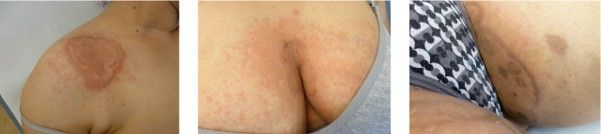
  • Large, intensely itchy, reddened, and scaly patches of skin, often with a ring-shaped border or several rings nested within one another.
  • Infection often occurs on the torso, arms, legs, groin, and buttocks, and sometimes on the face as well.
  • The lesions are often extensive and may be minimally inflammatory or markedly inflammatory.
  • Creams containing cortisone can alter the appearance of the skin and worsen the infection. As a result, the fungal infection can easily be mistaken for eczema.

Signs of this pathogen: The rash is widespread, recurs quickly after treatment, or does not clear up with terbinafine.

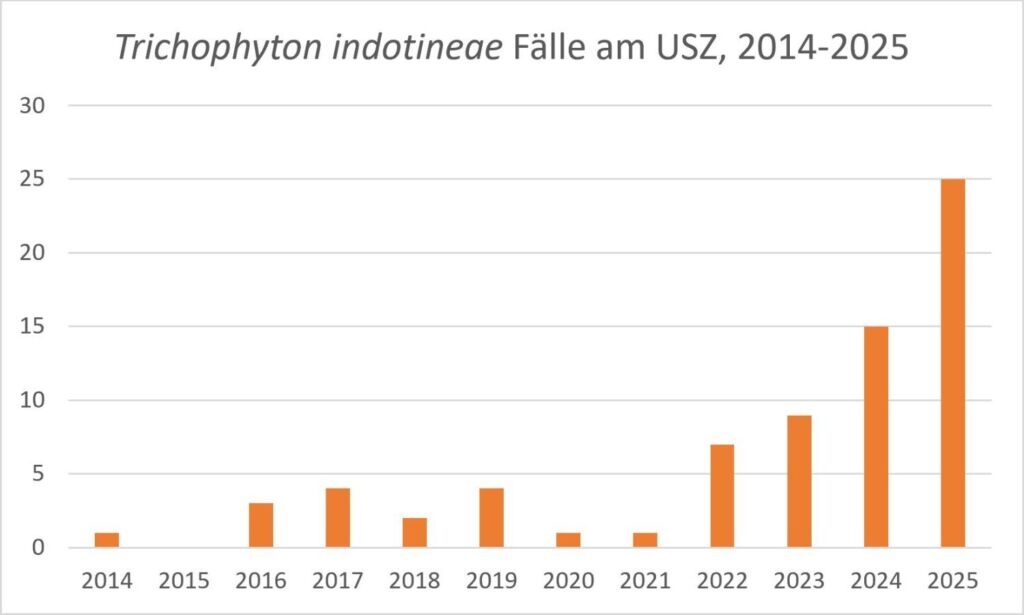
Erster dokumentierter Fall in der Schweiz bei einer indischen Patientin mit multiplen Infektionsstellen im Jahr 2014.

The first documented case in Switzerland involved a female patient with multiple sites of infection in 2014.

Diagnosis of Trichophyton indotineae

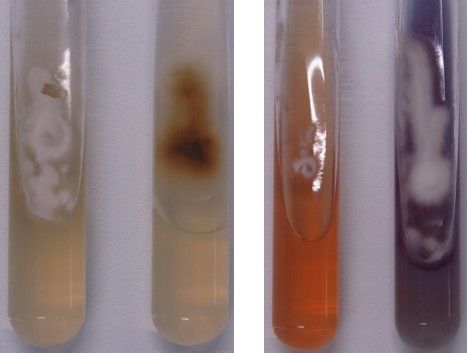
The doctor collects skin flakes. These are examined using microscopy and culture at the accredited laboratory of the Dermatology Clinic at the USZ. The exact type cannot be reliably determined by culture alone. Molecular methods (PCR or sequencing) are required for this. If the condition is suspected, the mutations that cause resistance can also be identified. The results help in selecting a targeted treatment.

Gewachsene Kultur Trichophyton Indotineae

Figure: Culture of Trichophyton indotineae grown on a nutrient medium.

Treatment

  • This fungal skin infection is primarily treated with pills. Creams alone are usually not enough. They can be used to supplement the pills. The doctor will determine the active ingredient, dosage, and duration of treatment.
  • Terbinafine remains effective against strains that are not resistant. For strains with mutations (resistance to terbinafine), itraconazole is the most reliable option.
  • Treatment then takes significantly longer than for other skin fungal infections. In our analysis, the median duration of treatment with oral medication was 11.5 weeks for strains with a mutation and 3.5 weeks for strains without a mutation.
  • In about one-third of patients, the infection recurred. Repeat treatment was generally successful.
  • Do not stop treatment on your own, even if your skin starts to look better early on.
  • During treatment, wash towels, clothes, and bedding regularly in hot water.

Prevention

  • Do not share towels, clothes, razors, or other items with other people.
  • If you notice any unusual or persistent skin conditions, seek medical advice early on.
  • Do not apply cortisone creams to unexplained rashes without first consulting a doctor.
  • If there is a fungal infection in the household, ask your roommates to watch for any changes in their skin.
  • Take antifungal medications only as prescribed by a doctor and for the prescribed duration. Unnecessary use or use for too short a period promotes resistance.

Frequently asked questions

A fungal infection of the skin that causes extensive, intensely itchy skin infections and is often resistant to terbinafine.

Yes. The fungus is spread through skin-to-skin contact and via shared items.

Many strains carry mutations that render the drug ineffective. A laboratory test can determine this.

Often several weeks to months; significantly longer for resistant strains. The duration depends on the findings and the course of the disease.

Yes, in about one-third of the patients treated in our analysis. Repeat treatment was usually successful.

In cases of a widespread, itchy rash that does not heal, recurs after treatment, or worsens with cortisone, especially after traveling to South Asia.

  • Lechner AH, Arnold DD, Bosshard PP. Emergence of Trichophyton indotineae in Switzerland (2014–2025): Clinical analysis and antifungal susceptibility. J Dtsch Dermatol Ges. 2026. https://onlinelibrary.wiley.com/doi/10.1111/ddg.70394
  • USZ Dermatology Clinic: Fungal Skin Infections—Symptoms, Treatment, and Prevention. https://www.usz.ch/krankheit/hautpilz/
  • Gupta AK et al. Consensus Recommendations for Trichophyton indotineae: A Modified Delphi Study. J Eur Acad Dermatol Venereol. 2026.
  • Caplan AS et al. Diagnosis and Management of Tinea Infections. Am Fam Physician. 2025.
  • Internal case figures from the Dermatology Clinic at the USZ (as of [Nov. 18, 2026])

Responsible Department