Sustainability in procurement, supply chain and logistics
In logistics, we ensure greater sustainability by replacing disposable medical products with reusable products, reducing waste and disposing of it in an environmentally friendly manner.
Environmentally friendly disposal
The USZ would like to reduce the amount of waste generated as far as possible. As part of the “Exemplary Energy and Climate Initiative”, the intention was formulated, together with the other Swiss university hospitals, to reduce the absolute amount of waste by 2030 – despite increasing case numbers. In particular, the focus is on waste that is treated in waste incineration plants. The USZ still produces over 2,000 tons of such waste every year.
Plastics, metals and batteries are collected separately and recycled. From the nonwovens used to transport and store sterilized instruments alone, around 10 tonnes of plastic can be returned to the material cycle every year.
By optimizing the disposal routes, the number of kilometers driven by the disposal vehicles has been reduced by more than half in recent years.
Reduce packaging waste
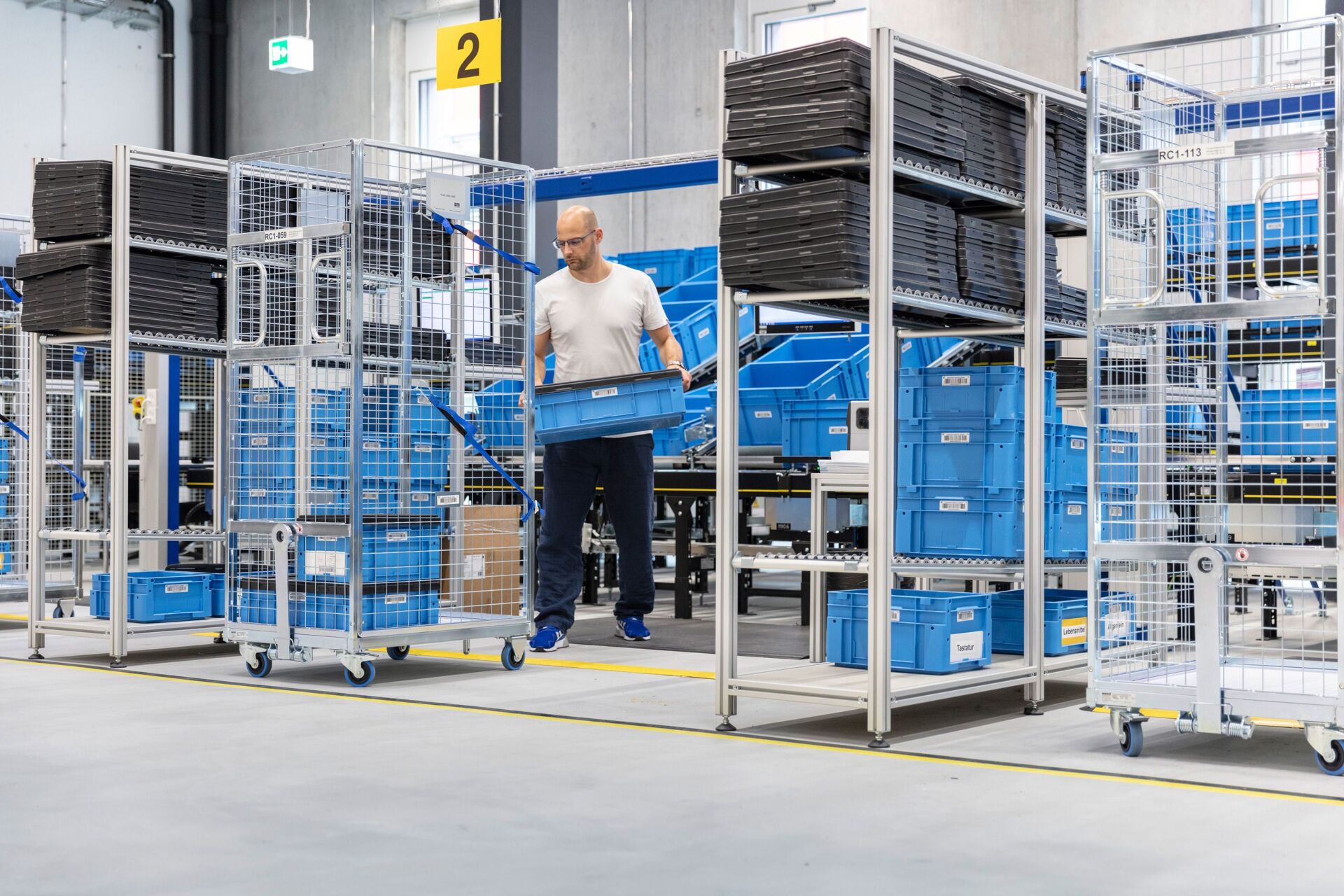
Since 2018, USZ Logistics has been working with standardized reusable containers when transporting materials in order to minimize packaging waste. The USZ is also looking for solutions together with its suppliers. For example, office supplies are now picked directly from the supplier in USZ reusable containers and delivered to the USZ.
Procurement and supply chain
A large part of the subsequent environmental impact of the products used in the USZ can already be influenced in the procurement process, e.g. in terms of climate impact or recyclability. Reusable products can reduce both costs and environmental impact and are therefore preferred wherever possible. Alternatively, attention is paid to the recyclability or biodegradability of disposable materials. The costs and environmental impact of the entire life cycle are therefore taken into account when making procurement decisions.
To reduce the complexity of such decisions, sustainability-related procurement guidelines already exist for some product areas. These are to be extended to other product groups in the future. Optimizing the ordering processes also reduces over-ordering and therefore unused or expired products.
The responsibility of the USZ for compliance with minimum standards in the area of social and environmental responsibility extends along the entire supply chain. The aim is to ensure that suppliers pay fair wages, offer safe working conditions and do not use child or forced labor. These requirements are already being demanded today via contractual conditions and verified via certifications or audits. In future, the supplier evaluation is to be expanded to include social and ecological aspects in order to bring even more transparency to the sustainability performance of our suppliers.