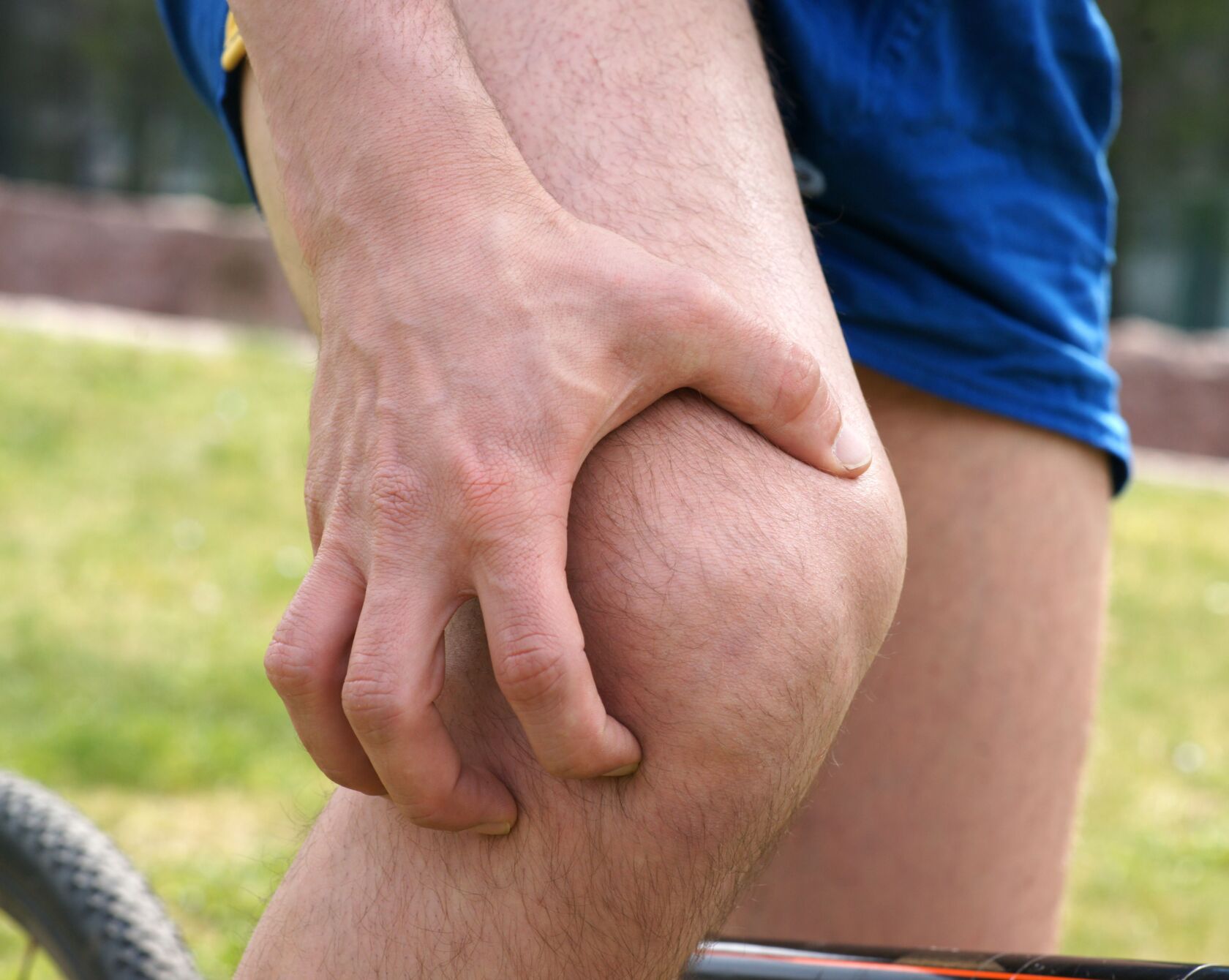
"Rehabilitation after a cruciate ligament rupture is a team sport," says USZ trauma surgeon and sports medicine specialist Thomas Rauer. At the USZ, specialized physiotherapists and, on request, a gait analysis in the "4D Motion Lab" support the process.
Most joint injuries occur in the knee – often caused by sport. The anterior cruciate ligament tears particularly often: 85 out of 100,000 patients are admitted to hospital with this injury. “Around half of all cruciate ligament ruptures could be avoided,” says Thomas Rauer, senior physician at the Department of Traumatology at the University Hospital Zurich. Targeted strength and coordination units for the knee joint muscles would reduce the risk of injury to the anterior cruciate ligament by up to 50 percent. The physiotherapy occupational therapy department at the USZ presents useful exercises on its video portal.
Whether surgery is necessary for a torn cruciate ligament depends entirely on the patient, says Rauer. More precisely: on the sporting ambitions, professional requirements and possible accompanying injuries to the knee. “Anyone who can adapt their lifestyle will be able to build up sufficient stability with conservative therapy via the muscles.” Surgery can also be performed at a later date. However, anyone who depends on a stable joint – such as roofers, road builders or stop-and-go athletes – should have surgery as soon as possible, according to the knee specialist. “Otherwise, twisting trauma to the knee joint can lead to other concomitant injuries, such as to the menisci or cartilage.”
Minimally invasive surgery
If surgery is indicated, the ligament is reconstructed with the help of grafts. Whenever possible, the patient’s own tendons are used, but in exceptional cases donor tendons can also be transplanted. The minimally invasive surgical technique of arthroscopy has proven its worth. This can be specially adapted to the patient’s anatomy and requirements. This allows you to individually determine which tendon is used. These are often hamstring, patellar and quadriceps tendons. “Top athletes prefer tendons that are still attached to the bone block so that rehabilitation is faster,” says Rauer. The USZ specialist with a focus on trauma surgery and sports medicine has a high level of expertise in the treatment of sports injuries: he used to be a competitive ice dancer himself and now heads the USZ team that provides medical support for the Weltklasse Zürich athletics meeting.
Whether with or without surgery, it takes at least 9 to 12 months for a cruciate ligament injury to heal. Physiotherapy is essential. “Rehabilitation after a cruciate ligament rupture is a team sport,” says Rauer. The Department of Traumatology at the USZ works closely with the highly specialized sports physiotherapists of the “Trauma & Sport” specialist group. At the USZ, it is also possible to regularly check the progress of rehabilitation in the “4D Motion Lab“. In this gait laboratory, the holistic movement sequence is analyzed. This makes it possible to objectively detect misalignments thanks to video analyses, optical 3D images along the entire spine and a treadmill with foot pressure measurement.
Sports traumatology and knee injuries
The USZ also offers a special consultation on the subject of “Sports traumatology and knee injuries”. Interested patients can be registered by referring physicians. The consultation takes place every Friday afternoon at the University Hospital Zurich and every Monday at USZ Airport.