Research Group Jana Pachlopnik Schmid

Keywords
Genetic error of immunity, pediatric immunology, antiviral immune defense
Summary
Our lab investigates rare, unexplained primary immunodeficiencies through in-depth cellular, molecular, and genomic analyses to uncover disease mechanisms, identify novel disorders, and enable precise, individualized treatments.
Mission statement
We aspire to exploit inflammatory signaling to discover mechanistically informed novel treatment strategies that improve the treatments and outcomes for patients with acute myeloid leukemia and sarcoma.
Overview
Our lab focuses on inborn errors of the immune system and their impact on health. Treatment of such patients is highly dependent on the specific immunodeficiency they exhibit, and the underlying cause thereof. Therefore, elucidating the cause of hyperinflammation like in HLH is crucial to both our understanding of the immune system and medical treatment. Our research is particularly focused on patients that evade routine diagnosis or diseases which we lack comprehensive understanding for.
We analyse and characterise these diseases with thorough functional and phenotypical examinations of leukocytes and fibroblasts from patients with extreme immunological phenotypes. This is supplemented with genomic, transcriptomic, and high-throughput microscopic techniques. Analysis of these datasets and functional validation in animal models enables us to identify novel diseases, characterize pathomechanisms, and apply targeted treatments.
Publications
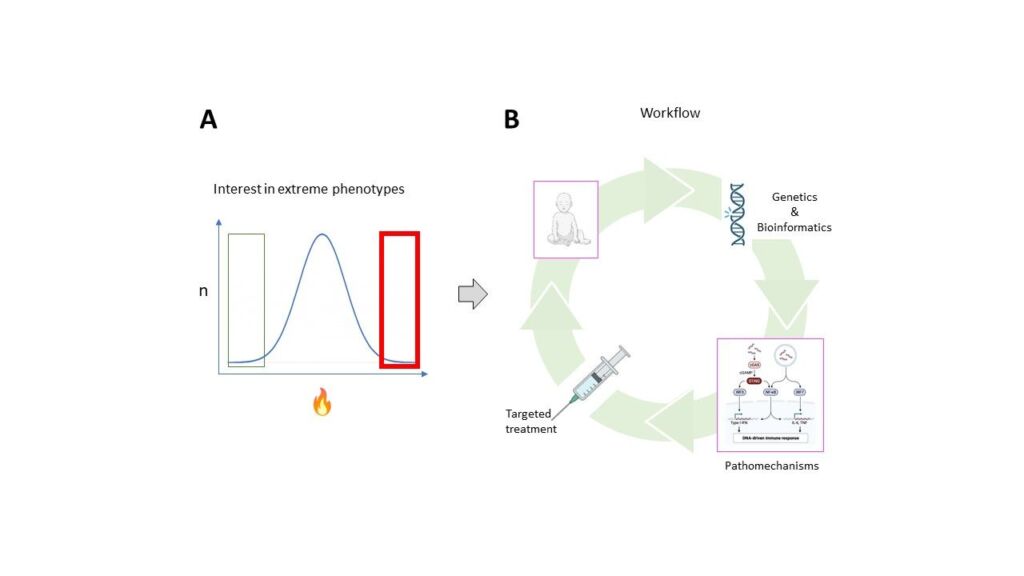
To understand disease mechanisms, especially extreme phenotypes of immune dysregulation and inflammation triggered by viral infections (A), we use a combined approach (B) integrating omics analyses (genomics and transcriptomics) to identify novel mutations, functional immunological assays and high-throughput microscopy to analyze immune responses, and disease models (patient-derived cells and animal models) to study interconnected pathways; these insights ultimately enable us to identify and validate drug targets for improved treatments. Partially created with Biorender.