Various treatment options
There are various treatment options for AVM of the brain, which can be used alone or in combination:
- Endovascular embolization: In this procedure, the vascular malformation is reached and treated via the arteries and veins after a groin puncture. During the procedure, we insert plastic tubes (catheters) through the femoral artery into the vessels of the AVM and inject an agent that closes the vessels of the malformation. Endovascular embolization is less invasive than traditional surgery. It can either be used alone or as a preparation before other surgical procedures to reduce the size of the AVM or the likelihood of bleeding and make the procedure safer.
- Surgical removal (resection): The AVM can be surgically removed by a neurosurgical procedure, with or without preoperative embolization.
- Stereotactic radiosurgery (SRS): In this treatment, radiation is directed precisely at the AVM. The radiation damages the blood vessels of the AVM and leads to scarring and thus to the destruction of the AVM.
- Conservative treatment: Conservative treatment (without surgery) is also considered as an alternative to invasive methods. This is chosen in certain cases after thorough consideration of the natural risks of the disease compared to the risks/successes of invasive treatment.
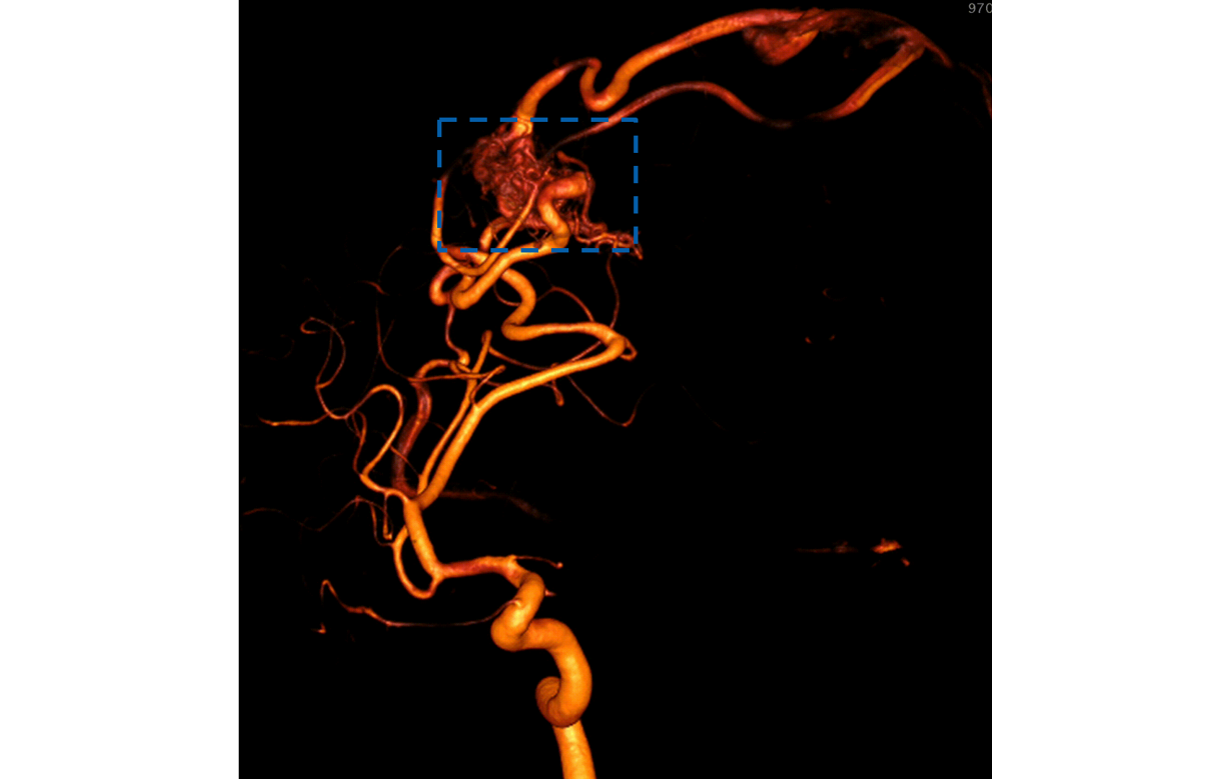
Vascular malformation (arteriovenous malformation) in the blood vessels of the head. The AVM is visible as a vascular tangle.
Why the USZ?
Many years of expertise
Our clinic is an internationally renowned institution in the field of diagnostics and minimally invasive, image-guided treatment. We treat diseases of the brain, the spinal cord, the peripheral nervous system and its associated organs (eyes, hearing and balance organs, etc.) and the surrounding structures on the head, neck and spine.
The latest treatment methods
At the Department of Neuroradiology, we use the most modern interventional methods, the most advanced materials and instruments and the latest imaging techniques. This enables us to offer every patient the best possible treatment.
Partner network
In weekly interdisciplinary conferences with experts from neurosurgery, neurology and neuroradiology, we develop an individual treatment concept for each case, which we then discuss with our patients. To ensure optimal therapeutic success, our international team of experienced neuroradiological interventionists works closely with experts from other highly specialized clinics as well as with outstanding nursing and rehabilitation specialists before, during and after the procedure.
Procedure
The first step is to make a diagnosis, decide on minimally invasive treatment and discuss it with you during the consultation. This is followed by a prompt treatment appointment, taking into account the urgency of the treatment and your specific wishes.
The hospital stay for the treatment lasts four to six days. You will arrive the morning before the procedure and we will assess the current findings and make the final preparations. We will be happy to answer any final questions. On the day of the procedure, you will be taken from the ward to one of our two operating theaters, where the surgical team will welcome you and perform the procedure.
Aftercare
Immediately after the procedure, you will be examined to make sure that everything went well. You will then be transferred to a specialized monitoring ward, where you will be cared for and monitored until the next day. On the following day, a magnetic resonance examination is performed to assess the results of the operation and rule out complications. Normally you will then return to the normal ward and after a further one or two days you will be able to go home after a specialist consultation. At this last meeting, appointments for check-ups and consultations are also made.
Hospital stay: 4 – 6 days