Cause and symptoms
A ligament injury to the wrist can occur after a fall on the outstretched hand. Not infrequently, such injuries can also be observed as concomitant injuries in wrist fractures, such as a fracture of the radius close to the joint (so-called radius fracture). Magnetic resonance imaging plays a decisive role in the diagnosis of ligament injuries. In some cases, however, these injuries can only be diagnosed by means of arthroscopy of the wrist.
Procedure
Not all injuries need to be treated surgically. Partial injuries in particular can be treated with several weeks of immobilization and hand therapy. During surgical treatment, the affected carpal bones are brought back into the correct position in order to heal the ligament. Until the ligament itself is stable enough to hold the bones in their correct position, the bones must be temporarily fixed in the correct position with wires. Once the ligament has healed, this fixation can be removed again and mobility can be restored.
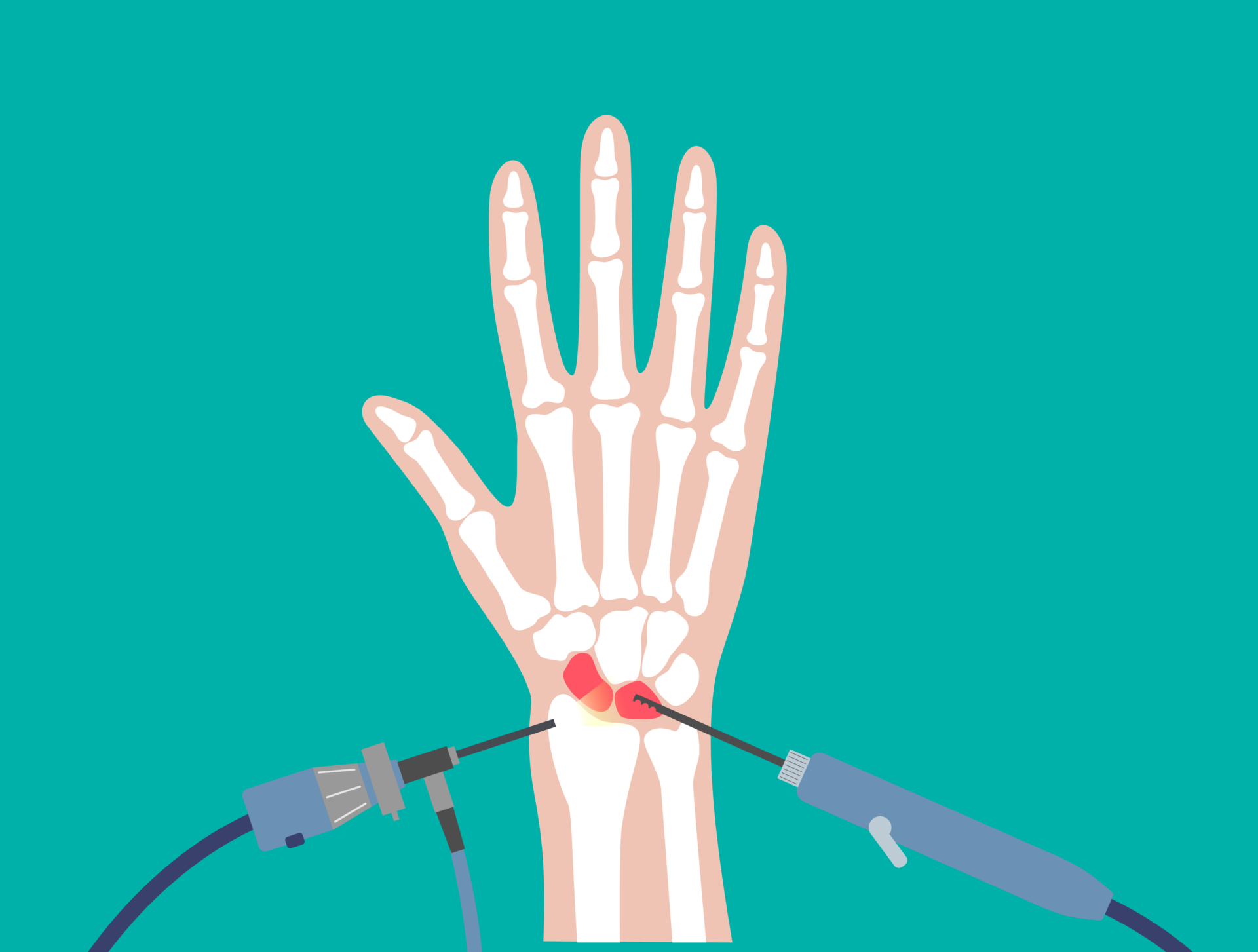
If ligament damage is treated in the first few months, it can either be sutured directly or refixed to the bone and additionally reinforced by suturing to the joint capsule. Nowadays, these procedures can be performed gently and safely using minimally invasive techniques such as arthroscopy.
After a longer period of time, however, the ligaments are already partially degenerated and the chances of success of such an operation decrease. If a ligament is only treated several months or years after it has been damaged, it usually needs to be reconstructed using other ligaments or even tendons.
Depending on the ligament affected, partial fusion of the joint may also be considered in this situation in order to ensure the correct position of the individual bones and prevent incorrect loading. As a general rule, ligament sutures and reconstructions only make sense if there is no significant cartilage damage. In such cases, the arthrosis that has already developed leads to treatment.
Aftercare
After each ligament suture or reconstruction, the wrist must be immobilized in a splint for six to eight weeks to allow the ligaments to heal. During this time, the fingers should move freely without strain. As long as the bones are still temporarily secured with wires, it is not yet possible to achieve full mobility and load cannot be built up.
Wires are removed after eight to ten weeks. This requires a second operation, which can usually be performed under local anesthesia and on an outpatient basis. This is followed by wrist mobilization and strength building. This is done under the guidance of hand therapy and occasionally with the help of supportive splints.
Even with consistent follow-up treatment with hand therapy, there is often a slight restriction of wrist mobility.