Examples of this include the commonly known tennis elbow and heel spurs, as well as the resulting inflammatory condition of the sole of the foot (plantar fasciitis). These conditions can result from chronic overuse (tennis elbow), being overweight, standing for long periods, or wearing ill-fitting shoes (heel spurs). Chronic plantar fasciitis is often caused by a foot deformity (abnormal pronation of the foot). The resulting stretching of the plantar fascia leads to microtrauma, especially in the area where the fascia attaches to the heel bone (calcaneus), which ultimately contributes to the development of a heel spur.
Our primary goal is to provide you with the best possible treatment and achieve the best possible outcome. At our clinic, we regularly treat patients with benign conditions and have gained a great deal of experience in this area. We work closely and in a spirit of trust with specialists from other disciplines, such as orthopedic surgeons, rheumatologists, and ophthalmologists. In addition, we regularly exchange information with leading centers and renowned radiation oncologists in this field.
Effects of Radiation Therapy
Clinical studies have confirmed that even very low-dose radiation therapy can be an effective treatment for benign conditions (Niewald et al). Heel spurs or chronic Plantar fasciitis is treated with 3–6 therapy sessions; the radiation dose is extremely low, at 0.5–1 Gray (Gy) per session. This results in a treatment duration of approximately two weeks; if necessary, the treatment can be repeated after six weeks to achieve better results.
Studies have shown improvements in pain symptoms in approximately 85% of patients immediately after treatment and in up to 90% after six weeks (Ott et al). These results are consistent with our long-standing positive clinical experience and are all the more remarkable given that many patients come to us at a late stage and have undergone numerous previous treatments that were unsuccessful.
Because of the low dose, these radiation treatments are generally very well tolerated, and side effects are rarely expected. Below, we would like to provide you with an overview of benign conditions that we regularly treat in our daily practice and that are good candidates for radiation therapy:
Risks of Radiation Therapy
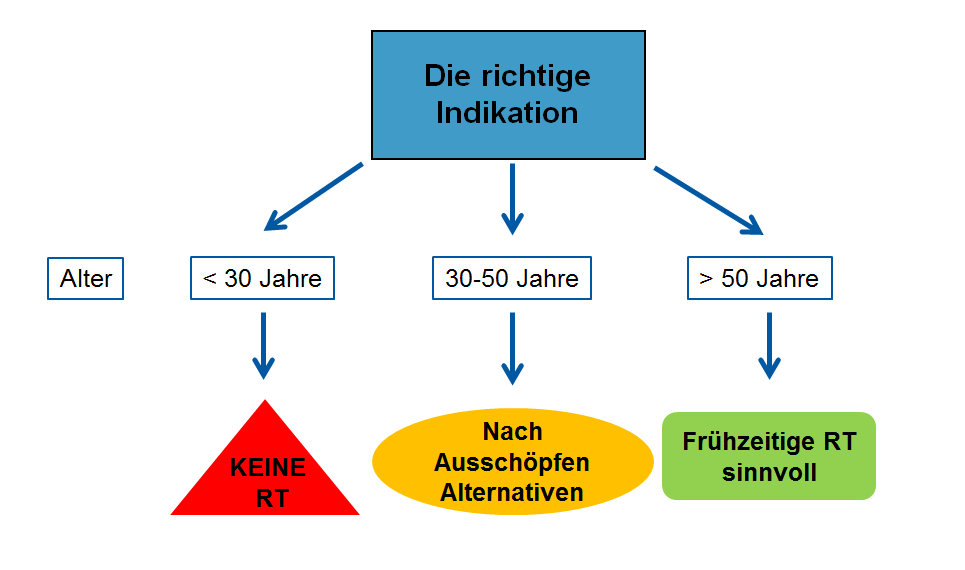
After radiation therapy, there is a slightly increased risk of developing a radiation-induced ulcer. For this reason, our department generally treats patients with benign conditions with radiation therapy starting at age > 50. For patients between the ages of 30 and 50, conservative measures should be fully exhausted first (see chart).