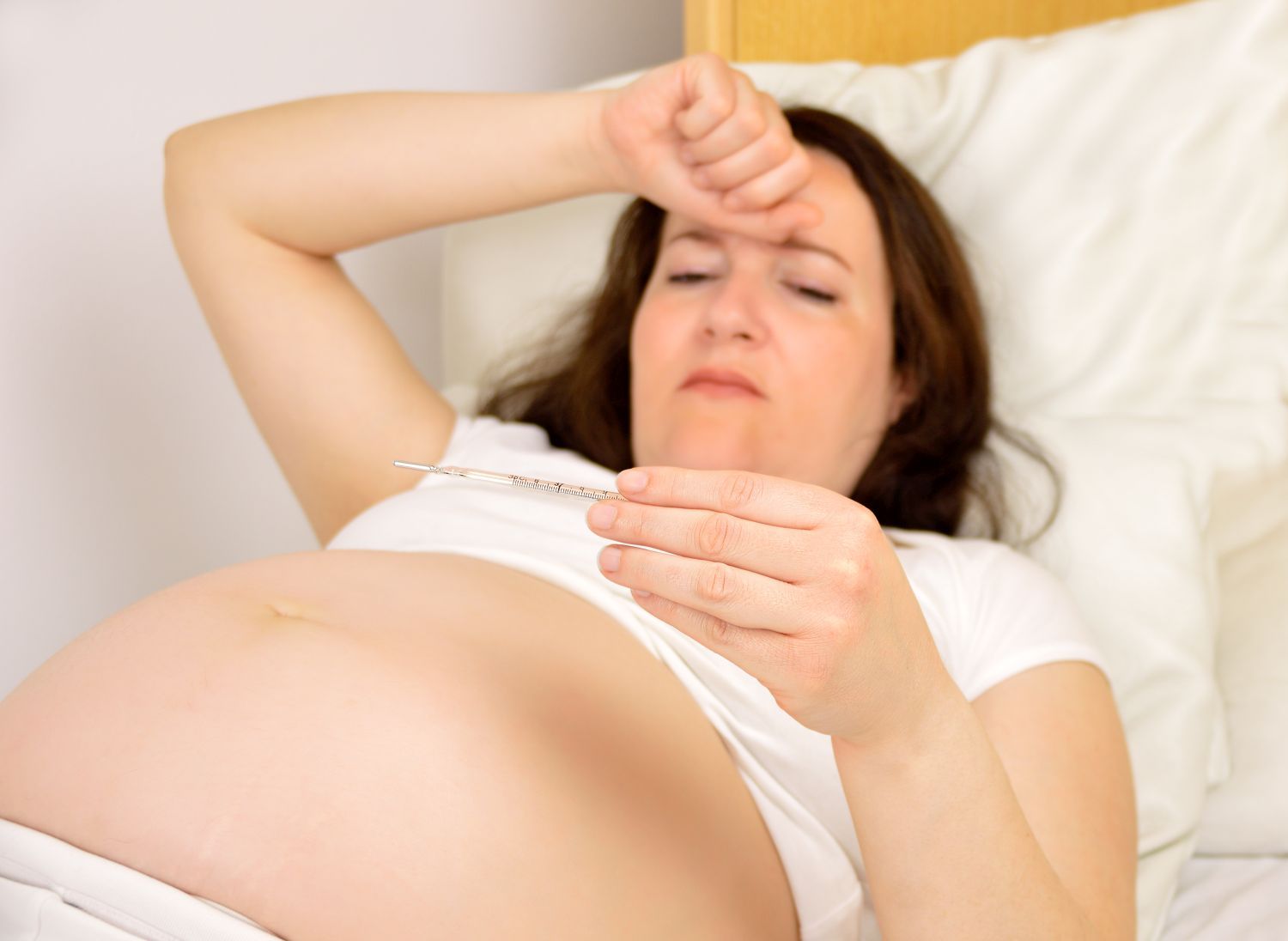
Cytomegaly is an infection caused by certain herpes viruses. Although cytomegalovirus infection is widespread worldwide, many infected people are unaware that they belong to the large group of people affected: In most cases, cytomegaly does not show any symptoms of illness. However, infection with the virus can also have serious consequences - especially during pregnancy. Cytomegalovirus infections in early pregnancy are a common cause of congenital malformations and impairments in babies. It is therefore important for pregnant women and women who wish to have children to find out about cytomegaly in good time.
What is a CMV infection?
A CMV infection is caused by the cytomegalovirus (CMV). The virus belongs to the herpesvirus family and is also known as human herpesvirus 5 (HHV-5). Like all herpes viruses, CMV remains in the body for life after infection.
The infection is spread worldwide. In Europe, it is estimated that 50 percent or more of adults become infected with the virus during their lifetime. In Switzerland, too, several million people carry CMV – usually without knowing it.
In most cases, a CMV infection goes unnoticed. Experts speak of an asymptomatic infection: the virus is present in the body but does not cause any symptoms. After the initial infection, CMV goes into a dormant phase (latency). It can become active again later, especially if the immune system is weakened.
Serious health problems occur mainly in certain risk groups:
People with a weakened immune system, such as cancer, HIV or congenital immunodeficiencies
Patients after organ transplants
Pregnant women, especially with infections at the beginning and in the first months of pregnancy
CMV infection during pregnancy
For healthy pregnant women, a CMV infection is usually mild or without noticeable symptoms. The greater risk is to the unborn child.
If a woman is infected with CMV for the first time during pregnancy (primary infection), the virus can be transmitted to the unborn child via the placenta.
In Switzerland, this is estimated to affect around 0.5 percent of all births, which corresponds to around 400 newborns per year. Most of these children show no abnormalities at birth. However, around one in ten infected newborns develops symptoms or later health impairments, such as hearing damage or neurological developmental disorders.
The risk for the child is particularly high if the first infection occurs in the first trimester of pregnancy. If the mother has previously had a CMV infection, the risk is significantly lower, but cannot be completely ruled out, as there is no permanent immunity.
Cytomegalovirus transmission: How do you get infected with CMV?
Many pregnant women and new mothers are surprised when they hear about cytomegaly for the first time. How can a pregnant woman who feels perfectly healthy become infected with CMV?
The virus is usually passed from person to person, through direct contact with body fluids or via the respiratory tract. This includes excretions from diaper changes as well as breast milk, blood, saliva, tear fluid, semen or vaginal secretions. All these excreted fluids can contain cytomegaloviruses in infected people.
Parents are more likely to become infected through close contact with their young children. This is because boys and girls up to four years of age are infected with CMV at a higher-than-average rate through contact with other young children. They are then often infectious for a longer period of time – i.e. they can pass on the virus through their body fluids (saliva, tears, urine). Pregnant mothers who already have a small child are therefore at an increased risk of CMV.
A study has shown that in Switzerland the risk of CMV infection is ten times higher for mothers of children who are cared for in crèches; in contrast, the risk for nursery nurses is only four times higher. One possible explanation for this difference is that nursery nurses probably pay more attention to hygiene regulations than parents at home.
CMV infections that occur during pregnancy can be particularly problematic. There is a risk that the infected mother will transmit the cytomegalovirus to her unborn baby via the placenta. In medicine, this type of transmission is called “transmission”.
CMV infection: how high is the risk during pregnancy?
If the first infection of a pregnant woman occurs around the time of fertilization, the risk of transmission to the unborn child is around 20 percent. If transmission occurs after fertilization but within the first three months of pregnancy, the risk of transmission increases to around 30 percent. In the last trimester of pregnancy, the probability of cytomegalovirus being transmitted from the mother to the unborn child is even higher (although this is usually irrelevant).
However, even if the virus has been transmitted to the unborn child, this does not necessarily mean that health problems will occur: The risk of this is around 30% after transmission at the time of fertilization and 20% during the first three months of pregnancy. Later, after around the 23rd week of pregnancy, the risk of serious damage following transmission is reduced even further because the development of the unborn child’s organs is then largely complete. It can therefore be summarized that the later in pregnancy the maternal infection occurs, the more frequently it is transmitted, but at the same time the less likely it is to have health consequences.
If a pregnant woman was already infected with CMV months before her pregnancy and therefore does not have a primary infection, her baby is usually not at risk. Unfortunately, “mostly” has to be written as – strictly speaking – there is no real immunity for CMV (see below). The risk of adverse health effects after a cytomegalovirus infection is also low for the pregnant women themselves. More than 70 percent of women who become infected with CMV during pregnancy are unaware of this.
CMV symptoms: How does cytomegaly manifest itself?
A CMV infection can have very different effects on those affected. Whether baby, child or adult: in most cases there are no symptoms at all. However, the most serious health consequences can also occur. Sometimes the symptoms of babies who become infected in the womb show up before or at birth. However, they can also appear weeks or months later. Or even later in life.
Unborn babies: Serious health problems caused by an infection in the womb include hearing impairment, visual impairment or even blindness and an enlarged liver. Physical and mental disabilities can also be the result of a CMV infection. Such damage is most likely to occur if the infection takes place in the first trimester of pregnancy; the later the CMV infection occurs, the less likely it is that the unborn child’s organs will be damaged.
Premature babies: They are particularly at risk. If their sensitive and immature organism is attacked by cytomegalovirus, the infection can even be fatal.
Babies: If babies become infected after birth, the health consequences are usually not serious; an infection may even go unnoticed.
Pregnant women and new mothers: If they notice their CMV infection at all, the symptoms often resemble the signs of flu. They manifest themselves, for example, as fever, fatigue or coughing.
Healthy children and adults: In most cases, they do not show any symptoms after being infected with CMV. Some people affected may show signs of illness that resemble a flu-like infection with fever. Only rarely (and then mainly in adults) does pneumonia or liver inflammation occur. Three to twelve weeks usually pass between infection and the appearance of the first signs of illness; this is the so-called incubation period.
People with immunodeficiency: In people with a weakened immune system, cytomegaloviruses can lead to inflammation and damage to various organs.
CMV late effects: What long-term consequences are possible?
Even if the child is inconspicuous at birth after a congenital CMV infection, health consequences can still occur later.
The most important possible late effects of CMV include
Hearing loss that develops months or years after birth
Developmental delays or learning difficulties
Motor abnormalities
Visual disturbances
Epileptic seizures in severe cases
Hearing loss after intrauterine CMV infection is the most common non-genetic cause of congenital hearing loss. Regular hearing checks are therefore important for affected children, even if they appear normal at birth.
Permanent late effects are rare in healthy adults. The situation is different in people with a weakened immune system (such as people who have to take immunosuppressive medication after transplants): Here, CMV can lead to lasting organ damage, for example to the lungs, liver, retina or intestines.
CMV diagnosis: How do you recognize cytomegaly?
A CMV infection can be detected by examining blood, urine or another body fluid in the laboratory. If there are certain antibodies in the blood that the body has produced to defend itself against the cytomegalovirus, this is indirect evidence of an infection. It is also possible to search for traces of protein or genetic material of the viruses in body fluids. If found, this is direct evidence of the CMV infection.
Initial infection, reactivation or re-infection: significance for risk assessment
Doctors usually want to find out whether the infection is the first infection (“primary infection”) or whether there was a previous infection that is now either becoming active again (“reactivation”; this is comparable to recurrent herpes) or a second infection is occurring with a different CMV strain (“re-infection”; this is possible because there are different CMV strains and therefore there is no real immunity as there is with rubella or measles, for example). This distinction is important in order to better assess certain risks. For example, the probability of a baby being infected in the womb is lower with a second CMV infection than with a first infection. In general, it must unfortunately be said that the data situation on reactivation and re-infection is less clear and the actual risk can be less clearly defined. Diagnostics and treatment during pregnancy are therefore currently focused primarily on the more relevant initial infections.
Prenatal diagnosis of CMV: the role of ultrasound examinations
In some cases, a baby’s CMV infection can be detected before birth by means of an ultrasound scan. For example, if the unborn child is unusually small or other abnormalities can be seen on the screen, such as on the brain. However, this does not always have to be due to a CMV infection; there are also various other possible causes.
Prenatal CMV detection in amniotic fluid
In pregnant women, an examination of the amniotic fluid can also be informative. If cytomegalovirus can be detected in the amniotic fluid (amniotic fluid is fetal urine), it is clear that the unborn child has had contact with CMV (the transmission described above). However, it is important to understand that transmission does not necessarily mean harm—as described above, it is possible, and this is the case in the majority of instances, that although the child has been exposed to CMV (transmission), no health complications will arise. However, if there is no CMV in the amniotic fluid, the pregnant woman can breathe a sigh of relief: her baby is definitely not infected, there has been no transmission of CMV to the child.
The following applies to the detection of cytomegaly: a combination of different examinations and findings can help experts to narrow down the time of maternal infection. This is particularly important with regard to advice during pregnancy and possible consequences for the unborn child. As such examinations are demanding due to the special properties of CMV, it may be necessary to consult a specialist.
Cytomegaly therapy: How is cytomegaly treated?
Once infected with CMV, the pathogens remain in the body for life, even if they are not directly detectable: It is not possible to permanently eliminate the cytomegalovirus. However, this does not mean that doctors have to stand idly by and watch a cytomegalovirus infection. In the case of a CMV infection during pregnancy, there is the option of administering antivirals: These are drugs that are designed to inhibit the growth of viruses. Newborn babies can also be treated with it in many cases. Hyperimmunoglobulins, which are proteins obtained from the blood of donors and were frequently used successfully in the past, are currently being used more cautiously, as the administration of antivirals seems to be the better approach at the moment.
These drugs have only been used in the necessary high doses for a few years and they can have side effects. This applies to both pregnant women and unborn babies, who react differently to the therapy. For this reason, advice for women and the treatment of cytomegaly should be in the experienced hands of doctors who specialize in CMV.
“At the USZ, we train doctors and external gynecologists intensively on the topic at training events. It is important for us to inform women who are pregnant for at least the second time about CMV, as second pregnancies or multiple births in general are more at risk.”
Preventing cytomegaly: How to protect yourself from a CMV infection
You don’t have to be ill to infect others – even people who are healthy can carry the cytomegalovirus and transmit it to others. Pregnant women in particular should be aware of this and be careful. This is particularly true for expectant mothers who already have a child up to four years old; at this age, boys and girls often become CMV carriers. Infants excrete the virus for much longer than immunocompetent adults.
Good news: If you follow a few simple hygiene recommendations as a pregnant woman, you can significantly reduce the risk of infection for your unborn child:
Wash your hands thoroughly: Wash your hands with soap and water after any contact with your child’s bodily fluids. This applies to feeding, blowing the nose, changing diapers, washing and wiping away tears.
Hygiene in the kitchen and bathroom: Use your own crockery and cutlery when eating. Do not share towels and washcloths with your child. Toothbrushes should never be shared with others. Eating children’s food should also be avoided.
Avoid kissing on the mouth: This is especially true in the first few months of pregnancy. Cytomegaloviruses contained in saliva could otherwise be easily transmitted. A crying child should not be kissed on the cheek when comforting.
Cleaning surfaces (as part of normal hygiene): Clean toilet seats, sinks and other surfaces where the child’s body fluids are present.
Not only expectant mothers should observe these hygiene rules, but also their partner. They can also become infected with CMV – and pass the virus on to the pregnant woman unnoticed, for example through kissing or unprotected sexual intercourse.
If a mother carries the cytomegalovirus and gives birth to a premature baby, there is an additional risk: she could infect her immature baby with breast milk while breastfeeding.
If you are pregnant or planning to have children, it is best to discuss the topic of cytomegaly with your gynecologist. Many women who are planning a pregnancy want a blood test to detect antibodies against CMV before they try to get pregnant: If antibodies are detectable, it is known in the case of later blood tests during pregnancy that no initial infection could have occurred during pregnancy (the antibodies were already present beforehand). And in the women in whom no antibodies were detected, a possible time of infection could thus be narrowed down with corresponding consequences for therapy and diagnostics. Hygiene measures as described above should be observed in all cases.
Is there a vaccination against CMV?
There is currently no approved vaccination against cytomegalovirus. Despite intensive research, no vaccine is yet available that reliably protects against CMV infection.
Several vaccine candidates are in clinical development. The aim is in particular to protect women of childbearing age from an initial infection and thus prevent congenital CMV infections. However, it is not yet clear when a vaccine will be available.
Until then, the most important protective measure is consistent hygiene rules, especially during pregnancy.
Frequently Asked Questions About CMV Infection
The risk of serious harm to the unborn child is particularly high if the mother becomes infected with CMV for the first time during the first trimester of pregnancy. Although the likelihood of transmission to the child increases in later stages of pregnancy, the risk of severe birth defects decreases. A primary infection during early pregnancy is the most critical factor.
Close contact, such as kissing on the mouth, should be avoided as much as possible during pregnancy, especially around young children. CMV is often transmitted through saliva. Kissing on the forehead or cheek is safer, as long as there is no contact with saliva.
Yes, in principle, intimacy is possible. Since CMV can also be transmitted through semen, a condom could be used if the infection status is unclear. This is another way to reduce the risk of infection. Logically, however, kissing would also have to be avoided. The best and most practical approach is probably for the partner to follow the same hygiene measures as the pregnant woman—if he doesn’t get infected himself, he can’t pass it on.
Attending daycare is not a reason to remove a child from care. However, it is important to maintain consistent hygiene in daily life, especially when handling saliva or urine. Washing your hands regularly can significantly reduce the risk of infection.
Yes, that makes sense. A consultation with a doctor can help you better assess your personal risk and discuss specific precautions. In certain cases, a blood test for CMV antibodies may also be considered.
Contact with young children can pose an increased risk of CMV infection, as they often shed the virus. However, the risk can be significantly reduced through careful hygiene, particularly by washing hands and avoiding contact with saliva. CMV is also not a reason for daycare workers, for example, to be unable to work—as long as hygiene measures are strictly followed, the risk is low.
It is not always possible to completely prevent a CMV infection. However, consistent hygiene measures can significantly reduce the risk, especially when in contact with young children. These include washing your hands thoroughly, avoiding contact with saliva, and not sharing utensils, dishes, or toothbrushes.
After recovering from a CMV infection, it is generally recommended to wait a few months before becoming pregnant. This gives the body time to mount an immune response and reduce the risk to the unborn child. The exact duration should be discussed individually with your gynecologist.