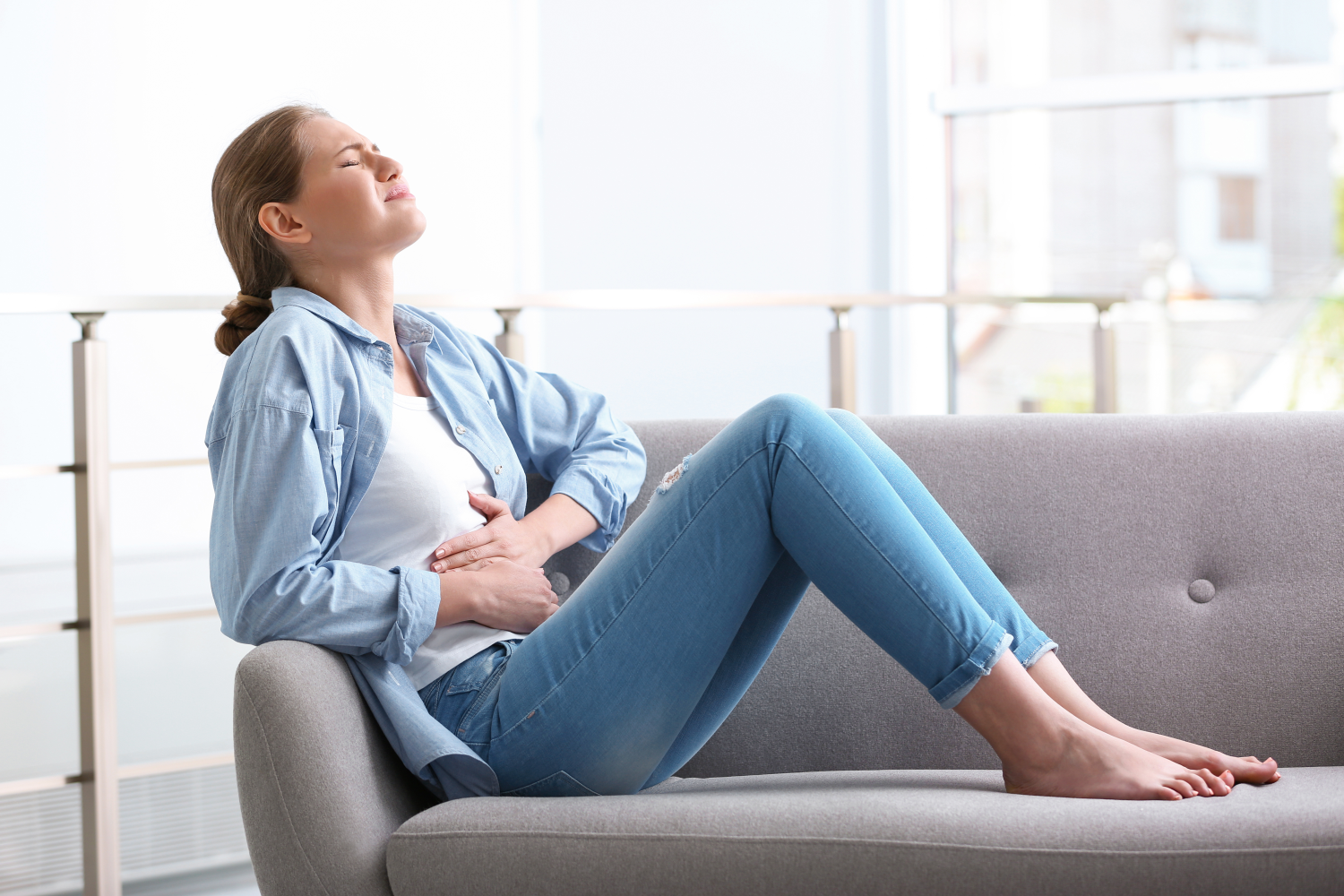
Both physical and psychological symptoms are typical, such as
- Abdominal bloating (most common physical symptom)
- Tightness in the breasts
- Headache
- Irritability, mood swings or sadness (often more stressful than physical complaints)
These symptoms can be so severe that they have a noticeable impact on everyday life, e.g. at work or in social relationships.
PMDS is a pronounced form in which the psychological symptoms are particularly severe. The exact diagnosis and treatment is carried out by a doctor and depends on which symptoms occur, how severe they are and how much they affect the quality of life.
What is premenstrual syndrome?
A syndrome is the occurrence of various symptoms that are related to each other. Several symptoms can therefore form a syndrome together. The syllable “pre” indicates that something precedes an event, in this case the monthly menstruation. Premenstrual syndrome (PMS) is characterized by various physical and psychological symptoms in the days leading up to the menstrual period. This usually includes severe mood swings and pain.
Many women are familiar with physical or emotional changes before their period. We speak of PMS or premenstrual syndrome when these changes significantly restrict your well-being and become a burden in everyday life. This is the case for more than 20-30% of women of childbearing age. For Switzerland, this means that there are at least 360,000 people between the ages of 15 and 50 who suffer from premenstrual syndrome (PMS).
In around 40,000 women in Switzerland, the menstrual cycle symptoms are so severe and the psychological complaints are so clearly in the foreground that they are referred to as premenstrual dysphoric disorder (PMDS).
Causes: How does premenstrual syndrome develop?
What are the causes of PMS/PMDS?
The exact causes of PMS (premenstrual syndrome) and PMDS (premenstrual dysphoric disorder) are not yet fully understood. However, there are many indications that normal hormonal fluctuations in the female cycle have a stronger effect on the brain and nervous system in some women – especially in the second half of the cycle (luteal phase).
What plays a role in the body?
Female hormones (oestrogen and progesterone):
- These hormones rise and fall during the cycle.
- In women with PMS/PMDS, the brain may be more sensitive to these normal changes.
- If the hormones are temporarily suppressed, the symptoms disappear almost completely. When the hormones are replenished, the symptoms also return. However, as the hormones have many functions in the female body, permanently lowering the hormones is not a sensible treatment method.
Messenger substances in the brain (neurotransmitters):
- Serotonin, a substance responsible for mood, sleep and well-being, is particularly important here.
- Women with PMS often have lower serotonin activity in the second half of the cycle.
Summary:
- PMS/PMDS is probably caused by the interaction of hormones and sensitive reactions in the brain.
- Serotonin plays a central role in this.
- It is not the absolute amounts of hormones that are decisive, but how the body and brain react to them.
- Medication, diet, herbal remedies and lifestyle changes can help with treatment.
Symptoms: How does premenstrual syndrome manifest itself?
The accompanying symptoms of premenstrual syndrome (PMS) are numerous and individual and symptoms can vary from month to month. However, mood swings are almost always part of it.
Premenstrual syndrome can cause psychological and physical complaints.
Many different complaints have been described – over 150 – but most women have a smaller, typical range. The symptoms can be divided into two groups:
Emotional and psychological symptoms (most common in PMDS):
- Mood swings
- Irritability, nervousness
- Sadness or depressive mood
- Fears
- Cravings or increased appetite
- Feeling of being hurt or rejected more quickly
- Less desire for activities or social contacts
Physical complaints:
- Bloated belly
- Severe exhaustion
- Breast tenderness
- Headache
- Dizziness or hot flushes (an indication of PMS/PMDS in younger women)
Stress can cause you to experience PMS symptoms more intensely than in a phase in which you are balanced and relaxed.
Another factor that can intensify the accompanying symptoms of premenstrual syndrome is the so-called perimenopause: during this time – in the years before the menopause – some women experience PMS symptoms that last longer than was the case before the menopause.
Although PMS pain mainly affects women over the age of 30, young girls can also suffer from premenstrual syndrome. For some of them, the onset of monthly menstruation is regularly accompanied by cramp-like pain in the pelvis and abdomen. Such painful menstruation is called dysmenorrhea in medicine.
More about menstrual cramps
Premenstrual dysphoric disorder (PMDS)
Dysphoria is the opposite of euphoria and describes a mood in which those affected are dissatisfied, irritable, anxious, bad-tempered and/or depressed. Premenstrual dysphoric disorder (PMDS) is a severe form of premenstrual syndrome (PMS). The PMS symptoms are usually less pronounced and more physically emphasized than the PMDS symptoms.
How does premenstrual syndrome progress?
Premenstrual syndrome (PMS) can vary greatly from woman to woman. This applies not only to the possible number of symptoms and their intensity – the onset and duration of symptoms can also vary greatly among those affected by PMS.
The onset and duration of premenstrual syndrome
- Symptoms usually start a few days before your period.
- They are strongest in the last four days before menstruation until about two to three days after the start of your period.
- They last an average of six days per cycle.
- Many women are completely symptom-free between episodes.
Diagnosis: How do you recognize premenstrual syndrome?
The criteria for the diagnosis of premenstrual syndrome (PMS) are imprecise. This is mainly due to the large number of possible PMS symptoms. Depending on which and how many of these physical and psychological impairments a woman experiences, a PMS diagnosis can be clear, but also less reliable. In addition, there are no internationally standardized criteria for diagnosing premenstrual syndrome.
PMS or PMDS?
Sometimes premenstrual syndrome is only diagnosed when the number of physical and psychological symptoms is at least one and no more than four; according to this PMS definition, at least one symptom must affect the emotions (affects), i.e. be of a psychological nature. If more than five symptoms are present (at least one of which is mental-emotional or psychological), the medical diagnosis is often not PMS, but PMDS (premenstrual dysphoric disorder).
Do not be confused by such medical subtleties. After all, it’s not so much the correct name of your ailment that matters, but which complaints are causing you problems – and how best to eliminate or at least reduce them. She recommends developing a holistic strategy with the support of an experienced doctor.
PMS diagnosis: at least three cycles of symptoms
It is often stated in the medical literature that premenstrual syndrome is only present when the symptoms before menstruation are so pronounced that they interfere with everyday professional or private life. And: A PMS diagnosis can usually only be made if the symptoms have not only occurred once, but have affected at least three consecutive cycles. Otherwise, it is possible that the symptoms observed only appear to be related to the monthly period and are, for example, signs of a metabolic disorder.
PMS diagnosis: symptom diary
If you think you may be suffering from premenstrual syndrome, you can make it easier for your doctor to diagnose you by keeping a symptom diary. It should contain precise information about the nature of your symptoms and their onset and duration. And of course all the days of your period. If you manage to record this information for at least two months (covering two cycles), this can be helpful: The records will then very likely reveal whether your physical or emotional impairments depend on your menstruation – and are therefore an indication of PMS – or have another cause.
Therapy: What to do with premenstrual syndrome?
PMS: What really helps – and why there is (still) no miracle pill
Many women with premenstrual syndrome (PMS) want a single tablet that will make all the symptoms before their period disappear in one go. But this “miracle pill” does not yet exist. The symptoms of PMS are too varied and differ too much from woman to woman. Nevertheless, there are effective treatment options – even if they have to be individually tailored. A tablet – namely the contraceptive pill – may well be part of the solution. Other medications and therapeutic approaches are also available, which your doctor can discuss with you.
Alternative treatment options for PMS
Lifestyle and exercise
A healthy diet, regular exercise and sufficient sleep can often significantly alleviate PMS symptoms. Yoga and relaxation techniques such as meditation or progressive muscle relaxation also help to strengthen physical and mental balance.
Micronutrients (food supplements)
- Calcium shows the best effects in studies.
- Vitamin B6, magnesium and myo-inositol can also have a supportive effect.
- Important: Regular long-term intake is usually necessary.
Herbal remedies
- Monk’s pepper (Vitex agnus-castus) regulates hormonal processes and can alleviate physical and psychological complaints. Studies show an improvement in 52-81 % of users. It is recommended to take it for at least three months.
- St. John’s wort can help with low moods – but it is advisable to consult a doctor if you have an increased sensitivity to light.
Non-drug therapies
- Cognitive behavioral therapy (CBT) helps many women to cope better with PMS or PMDS.
- Acupuncture is also used – even if the scientific evidence is not yet clear.
For moderate to severe PMS symptoms
Medication
- SSRIs (selective serotonin reuptake inhibitors), a form of antidepressant, can help with severe mood swings, irritability and depressive moods. They can be taken daily or only in the second half of the cycle.
- The contraceptive pill, especially preparations with drospirenone and a short break, can also help – especially if you want to use contraception at the same time. If this is not sufficient, a combination with an SSRI may be useful.
When standard therapies do not help
In the case of very severe PMS or PMDS symptoms that do not respond to other therapies or in the case of severe drug intolerance, a so-called hormone stop with GnRH analogs in combination with hormone replacement therapy can be tried. This treatment temporarily suspends the body’s own hormone production and should only be carried out under close medical supervision.
What you can do yourself
Even without medication, PMS can often be positively influenced. They have proven themselves:
- Regular exercise – whether jogging, swimming or yoga.
- Relaxation exercises such as meditation or autogenic training.
- A healthy diet with lots of fruit and vegetables – and as little alcohol, sugar and nicotine as possible.
- Sufficient sleep and conscious relaxation in everyday life.
These recommendations may seem simple – but they can make a big difference, especially with PMS. Many women report that even small changes in everyday life have a big impact.
Gynecological endocrinology / hormonal disorders Consultation hours
The Clinic for Reproductive Endocrinology specializes in the hormones that control the female cycle and influence women’s health. We see this as a holistic approach, so we work closely with other clinics and institutions in various areas.
Details of the treatments