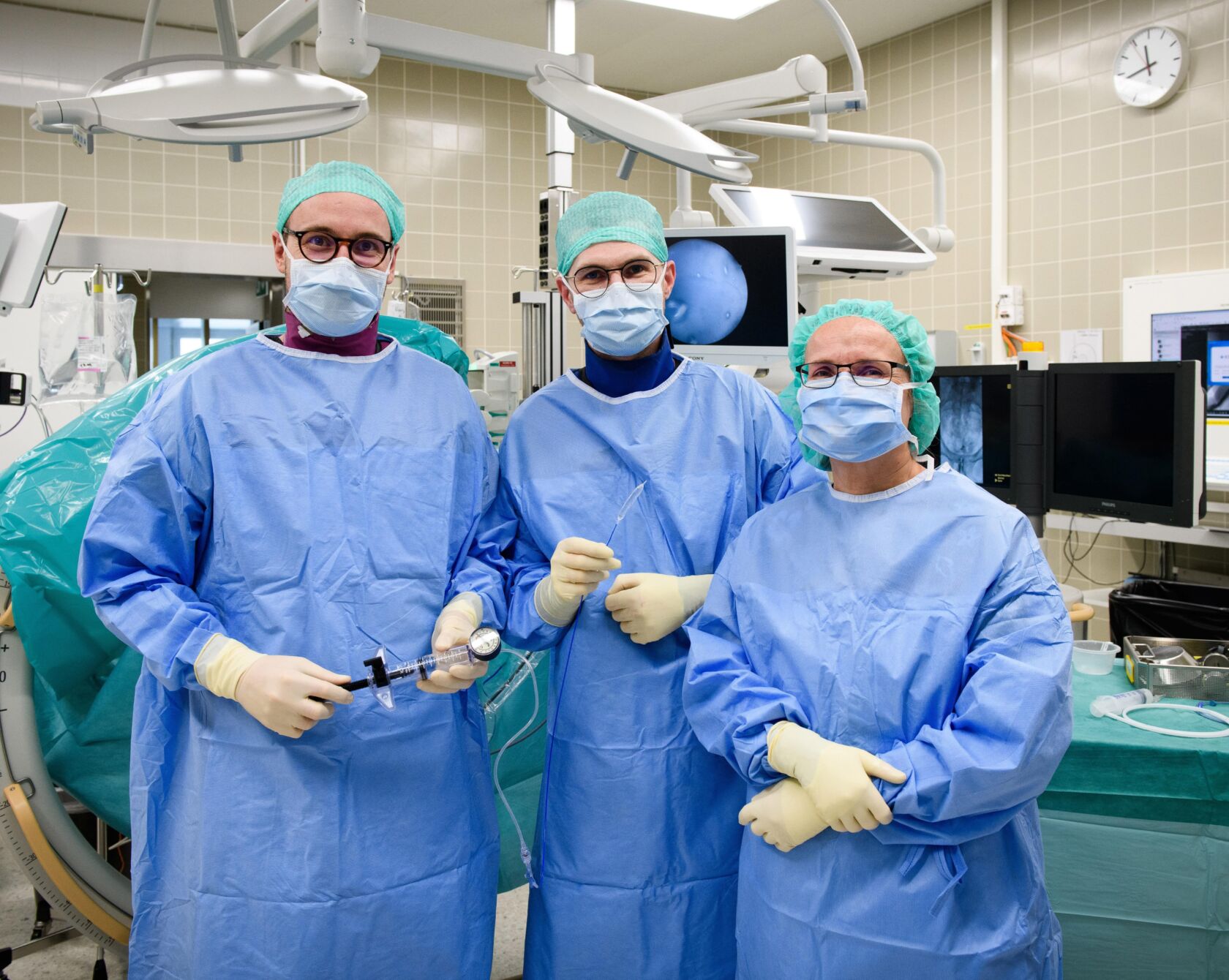
Patients with urethral strictures often suffer from constantly recurring strictures. With the innovative OptilumeTM technology, the urology department at the USZ now offers a new gentle procedure for urethral strictures that combines dilation of the urethra with selective drug delivery, thereby significantly reducing the likelihood of a recurrence of urethral stricture.
Urethral strictures are scarred narrowings of the urethra that cause problems with urination and therefore often have a massive impact on quality of life. Depending on the severity of the narrowing and the patient’s situation, various treatment options are available – each with specific advantages and disadvantages.
OptilumeTM is a new treatment method for urethral strictures
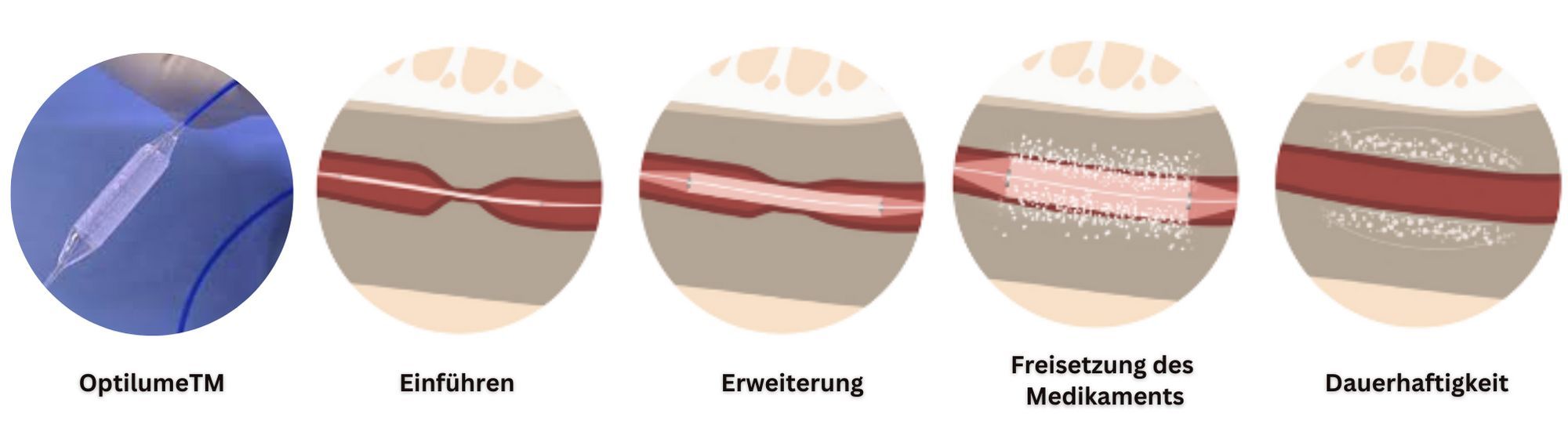
The new minimally invasive OptilumeTM technology can overcome some of the weaknesses of other common treatment options. The procedure is gentle and can be performed on an outpatient basis. The urologist inserts a cylindrical balloon catheter into the urethra. As soon as the balloon is positioned in the area of the constriction, it gently expands the constricted area. The balloon is coated with a drug that is released during the procedure and prevents the formation of new scars. This can quickly alleviate the symptoms. A lasting cure can be achieved in up to 75% of patients treated.
The drug used to coat the balloon is paclitaxel, which has been used effectively in various applications for millions of patients worldwide since 1992. The treatment only takes about half an hour in total.
Innovation with many advantages
The OptilumeTM process
- is minimally invasive, gentle and is performed on an outpatient basis
- requires only a short anesthetic
- Relieves symptoms quickly
- increases the likelihood of a lasting cure (compared to other minimally invasive procedures)
- can often be performed without catheter insertion after the procedure
For which patients is the OptilumeTM method suitable?
Patients
- with first-time urethral strictures
- with recurrent urethral strictures
- who do not want anesthesia or do not qualify for anesthesia for health reasons
- with strictures near the sphincter muscle
- that do not qualify for open reconstruction
Is OptilumeTM treatment covered by health insurance?
This procedure has not yet been recognized by health insurance companies. Before each application, we submit an individual cost estimate request. Patients may have to pay for the procedure themselves.