Prostate – structure, function, diseases

Hardly any other organ is so often overlooked and at the same time viewed with so much concern as the prostate. It is small and inconspicuous, but plays a crucial role in the male body. Many men only become aware of it when problems arise.

The prostate deserves more attention – not only when it is ill, but also when it is healthy. This is because it performs vital tasks for reproduction and has a major influence on the general well-being of every man.

What is the prostate?

The prostate (also known as the prostate gland) is a small gland that is found exclusively in men. It is one of the internal male sex organs. Its main function is to produce part of the seminal fluid that is secreted during ejaculation. Among other things, this fluid contains enzymes and nutrients that are important for the motility and vitality of the sperm.

Prostate anatomy: Where is the male prostate located?

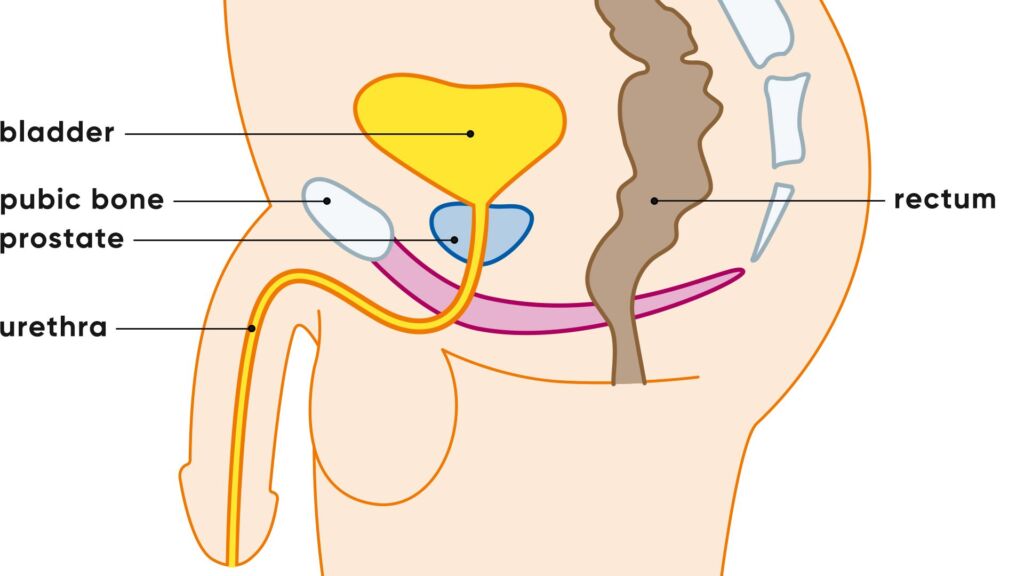
The prostate lies directly below the bladder and surrounds the upper part of the urethra, i.e. the channel through which urine flows from the bladder to the outside. It is also located in front of the rectum, which is why doctors can feel it through the anus during a check-up. Due to its location, changes in the prostate such as an enlargement can affect the flow of urine or sexual function.

Illustration männliche Geschlechtsorgane und Prostata

What is the prostate made of?

The prostate consists mainly of three types of tissue: glandular tissue, smooth muscle and connective tissue. These tissues are closely interlinked and form a functional unit. The musculature and connective tissue together are called the stroma – it is the supporting and connecting tissue that is located between the glandular lobules.

The stroma plays an important role in the function of the prostate: the smooth muscles help to actively expel the prostate secretions during ejaculation, while the connective tissue stabilizes the glands and supplies them with nutrients. Inflammation or tissue growths can change the structure of the prostate and thus impair the production and drainage of secretions. This in turn can have an effect on urinary function, urination and thus on well-being.

Prostate: glandular tissue

The glandular tissue forms the actual secretions of the prostate. This slightly milky liquid contains enzymes, such as the prostate-specific antigen (PSA), as well as zinc and citric acid. These substances liquefy the ejaculate and promote sperm motility. The secretion accounts for around 20 to 30 percent of ejaculation.

Prostate: muscle tissue

Between the glands are smooth muscle cells that contract during orgasm. These muscle contractions actively force the secretion into the urethra, where it mixes with the sperm from the seminal vesicles and the testicles. This process is an important part of ejaculation.

Prostate connective tissue

The prostate is surrounded by a firm, connective tissue capsule. This gives the organ support and separates it from its surroundings. The prostate also contains small blood vessels, nerve fibers and ducts through which the secretions enter the urethra.

Prostate zones

From a medical point of view, the prostate is often divided into different zones, especially the peripheral, central and transition zones. This classification is important because certain diseases occur preferentially in certain zones. For example, prostate cancer often develops in the peripheral zone, while benign prostate enlargement usually begins in the transition zone.

How large and heavy is a normal prostate?

The healthy prostate of an adult man is about the size of a chestnut and weighs around 20 grams. Their average dimensions are 3 to 4 centimeters in width, 2.5 to 3 centimeters in height and 3 to 4 centimeters in depth. Their volume is about 20 to 25 milliliters. The prostate can increase in size with age. This is often age-related and benign, but can sometimes be associated with symptoms.

Task and function of the prostate and prostate secretion

The prostate is a small but very important organ in the male body. Their main function is to produce part of the seminal fluid. This is not a simple “side dish”. The prostate secretion protects and supplies the sperm with important nutrients and enzymes that increase their motility and ability to survive. This increases the probability that the sperm will be successful in reproduction.

During ejaculation, the muscle fibers in the prostate contract and push the fluid produced into the urethra. There it mixes with the sperm from the testicles and the fluid from the seminal vesicles. This mixture forms the ejaculate.

In addition to its crucial role in reproduction, the prostate also has an important function in the urinary tract. It surrounds the upper part of the urethra, through which urine passes from the bladder to the outside. As long as the prostate is healthy, it has hardly any influence on urination. However, if it becomes enlarged or inflamed, it can restrict the flow of urine. This can lead to symptoms such as a frequent urge to urinate or a weak urine stream.

The prostate is also involved in hormonal processes, as it reacts to male sex hormones (androgens) and increases their effect. These hormones influence both the growth of the prostate and its function.

PSA – the prostate-specific antigen: Function in the prostate

PSA is a special enzyme that is produced by the cells of the prostate. It is part of the seminal fluid and has an important task: it helps to make the ejaculate more fluid after ejaculation. This allows the sperm to move better and gives them a better chance of reaching an egg. This means that PSA ensures that the semen is not too viscous and that the sperm can swim freely.

Small amounts of PSA can be detected in the blood. An elevated PSA level may indicate changes or diseases of the prostate, such as inflammation, benign enlargement, or prostate cancer. This is why PSA is often used as an important value in prostate screening.

The role of the prostate in hormone metabolism (DHT)

The prostate is a hormone-dependent organ, which means that it reacts in particular to male sex hormones, the so-called androgens. The most important androgen is testosterone, which is mainly produced in the testicles.

In the prostate, testosterone is converted into a stronger form, dihydrotestosterone (DHT), by an enzyme. This hormone is crucial for the growth, development and function of the prostate. It ensures that the glandular cells remain active and that prostate secretions are produced.

The prostate is heavily dependent on male hormone metabolism. The balance of androgens regulates their growth and function, which is why changes in the hormone balance can affect the health of the prostate.

How does the prostate support ejaculation?

The prostate plays a central role in ejaculation. It produces a special, milky secretion that contains important components such as enzymes (e.g. PSA), zinc and citric acid. In the urethra, this secretion mixes with the sperm from the testicles and the secretion from the seminal vesicles. Together they form the ejaculate.

During orgasm, the smooth muscles of the prostate contract rhythmically and actively push the prostate secretions into the urethra. At the same time, a closing mechanism ensures that no urine gets into the ejaculate and that the ejaculate does not flow back into the bladder. The prostate makes a decisive contribution to the reproductive function by releasing the ejaculate completely and in a targeted manner.
Prostate: Diseases (illnesses) and inflammations

The prostate is a small organ of great importance, which unfortunately does not always remain healthy. Many men experience prostate-related problems in the course of their lives: from inflammation and benign changes to serious diseases such as prostate cancer. The most common diseases include benign prostate enlargement (benign prostatic hyperplasia), prostatitis(inflammation of the prostate) and prostate cancer.

Benign prostate enlargement (benign prostatic hyperplasia – BPH)

Typical signs of a benign enlargement of the prostate include a frequent urge to urinate, difficulty urinating and the unpleasant feeling that the bladder is never completely empty. In technical terms, this is referred to as prostate syndrome (BPS) or benign prostatic hyperplasia (BPH).

BPH is the most common prostate disease in older men. From the age of 50, around one in three men is affected, and from the age of 60 even one in two. Although the disease is benign, it can cause considerable discomfort and severely affect everyday life.

The growth of the prostate can narrow the urethra. This leads to typical problems such as a weak urinary stream, frequent urge to urinate – especially at night – and the feeling of not being able to empty the bladder completely.

Prostatitis – inflammation of the prostate

The prostate can become painfully inflamed. It is estimated that up to 15% of all men develop prostatitis at least once in their lifetime. Bacteria (especially intestinal germs) are usually the trigger, but in many cases the exact cause remains unclear. The risk of this increases with age, especially from the age of 40.

Medically, a distinction is made between several forms of prostatitis:

  • Bacterial prostatitis
  • Abacterial prostatitis (without detectable bacteria)
  • Asymptomatic prostatitis

Prostate cancer (prostate carcinoma, prostate tumor)

Prostate cancer is the most common type of cancer in men. It rarely occurs before the age of 50. As the first symptoms are often absent, the disease goes unnoticed for a long time. This makes early detection of prostate cancer and regular checks, for example by determining the PSA value, all the more important. You can find out which warning signs you should take seriously, how prostate cancer is diagnosed and which therapy and treatment options are available today for prostate cancer in our detailed article Prostate cancer.

Prostate Cancer Center at the USZ

At the University Hospital Zurich (USZ), experts from various medical disciplines pool their expertise in the certified Prostate Cancer Center. The center is recognized according to the quality standards of the German Cancer Society (DKG). Specialist staff from the fields of urology, oncology, radiology, nuclear medicine and pathology work closely together here. Each case is discussed individually in the interdisciplinary tumor board in order to ensure optimal therapy tailored to the patient. Treatment in DKG-certified centers is carried out according to strictly tested guidelines and, according to studies, is associated with a higher chance of survival.

More about the Prostate Cancer Center

How does the prostate stay healthy?

Even small changes in everyday life can help to strengthen the prostate and prevent complaints. Here are our tips:

  • Stay active: regular exercise promotes blood circulation and supports prostate health.
  • Protect yourself from the cold: hypothermia can lead to muscle tension around the prostate and urethra. The right clothing keeps you warm and fit for outdoor activities.
  • Drink enough: plenty of fluids flush out the urinary tract and help prevent infections. Mineral water and diluted fruit juices are ideal.
  • Pay attention to your diet: avoid too much fat, give preference to vegetable oils such as linseed or olive oil and make sure you get enough vitamins – they protect the cells.
  • Regular check-ups: From the age of 50, the prostate should be examined annually by a doctor – a simple and painless routine examination.

Diagnostics and prevention of prostate diseases

There is no nationwide prostate screening program in Switzerland. The decision to have a screening examination is up to the individual man and his doctor. From around the age of 50 – or from the age of 45 if you have a family history of prostate cancer – we recommend that you undergo an examination to detect diseases such as prostate cancer at an early stage.

Diagnostics include the PSA test, in which the prostate-specific antigen in the blood is measured, and imaging procedures (MRI), which are used in the event of abnormal findings. A digital rectal examination (palpation) can also be performed.

As the costs of PSA tests and other examinations are not always covered by basic insurance, it is important to discuss them individually with your doctor. An informed decision strengthens prevention and enables early treatment of prostate diseases.

How meaningful is the PSA value?

The PSA value indicates the concentration of the so-called prostate-specific antigen (PSA) in the blood. PSA is a protein that is produced by the prostate and is normally released into the blood in small quantities. An elevated PSA value can indicate a change or disease of the prostate, which in addition to prostate cancer also includes benign prostate enlargement or inflammation (prostatitis).

Studies show that the palpation test is significantly less reliable than the PSA test. It often overlooks pathological changes (false-negative findings) and at the same time provides more indications of abnormalities that later turn out to be harmless (false-positive findings). These misjudgements can lead to unnecessary follow-up examinations, which entail risks.

However, an elevated PSA value is not automatically a sign of cancer, but merely indicates that the prostate should be examined more closely. Other factors such as infections or irritations can also temporarily increase the value. The PSA test therefore serves as an important indicator, but always in conjunction with further examinations and medical assessment.

As part of the early detection of prostate cancer, we use a new, innovative blood test at the USZ. In addition to the protein marker PSA, other genetic biomarkers in the blood are also examined. This new test is called the Stockholm3 test.

More about the medical check-up at the USZ