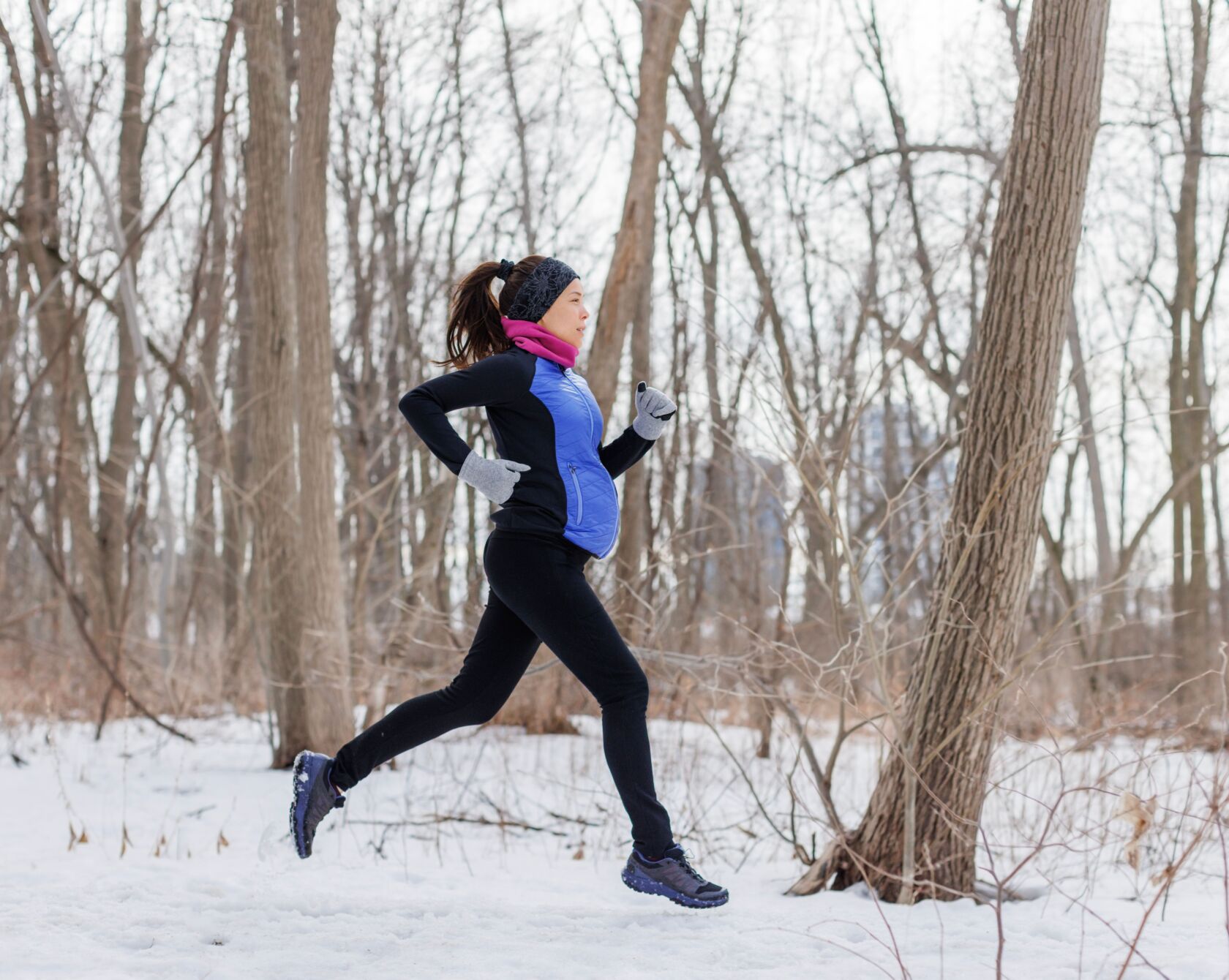
Many women want to maintain their lifestyle with exercise or build up fitness during pregnancy, but are unsure whether and how much sport they can do. If your pregnancy is problem-free, there is nothing to be said against dosed activity.
Pregnancy and sport are not mutually exclusive. On the contrary: in addition to the positive physical effects, regular exercise makes you feel better and increases your general well-being. And not just before the birth: women who are physically active during pregnancy are less likely to suffer from postpartum depression and the mother-child relationship is more relaxed.
Sport is recommended during a problem-free pregnancy
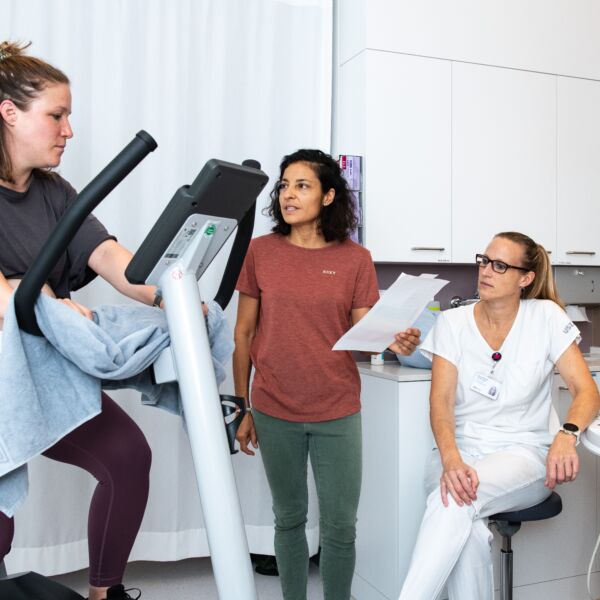
“I recommend all women who have a pregnancy without complications and feel well to continue or build up their exercise,” says PD Dr. Nina Kimmich, Head Physician at the Department of Obstetrics at the USZ. She supports and advises amateur and elite athletes on sport during pregnancy and conducts research on the subject. “It is important to adapt the training to the individual situation, the physical changes caused by the pregnancy and the condition of mother and child.”
“I recommend all women who have a pregnancy without complications and feel well to continue or build up their exercise.”
Dose the load and adjust the intensity
A total weekly duration of 150 minutes of moderate exercise is recommended. Three to four training sessions of a maximum of one hour each per week are considered safe for amateur sportswomen. Under high stress, the blood flow in the placenta can be reduced and this can lead to a slowing of the heartbeat (bradycardia) in the foetus. It is therefore important not to overexert the body. As a guideline, 20 to 30-year-old pregnant women should not exceed a heart rate of 155-160, 30 to 40-year-olds a heart rate between 140 and 156. If you feel unwell, you should reduce your exertion or refrain from sport. “Most women have a good sense of what intensity and frequency is good for them. Women who exercise intensively and competitive athletes should work with a specialist to plan their individual training.”
Pay attention to weight load and height
All types of sport are permitted. According to Dr. Kimmich, women in particular who did little or only light sport before their pregnancy should choose gentle sports with little risk of injury such as yoga, Pilates (which also trains the pelvic floor), swimming, walking and cycling on the exercise bike.
Exercises using your own body weight are also highly recommended. Depending on the type of sport, weight-bearing activities should be avoided and joint-friendly options chosen instead, e.g. rowing ergometer or swimming. Sports where there is a risk of injury from falling (cycling, gymnastics, horse riding, skiing) or from balls, kicks, sticks etc. should also be avoided, as should lying on your stomach. The (flat) supine position can lead to reduced blood flow to the placenta in advanced pregnancy (from approx. 28 weeks’ gestation) and should therefore be avoided.
Excessive strength training/weight lifting can also restrict the blood flow in the placenta; this also puts a lot of strain on the pelvic floor. Women from the lowlands should not do intensive training above 2000-2500 meters above sea level. Bottle diving should also not be practiced during pregnancy.
Protect the pelvic floor and prevent infections
To prevent pelvic floor weakness or urinary incontinence, pregnant women should incorporate daily pelvic floor training into their exercise routine. It is also important to adjust the energy and fluid intake to the activity level so that the child’s growth is not impaired and the risk of thrombosis does not increase. Supplements with vitamins or iron should be discussed with your doctor. “Sometimes smaller but effective measures are forgotten,” says Nina Kimmich. “Not only overheating, but also hypothermia should be avoided in order to reduce susceptibility to infections.”
Positive effects on body and mind
“The risks of sporting activity during pregnancy for the child lie primarily in the risk of injury,” says Nina Kimmich. If these risks are taken into account, the positive effects outweigh them. Swimming can provide welcome cooling, but it also promotes venous and cardiac activity. Regular exercise during pregnancy can stabilize blood sugar and regulate weight gain – both of which in turn lead to a lower risk of gestational diabetes. It leads to a lower risk of pre-eclampsia(pregnancy poisoning) and high blood pressure, to stabilization of the circulation and, last but not least, to better management of pain, such as back pain.
Caution with complications and pre-existing conditions
A ban on sport during pregnancy is rare. However, if complications occur or there are pre-existing conditions, the training should be adjusted or not carried out at all. Here, too, the individual situation is decisive. “Premature rupture of the membranes, premature labor and high blood pressure rule out exercise,” says Nina Kimmich, “as do delayed growth of the child, multiple pregnancies, too little amniotic fluid, vaginal bleeding and interventions such as a cerclage.” If complications occurred during previous pregnancies or if there are pre-existing conditions, sporting activities should be discussed with your doctor.
Sport after the birth
Depending on the birth, women can start pelvic floor training within two weeks afterwards and return to sport with gentle forms of exercise such as walking, cycling, yoga, Pilates or cross-country skiing and gradually increase the training until tendons, bones and muscles can withstand the prenatal strain again. “This takes around nine to twelve months,” says Nina Kimmich, “but cardiovascular fitness is quickly restored to a high level.” Breastfeeding is usually also possible without any problems. “With a little caution and ideally with accompanying pelvic floor training, nothing stands in the way of a fairly rapid return to pre-pregnancy exercise levels.”
Courses for pregnant women and parents at the USZ