The irradiation of large tumors in particular is challenging, as healthy surrounding tissue can also be damaged. The new method called Lattice radiotherapy promises to reduce the size of the tumor more effectively without increasing possible side effects. For the first time, a joint study between University Hospital Zurich and Cantonal Hospital Aarau is examining how this technique performs in comparison to standard radiation therapy.
Palliative radiotherapy helps many people with advanced tumors to alleviate pain and other severe symptoms. However, tumors with a diameter of more than 5 cm pose a particular challenge, as uniform irradiation of a large tumor can cause excessive damage to the surrounding healthy tissue. Lattice radiation therapy (LRT), which utilizes a distribution of high-dose and low-dose regions, can effectively weaken the tumor while minimizing side effects. However, systematic comparisons of the effectiveness of this method with conventional radiotherapy are still lacking.
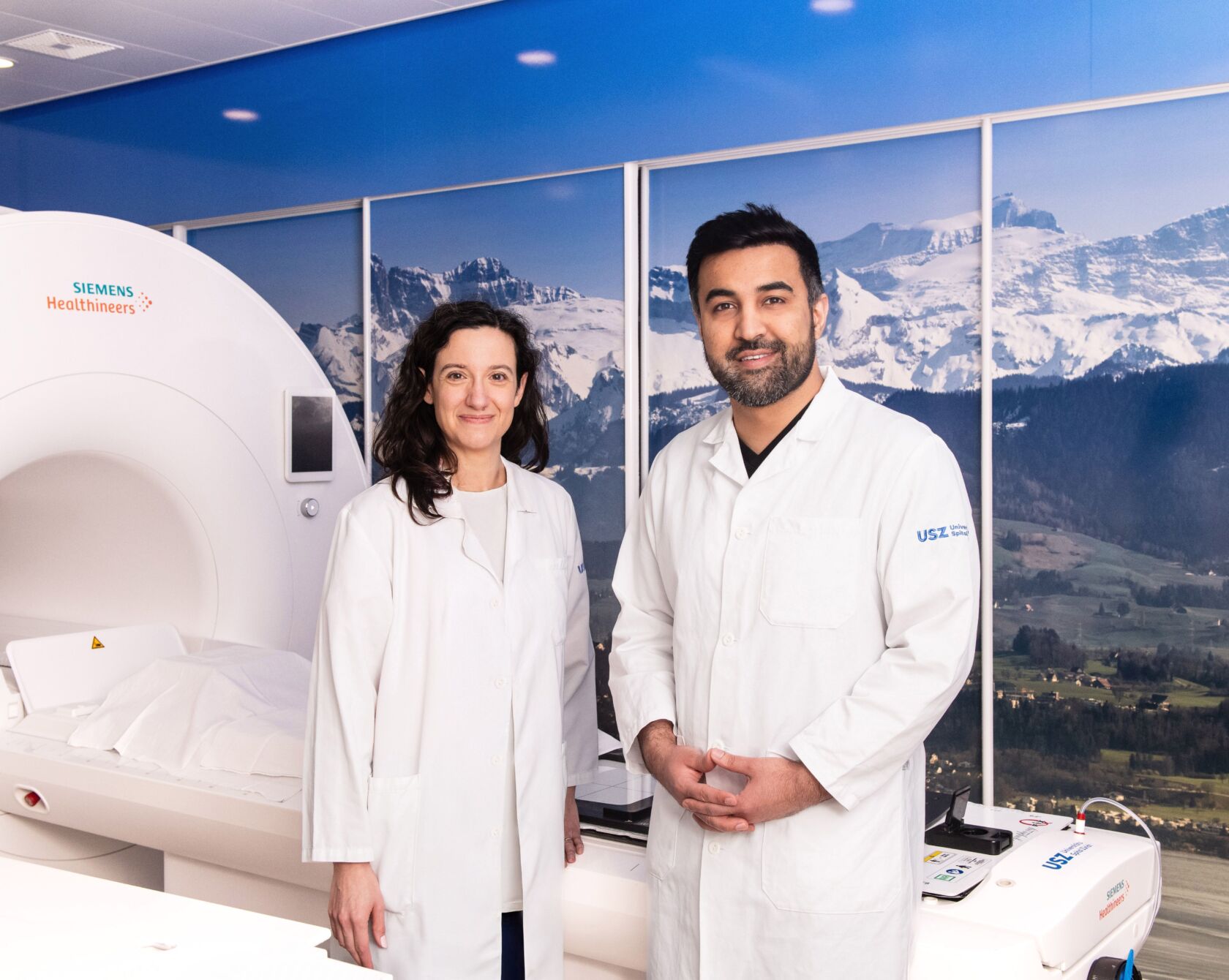
This is exactly what a joint multicenter study at the University Hospital Zurich and the Cantonal Hospital Aarau, led by Dr. rer. nat. Serena Psoroulas, medical physicist and Dr. med. Maiwand Ahmadsei, radio-oncologist at the USZ. The project “LATEST – LAttice vs Target dose Escalation: a randomized STudy” was awarded a prize by the Swiss Cancer Research Association.
The plan is to recruit 60 patients over a period of four years, with patients being randomized to either the Lattice method or the conventional radiation plan. During the treatment period and follow-up, MRI imaging is performed to observe how the tumor and surrounding tissue respond to the novel dose distribution with high-dose and low-dose regions.
The Lattice method is expected to achieve greater tumor reduction with fewer side effects than the conventional method, as higher doses of radiation can be applied directly to the tumor. The results of this study should create a solid basis for using this method more widely in the future.
We wish Serena Psoroulas, Maiwand Ahmadsei and the team involved every success with this project and congratulate them on the award.