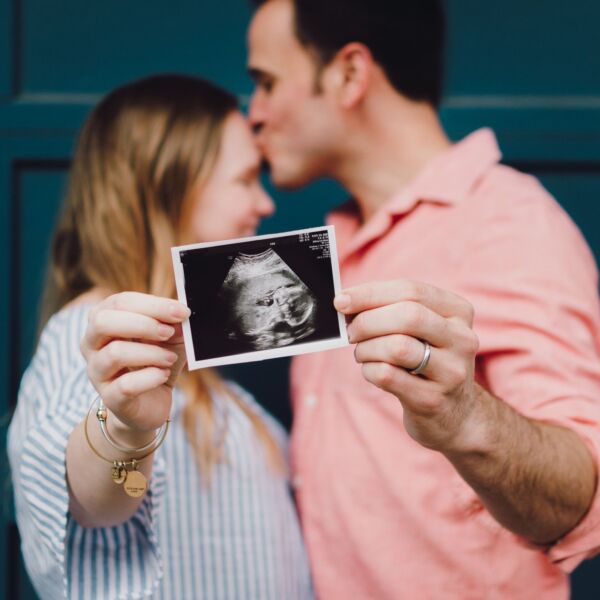
Cases of rubella have increased in Switzerland in recent months. The USZ is also seeing a significant increase in cases of fifth disease (erythema infectiosum). "We normally carry out an umbilical cord transfusion for rubella on average once a year, but recently it has been up to two to three times a week," says Nina Kimmich, Head Physician at the Department of Obstetrics at the USZ.
Ringworm is caused by parvovirus B19 and is a disease that mainly affects children – the disease manifests itself as a characteristic skin rash in the form of rings. Adults, on the other hand, often remain asymptomatic – if they develop symptoms, they are flu-like complaints such as fever, headaches or joint pain.
Dangers for unborn babies
The infectious disease can be particularly dangerous for unborn children. “The virus can attach itself to the unborn child’s red blood cells and destroy them,” says Nina Kimmich. This leads to anemia, in which the child’s heart has to work harder to compensate for the lack of oxygen. Without treatment, this can lead to serious complications such as heart muscle weakness and water retention in the body, as well as long-term neurological problems. In severe cases, the child can die in the womb.
“An umbilical cord transfusion requires a high level of technical expertise and a hospital that is able to provide comprehensive care for premature babies!”
Treatment options
If severe anemia is detected, an umbilical cord transfusion can be performed. This procedure is technically demanding and is only offered in specialized centers such as the USZ. “Umbilical cord transfusion is a life-saving measure for the unborn child,” explains Nina Kimmich. “It requires a high level of technical expertise and a hospital that is able to provide comprehensive care for premature babies.”
Prevention and recommendations
Around 40 percent of pregnant women are not immune to rubella. A simple blood test can determine whether you are immune. Nina Kimmich recommends that non-immune pregnant women take special precautions: “Pregnant women who are not immune should wear a face mask in risk situations, wash their hands frequently and avoid contact with children’s saliva.” This is especially true in the first 20 weeks of pregnancy, as treatment is particularly challenging with such small fetuses.
If pregnant women notice flu-like symptoms, they should consult a doctor. Close monitoring is necessary in order to detect and treat a possible infection with parvovirus B19 at an early stage. After an infection of the mother, regular follow-up checks should be carried out to ensure that the unborn child is not affected.
Current situation
Experts are currently advising pregnant women to be cautious and have regular check-ups. As many people are not informed about the dangers of fifth disease, education is particularly important. “Many patients, including those who work with children, know little about the disease,” says Nina Kimmich.
Rubella vs. ringworm - what's the difference?
Rubella and ringworm are caused by different viruses, but both are particularly dangerous for pregnant women. Rubella is caused by the rubella virus and is transmitted by droplet infection. They can lead to malformations in the unborn child. The main symptoms are:
- Skin rash: A fine-spotted, red rash that starts on the face and spreads over the body.
- Swollen lymph nodes, especially in the throat and neck area
- Mild fever
- Cold symptoms: Cough, runny nose, red throat and sometimes headache and joint pain
As a pregnant woman, it is particularly important to protect yourself against a rubella infection. The most effective method is vaccination, which, unlike ringworm, exists for rubella. Women of childbearing age should ensure that they have already been vaccinated twice against rubella before becoming pregnant. Even if the vaccination status is good, contact with people who have contracted rubella should be avoided. Regular hand washing and disinfecting surfaces can help prevent the spread of the virus.
Pregnant women who have had contact with a person suffering from rubella or who notice the above symptoms should consult their doctor immediately.
Frequently asked questions about ringworm and rubella
No, rubella and ringworm are two different diseases that are caused by different viruses. Rubella is caused by the rubella virus, ringworm by parvovirus B19. Both diseases are particularly dangerous for pregnant women, as they can lead to premature birth, intrauterine death or malformations in the unborn child.
Rubella and chickenpox are also two different viral infections that are often confused, as both cause red skin rashes. Rubella is caused by the rubella virus, chickenpox – also known as varicella – by the varicella zoster virus. While rubella is mild in most adults, chickenpox can lead to serious complications in adults and immunocompromised individuals. A chickenpox infection can also be associated with serious complications in unvaccinated pregnant women. A vaccination is available against both diseases.
Both ringworm and rubella are dangerous during pregnancy. While both infections are usually mild in children and adults, they can have serious consequences for the unborn child during pregnancy.
There is a vaccination for rubella, but this should be given at least one month before a planned pregnancy. You cannot be vaccinated against rubella. Avoiding contact with infected people and good hygiene are therefore particularly important.
The rubella vaccine is one of the so-called live vaccines. These contain attenuated but still living pathogens that could theoretically trigger an infection. The vaccination is not dangerous for the pregnant woman. Avoiding live vaccinations during pregnancy is a precautionary measure to protect the unborn child from possible risks.
After a rubella vaccination, at least pregnancy can be avoided for one month by using adequate contraception.
As a rule, a rubella IgG value (value for immunity) of at least 10 IU/ml is considered sufficient to provide protection against a rubella infection. However, the limit values can vary from laboratory to laboratory.
It is important that women of childbearing age know their immunity status and, if necessary, are vaccinated before a planned pregnancy if the rubella IgG value is negative or too low.
Put simply, rubella is characterized by many small red dots, whereas ringworm occurs in “garlands” or rings. As there are various (childhood) diseases that are associated with skin rashes, it is often difficult for laypersons to make a diagnosis based on the rash. Seek medical advice for a reliable diagnosis.
blotchy skin changes that appear on the cheeks. These spots can spread quickly and form a net-like pattern that resembles the appearance of “butterfly wings”. This rash can be intensely red and gives the disease its name – “ringworm”.
Once the rash has started on the face, it spreads to the rest of the body within one to three days. The red spots can appear on the arms, legs and torso. In some cases, the rash can also affect the palms of the hands and soles of the feet, but this is less common.
The rash of ringworm can last for different lengths of time, but usually between one and three weeks. During this time, the rash may come and go, especially with physical exertion or heat.
The typical rubella rash usually starts on the face. It appears as small, red spots that can quickly multiply and merge, creating larger red areas. This rash can be itchy, but does not usually hurt.
After starting on the face, the rash spreads to the neck, chest, back and finally the extremities (arms and legs) within 24 hours. The severity of the rash can vary from person to person. Only about half of those with the disease show a rash at all.
The rash usually lasts for about three days and then disappears in the same order in which it appeared. This means that it first disappears from the face and then gradually from the rest of the body.
The rash itself is not contagious, but the two viruses that cause it are. Both diseases are transmitted by droplet infection (coughing, sneezing, direct contact). In the case of ringworm, the risk of infection is highest before the rash becomes visible. As soon as the rash appears, there is hardly any risk of infection. In the case of rubella, infected people are contagious around one week before and up to one week after the rash appears.