Symptoms
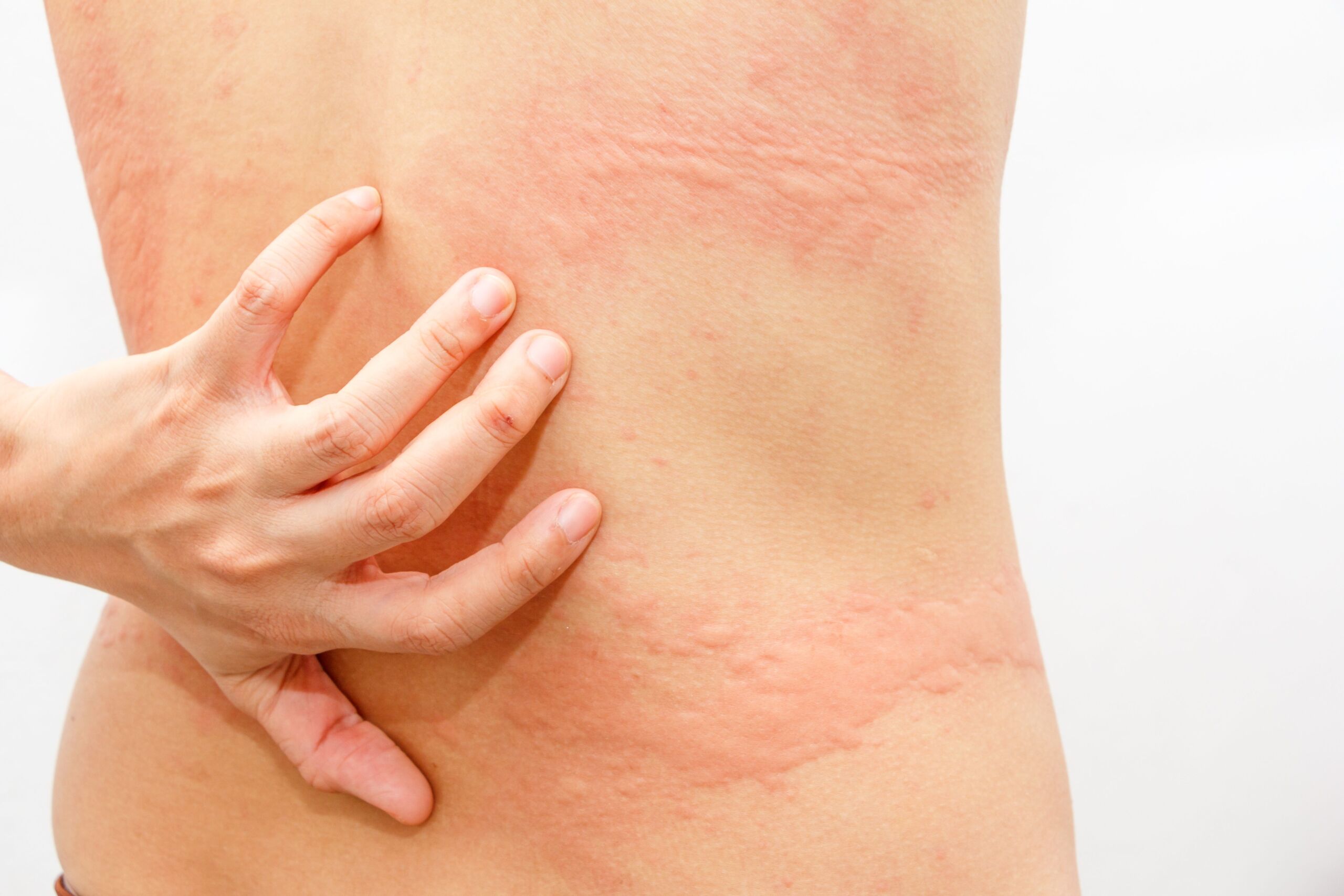
Clinically, hives manifest as sudden-onset, intensely itchy wheals—that is, raised areas of skin surrounded by a red border. These individual skin changes are usually transient and last less than 24 hours. If the skin swelling occurs deeper in the dermis or in the adjacent subcutaneous fatty tissue, it is referred to as angioedema (also known as Quincke’s edema). These deep, firm swellings are more often painful than itchy. They last longer than the urticarial skin lesions, sometimes up to several days.
Diagnostics
Through in-depth conversations with those affected and various blood tests and skin tests, we identify the trigger or triggers.
- Acute urticaria: The cause is usually an allergy to food, medication, or an insect sting. If the trigger is known, it is essential to avoid contact with it.
- Chronic urticaria: In most cases, it is not caused by an allergy. Here, we identify factors that can exacerbate the clinical picture, such as pressure, cold, or physical exertion, as well as medications, infections, or the presence of specific immune factors.
Treatment
We’ll work with you to develop a personalized treatment plan. We would be happy to advise you on how to avoid factors that can trigger an outbreak and which foods or medications are not suitable for you, as they may trigger a flare-up of urticaria.
A wide variety of medications are available for internal use (to be taken orally), as well as creams and ointments for external use (and shower and bath products) that are specifically designed to relieve itching.