What is nail fungus?
Walking barefoot without flip-flops at the pool, in the sauna, or in the shower area of the gym—and just like that, it’s happened: a fungal infection has taken hold of a toenail. However, toenail fungus can also develop from untreated athlete’s foot. The infection is characterized by a yellowish or brown discoloration of the nail. Over time, the fungus eats deeper and deeper into the nail and gradually destroys the nail plate. Fingernails are less commonly affected because they grow faster and are more exposed to the air. Mushrooms, on the other hand, thrive in a warm, humid climate. Onychomycosis usually affects the toenails. Without specific treatment, the infection will not go away, and it is highly contagious. That is why, if you are sick, you should not share nail clippers, nail files, or towels with other members of your household.
Nail Fungus – Prevalence and Age
Nail fungus is a fairly common condition. According to estimates, about 4 percent of people in industrialized nations suffer from it. Onychomycosis becomes increasingly common with age. People who exercise and those with sweaty feet are particularly prone to the unpleasant condition known as nail fungus—the pathogens thrive in warm, moist environments. Men are more likely to develop nail fungus than women. Fungal infections rarely affect fingernails. The condition usually occurs primarily on the big toe’s nail. If left untreated, however, it gradually spreads to other toenails.
Nail fungus: causes and risk factors
Nail fungus is usually caused by fungal sprouts of the dermatophyte group. These are the spores that cause athlete’s foot. Molds or yeasts, on the other hand, are rarely the cause of onychomycosis. You come into contact with fungal spores when showering or changing clothes after exercising or in similar settings. If the immune system is unable to eliminate them in time, they penetrate the toenail or the surrounding skin. Tiny injuries make it easier for an infection to set in.
You are at particularly high risk if you suffer from the following conditions:
- Immunodeficiency
- Diabetes
- Psoriasis
- Foot Sweat
- poor blood circulation in the feet (such as from wearing tight shoes)
- Injuries to the nails and skin
Symptoms: Nail fungus causes yellow nails
The first signs of toenail fungus are usually visible on the right or left edge of the big toe: It first turns yellow and then becomes increasingly thick and rough. If left untreated, this yellow area will continue to spread into the nail. It begins to change, becomes more porous, and loses its smooth surface. The fungus penetrates the nail’s horny layer and slowly breaks it down.
Nail Fungus—Here Are the Different Types
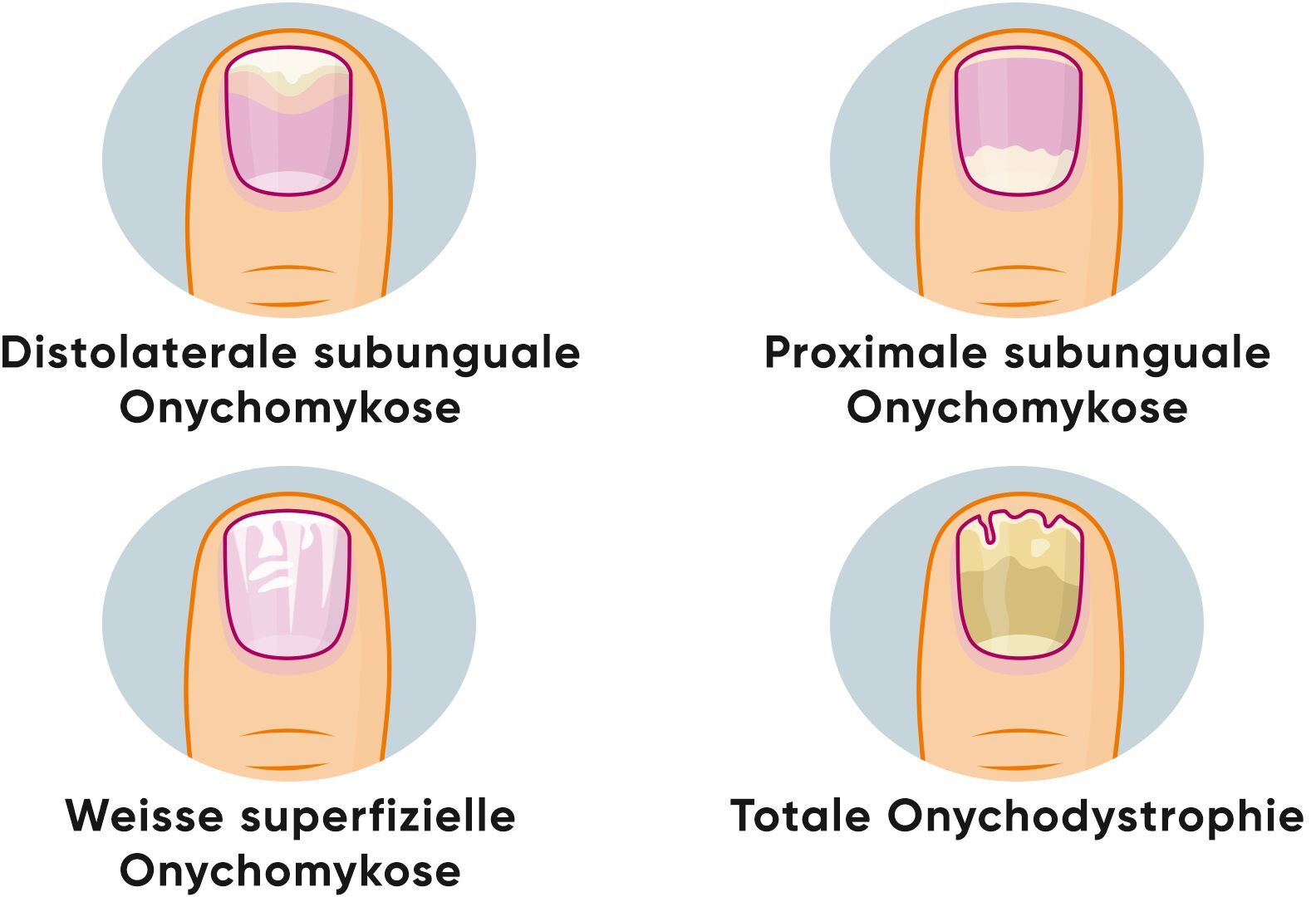
Experts distinguish between three different forms of onychomycosis:
- Distolateral subungual onychomycosis: This type of nail fungus is particularly common. It first infects the skin around the nail and then penetrates the nail plate from below, where it spreads. This softens the nail from below and causes it to turn yellow.
- Proximal subungual onychomycosis: This form is significantly less common. The fungus attacks the nail from above at the nail root—that is, where the nail grows out. From there, the fungus gradually spreads across the entire nail plate.
- Superficial white onychomycosis: This infection is caused by the fungus Trichophyton. The fungus grows only on the outermost layer of nail keratin. This causes the toenail to appear white.
- Total onychodystrophy: The fungus has infected the entire nail, including the root. There isn’t a single healthy nail plate left. At this stage, nail fungus is difficult to treat.
Online skin check: quick and convenient from home
Send in a photo of the affected skin area and complete the short questionnaire. You will receive a reliable diagnosis from our experts within 24 hours on weekdays. The button takes you to the external platform of our partner, where you can enter your data securely. These are sent to the USZ for further clarification.
Diagnosis of nail fungus
We immediately recognize the nail fungus from the altered surface of the nail. A magnifying glass is used to see how advanced the infestation is. To make sure which type of fungus is responsible for the damage to the nail, we cut off a piece of the nail, look at it under a microscope or send it to the laboratory for examination. Sometimes we also add a piece of the surrounding skin. The laboratory test is used to differentiate between other diseases with similar symptoms such as lichen ruber or so-called eczema nails. However, the type of fungus can only be determined if no antifungal agents have been used in the four weeks prior to taking the sample. However, in the case of an incipient fungal nail infection in particular, a visual inspection is often sufficient.
How do I protect myself from nail fungus?
There are many things you can do to protect yourself from foot or nail fungus:
- Change your socks every day and air out your shoes thoroughly every day.
- Wash your towels at least once a week at 60 degrees.
- Do not wear tight shoes, and make sure your feet are well ventilated.
- Wear your own flip-flops at the swimming pool and the gym.
- Disinfect your shoes—including your shower shoes—regularly.
- Dry your feet thoroughly, including between your toes, and use a separate towel for this.
- Do not share nail clippers and nail files with other family members, and disinfect them after each use.
- Use washable bath mats in the bathroom and wash them regularly.
Course and prognosis of nail fungus
If a foot or nail fungus does occur, treat it immediately and thoroughly! The earlier you start treatment, the more successful it will be. If you develop athlete’s foot or nail fungus, you should wash your socks with a hygiene rinse and change the towel every day.
Treating a nail fungus requires a lot of patience. Toenails grow much slower than fingernails and even slower in women than in men. On average, the nail of the big toe grows about 0.5 millimeters per week. With the other toenails it is often a little less. The growth rate continues to decrease with age. A fungal infection is only defeated when it has completely grown out of the nail. Even with a mild infection, it takes several months for the nail to heal completely. If you suspend treatment for even a short time, you risk the complete success of the treatment.
If a large part of the nail is infected, it often takes more than a year until the fungus is defeated. There is a high risk of relapse even after successful treatment: fungal spores can easily hide in small cavities under the nail. The fungus can spread again as soon as the antifungal medication is discontinued and you are in a warm and humid environment. Very careful hygiene is therefore advisable. All shoes and stockings as well as pedicure sets and towels should also be carefully disinfected after successful treatment.
Nail fungus: treatment with medical nail polish
The treatment of the fungal infestation depends on the type of fungus and how far it has already spread. If only a small part of the nail is affected by the fungus and only one nail is affected, treatment with special nail polish or (more rarely) a medicinal cream is often sufficient. As far as possible, you should remove the nail destroyed by the fungus and then regularly apply cream or nail polish or both. It is important that you treat the affected area as well as the surrounding area thoroughly. It is best to remove dead parts of the nail regularly, before starting treatment you can disinfect the nail first. Take care not to injure the skin of the toes during treatment.