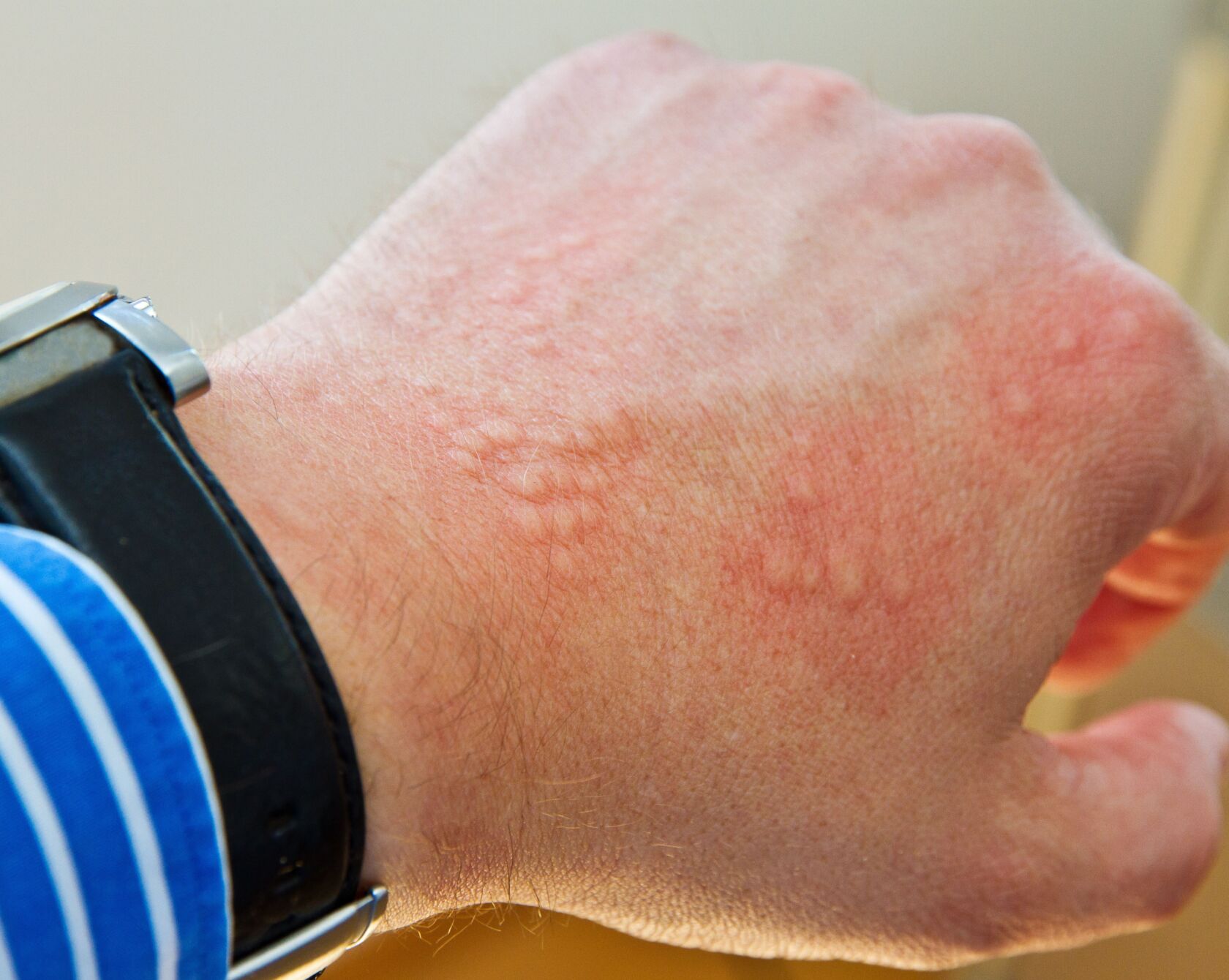
Many rumors are currently circulating about urticaria after the booster vaccination. Some of those affected also report in media reports that they have experienced urticaria. Prof. Dr. med. Peter Schmid-Grendelmeier, Scientific Advisory Board of aha! Allergy Center Switzerland and Head of the Allergy Ward of the Dermatology Clinic at the University Hospital Zurich, explains.
This interview was conducted by the Aha! Allergy Center Switzerland.
Prof. Dr. med. Peter Schmid-Grendelmeier, it is well known that urticaria after COVID-19-vaccination can occur in rare cases. Does nettle rash occur more frequently after the booster?
At the allergy ward at the University Hospital Zurich, we have indeed noticed that urticaria occurs more frequently after the booster than with the first vaccination, for example – but this is still rare in view of the vaccination figures. Pharmacies and doctors have made similar observations. Exact figures on how often this is the case are not yet available at the beginning of February 2022.
Why does urticaria occur after the booster vaccination?
The immune response is stronger after the booster than after the first two vaccinations and therefore unpleasant side effects may also be increased.
How long does urticaria “normally” last?
If urticaria does occur, this is usually the case several hours or days after the vaccination. It is one of the rare side effects and is unpleasant, but usually harmless. Taking antihistamines can provide relief. Talk to your doctor if you have severe symptoms.
If people who are being vaccinated for the first time have experienced a rash similar to hives all over their body within the first hour after the first COVID-19 vaccination, they should consult an allergist before the second COVID-19 vaccination in order to take the necessary precautions.
Are long courses of urticaria after COVID vaccination also known? Some sufferers report that the symptoms last for more than 6 to 8 weeks.
Prolonged urticaria in connection with the COVID-19 vaccination and especially the booster vaccination has been observed in individual cases. Exceptionally, it may last longer than 6 to 8 weeks. However, since prolonged urticaria in particular can have a variety of causes, a connection with the vaccination is not always clear and is also not mandatory. In this case, consult a doctor who can initiate a therapy that usually works quickly and is usually based on antihistamines. And other possible causes can also be evaluated.
What is the cause of urticaria, which can also occur days after vaccination?
Irrespective of the COVID vaccination, processes in the body – such as fever, infections, allergies or severe physical or psychological stress – can activate the immune system and thus cause urticaria, among other things. The COVID vaccination stimulates specific components of the immune system to build up protection against the virus. It is assumed that these accompanying or excessive immunological processes can cause symptoms such as chills, headaches, fatigue – and sometimes urticaria. They are therefore also a sign that the immune system is reacting to the active substance.
If urticaria occurs, can it be assumed that there are no other more severe symptoms? The fear of those affected is often great.
So far, we have not observed any cases in which other severe symptoms have suddenly appeared. None are mentioned in the current scientific literature either.
What does experience show: Is urticaria more likely to occur with certain vaccines?
To date, there are no sufficiently large data available to allow clear attribution of increased urticaria to a specific vaccine. Individual studies show that skin symptoms are more likely to be a side effect of the Moderna vaccine; however, this finding may also be related to the frequency with which the vaccine is used. And, of course, these can also occur with the vaccinations from BioNTech/Pfizer and Johnson&Johnson.
After what time interval can the occurrence of urticaria no longer be associated with the COVID vaccination or the booster?
The longer the interval between vaccination and the disease, the less likely the link is. An appearance 10 to 14 days later can hardly be linked to the vaccination.
If urticaria occurred: Is it advisable to switch to a different agent for the second or booster vaccination?
There is no clear data available for such a recommendation. But if it is possible to switch to a different vaccine, it makes medical sense to do so in terms of tolerability.