Story

Individualized cancer therapies – free from cancer after a long battle

After several unsuccessful treatments, Barbara Marty and Manuel Schibli's cancer has disappeared. This was made possible by innovative therapies based on molecular analysis of the tumor.

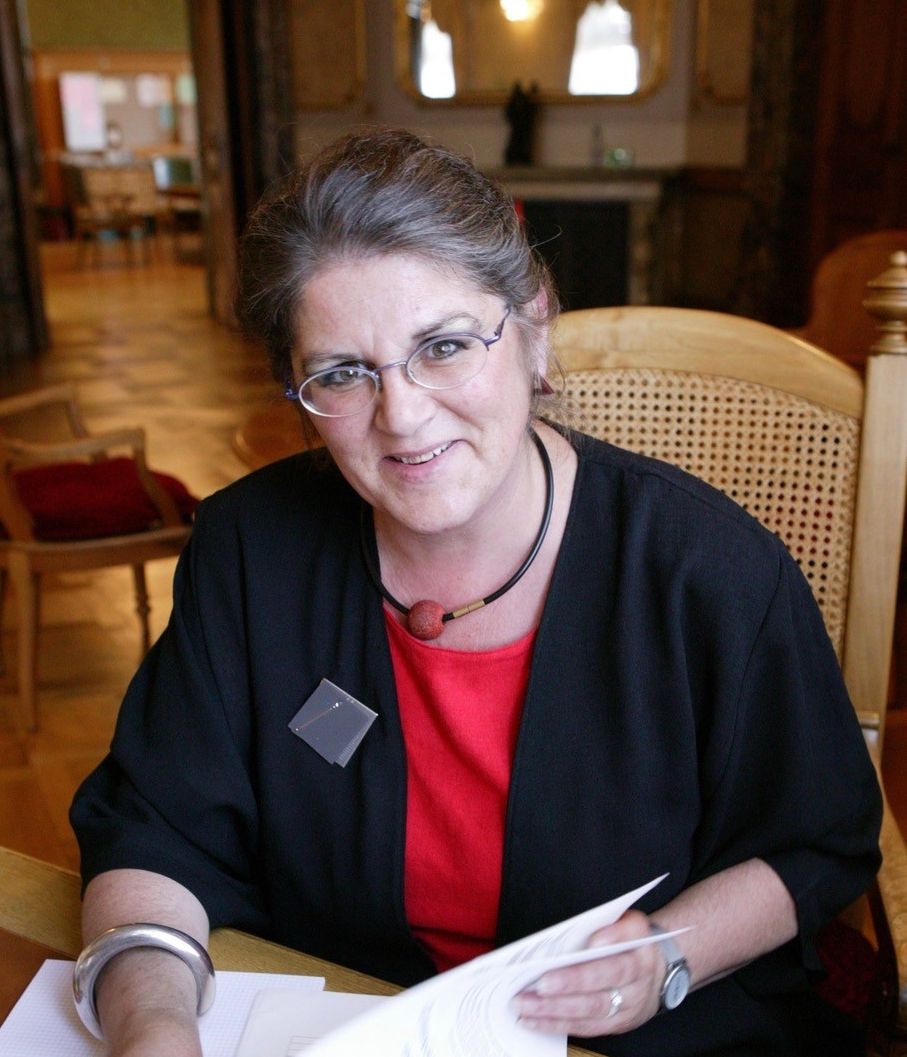
When Barbara Marty was diagnosed with lung cancer five years ago, she was hardly surprised. “I knew the dangers, they were on every packet,” says the now 67-year-old former smoker. But she is certain: “I’ll get through this.” As a former professional politician, Marty is used to fighting. But cancer was to become her toughest opponent: after an extremely stressful course of chemotherapy and immunotherapy, it has been pushed back. But not defeated. When she finally stops the treatment after more than two years and wants to return to work, she receives good and bad news: there are only a few metastases on her lungs. Instead, the lymph channels are now affected.

Today, cancer research knows that every tumor is different. The more precisely it can be analyzed, the sooner a targeted and therefore effective therapy is possible. “We are getting better and better at recognizing the differences in the molecular profile of tumours,” says Professor Markus Manz, Director of the Department of Medical Oncology and Haematology at the University Hospital Zurich and Head of the Comprehensive Center Zurich (see box). “Ideally, we find individual therapies that are not only efficient, but also minimize side effects.”

Marty’s molecular tumor profile showed a mutation in the KRAS gene. At that time, an international study with a new type of drug called AMG 510 was being conducted precisely for such patients. “A stroke of luck for me,” says Marty, who agreed to take part and has since been taking eight tablets a day, having regular blood tests and CT scans. And lo and behold: the cancer has virtually disappeared to this day. “Doctors who don’t know my history don’t believe that I’ve ever had cancer,” she says. What’s more, the therapy has no side effects for her.
Changing blood cells in the laboratory

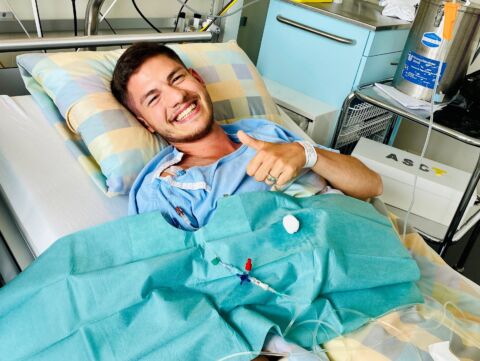
Manuel Schibli also benefited from the new possibilities of targeted cancer therapy. The 25-year-old from the canton of Aargau was an exceptionally fit young man when he was diagnosed with blood cancer around four years ago. By then, he was going to the gym five times a week and even took part in the Swiss Natural Bodybuilding Championships once. But suddenly he was no longer equally efficient. He felt tired, had a headache and sometimes blacked out. Schibli went to his family doctor and had his blood taken. “A short time later, I got a call: I should go to the emergency room immediately.” Unsuspecting, he packed a few clothes in a bag and got into the car. That same evening, a few examinations later, he was transferred by ambulance and received in a wheelchair. “That was surreal. Otherwise, I felt totally healthy.”

Schibli initially fought the cancer with chemotherapy, and finally with a blood stem cell transplant. He describes the following days in hospital as the hardest time of his life. “I lay half-dead in bed for days. It felt like I had demons in my body.” But not only that: it turned out that the cancer had returned as strongly as at the beginning of the therapy.

The diagnosis he received opened up a new possibility. Schibli suffered from acute lymphoblastic leukemia (ALL), which is relatively rare in adults. An immunotherapy called CAR-T has been available for this specific form of blood cancer for a few years now. This involves removing certain white blood cells – the T lymphocytes – from the patient, genetically modifying them in the laboratory and reintroducing them. In this way, the body’s own defense system is induced to destroy the harmful blood cells.

In Schibli’s case, the therapy was a complete success: he has been cancer-free for around a year. He is also going to the gym regularly again. “Priorities have shifted somewhat,” he admits. Instead of just lifting weights, he trains endurance more often. “On nice days with my new racing bike.” Because his immune system is limited due to the disease, Schibli takes several medications. However, he draws a lot of positives from his long battle against cancer: “The illness has made me mentally stronger and more relaxed.”

Manuel Schibli

Barbara Marty also says that she is much more relaxed. And this despite the fact that she is physically limited even without cancer. She also suffers from the lung disease COPD, a “smoker’s leg” and a “Charcot foot”. She also needs Spitex twice a week for drainage. Despite all this, she says: “I have most of my life behind me. So I’m taking all the more time to enjoy the rest.” She talks about her wild garden with slow worms and newts at home in the Zurich Oberland, her two dogs and cat and, above all, her three grown-up children. She recently fulfilled a lifelong dream with them: a trip across Germany to the island of Rügen in a motorhome. “I can’t be spontaneous anymore,” she says. “But I’m very grateful that it’s still possible at all.”

CCCZ: University Cancer Center

Specialists from numerous disciplines work closely together at the Comprehensive Cancer Center Zurich (CCCZ). We also conduct research and teaching, which enables us to offer particularly innovative cancer therapies. The CCCZ is operated by the University Hospital Zurich and the University of Zurich with the involvement of Balgrist University Hospital and the University Children’s Hospital Zurich. There is close cooperation with ETH Zurich.

More about the CCCZ

Contact

Markus Manz, Prof. Dr. med.

Director of Department, Department of Medical Oncology and Hematology

Tel. +41 44 255 38 99
Specialties: Leukemias, Lymphomas, Plasma cell diseases