
Colorectal cancer is one of the most common tumor diseases in Switzerland and in many cases, it only causes symptoms at a late stage. This makes early detection screenings even more crucial.
Prof. Scharl, what are the known risk factors for bowel cancer?
The highest risk is age, which is why bowel examinations are recommended from the age of 50 and the costs are covered by health insurance. Other risk factors include genetic predisposition, diet and environmental factors, intestinal polyps and chronic inflammatory bowel diseases (e.g. ulcerative colitis, Crohn’s disease). As bowel cancer cases are also becoming increasingly common in younger people, persistent symptoms should always be clarified by a doctor. Individual advice is important in the case of cancer in the family.
What are the symptoms of bowel cancer?
Warning signs are persistent or recurring digestive problems, blood or mucus in the stool, alternation between diarrhea and constipation, urge to defecate without emptying, very thin or black-colored stool. Other possible symptoms: Anemia, abdominal pain, loss of appetite, nausea, bloating, unexplained weight loss or fever without infection. Such complaints should be assessed by a doctor.
How does bowel cancer develop?
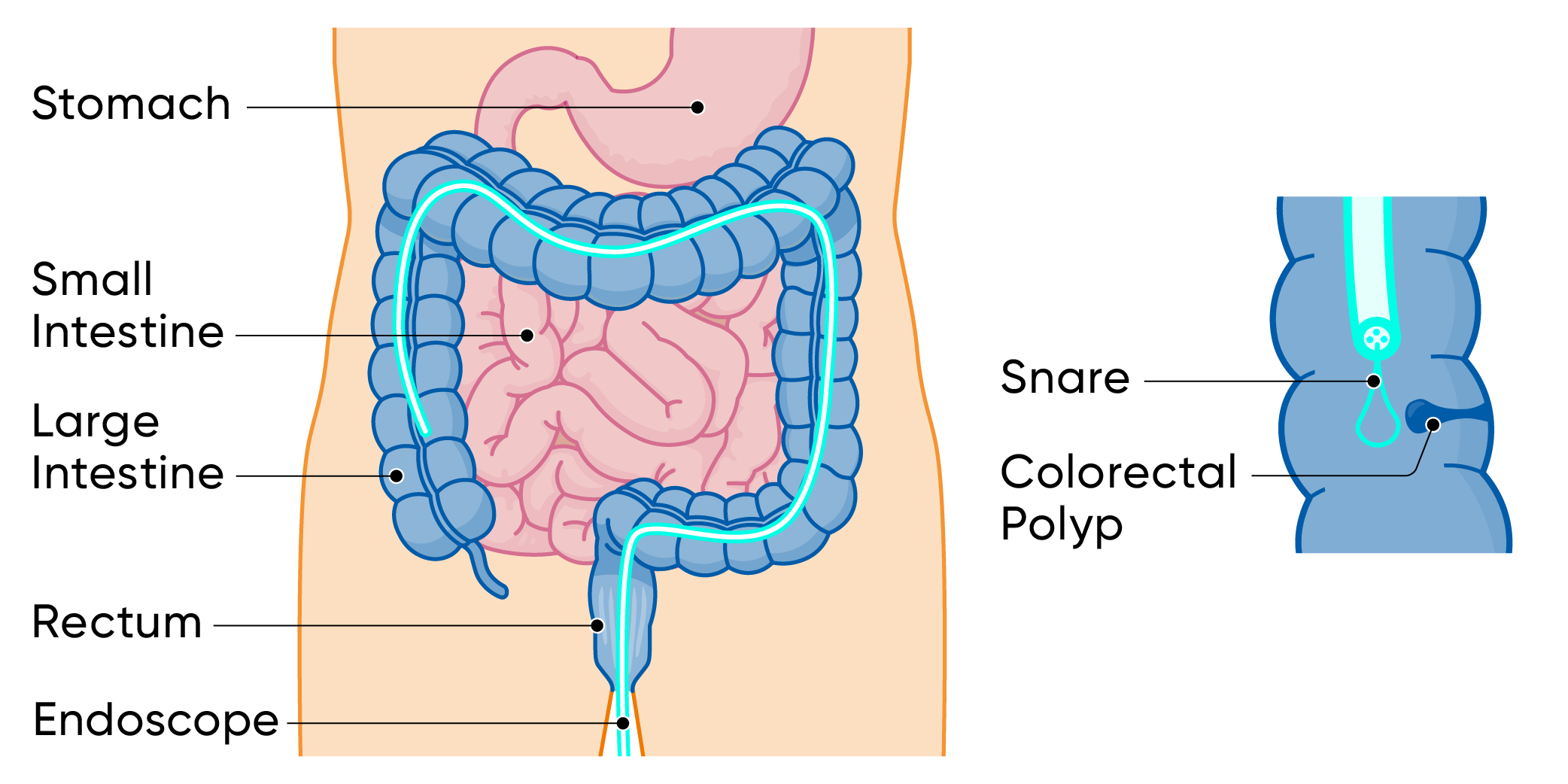
Colon and rectal cancer almost always develop from benign precursors that one day degenerate. These precursors are called “polyps”. Most polyps are adenomas, benign glandular growths that develop further and can then become dangerous. If these are discovered and removed in time during a colonoscopy, bowel cancer can be prevented in eight out of ten cases.
So colonoscopy is prevention and early detection?
Yes, because the growths would then never reach a stage where they become dangerous. And if it is, colorectal cancer detected at an early stage is curable in many cases. In addition to a healthy lifestyle with exercise, a high-fiber diet, no smoking and a normal weight, colonoscopy is the most important measure to prevent and detect colorectal cancer at an early stage.
Then a bowel examination should be a matter of course?
Absolutely. Especially because bowel cancer hardly causes any symptoms for a long time. Of course, the examination is somewhat time-consuming with the preparation, but with modern drinking medication, the necessary bowel cleansing is more pleasant and easier than before and the examination itself is also much gentler with modern examination methods. However, the patients don’t notice any of this because we put them into a short sleep for the 30-minute procedure.
And if bowel cancer is discovered?
Unfortunately, a minority of bowel tumors are still detected at an early stage and most are only diagnosed at later stages. The cancer has then already affected all layers of the intestinal wall or spread to neighboring lymph nodes. In around one in five people affected, the tumor has already formed visible offshoots at the time of diagnosis.
How is colorectal cancer treated today?
Today, nine out of ten people affected can be cured if the disease is detected at an early stage. However, the chances of survival for advanced colorectal cancer have also improved in recent decades. In many cases, the central component of treatment is surgery. The affected section of bowel is removed. There is also radiotherapy and medication. To increase efficacy, several treatments are combined depending on the type, stage and spread of the colon tumor. The age and general condition of the affected person also play a role in the choice of therapies.
Colonoscopy
A colonoscopy is the best cancer prevention. If you have persistent symptoms or a family history, you should register for a diagnostic colonoscopy via your family doctor. If you are between 50 and 69 years old, your basic insurance will pay for a colonoscopy every ten years.