Telemedicine and artificial intelligence support skin diagnostics and therapy at the Department of Dermatology at the University Hospital Zurich (USZ).
New digital methods enable us to detect skin changes faster, more precisely and often at an early stage. This improves diagnostic reliability and makes treatment more efficient – for the benefit of our patients.
Why digital dermatology?
Our skin is not only our largest organ, but also an early warning system for many diseases. Thanks to digital technologies such as telemedicine and artificial intelligence (AI), we can make dermatological expertise available regardless of location and support it with state-of-the-art image analysis. Digital dermatology complements medical experience and opens up new possibilities in prevention, diagnostics and therapy.
Teledermatology – skin diagnosis independent of time and place
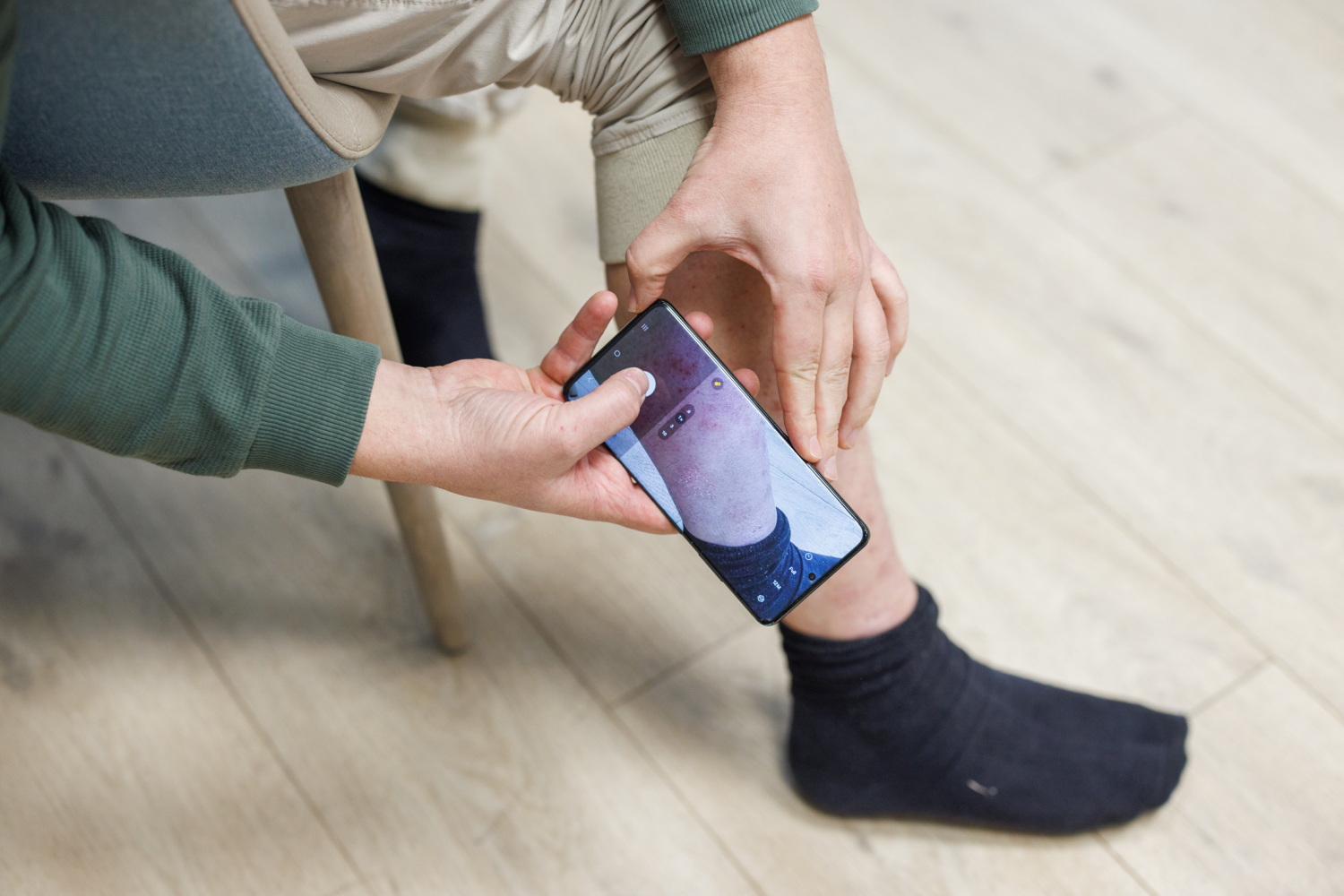
With teledermatology at the USZ, you and your family doctor can receive a dermatological assessment quickly and easily – without having to travel long distances.
What we offer
- Teledermatology for patients: Upload photos of your skin lesions and answer a few questions online. Our specialists will give you qualified feedback. Find out more about the offer.
- Teledermatology for referring physicians: General practitioners and specialists can submit findings and images online and quickly receive a specialist assessment. To the teledermatology referral form
- Allergy check online: Our digital service enables convenient clarification of allergies with an online survey and evaluation. To the allergy check
Your advantages:
- Quick access to dermatological expertise
- Reduced waiting times and less travel
- Secure data transfer and medical quality
Artificial intelligence - support for precise diagnostics
AI systems help our doctors to detect skin diseases even more reliably. They do not replace the medical assessment, but supplement it.
Current and future applications at the USZ
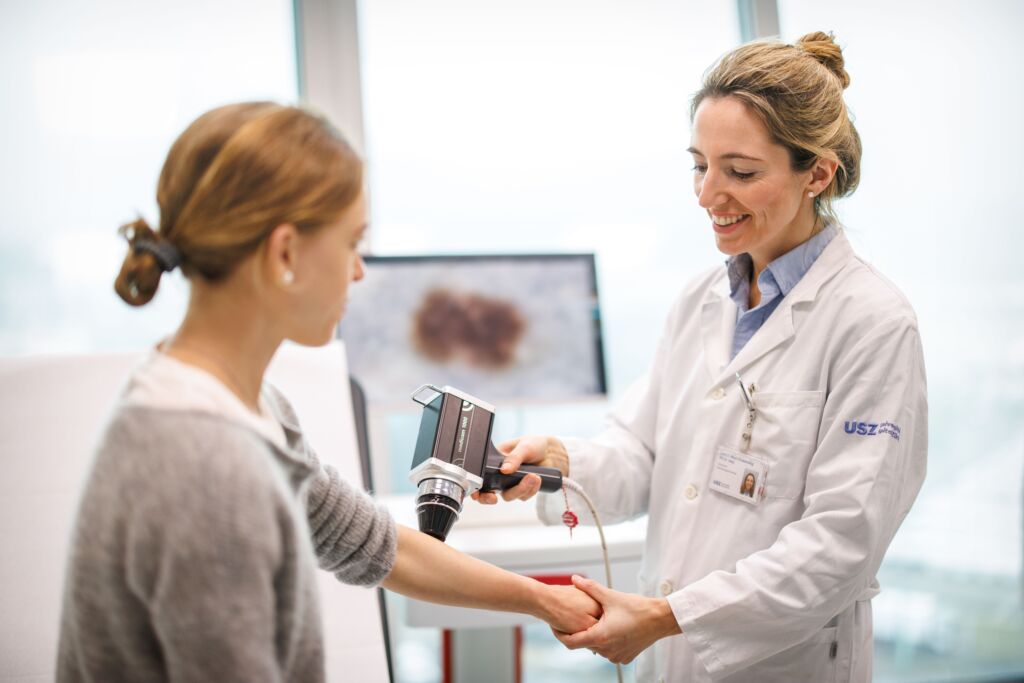
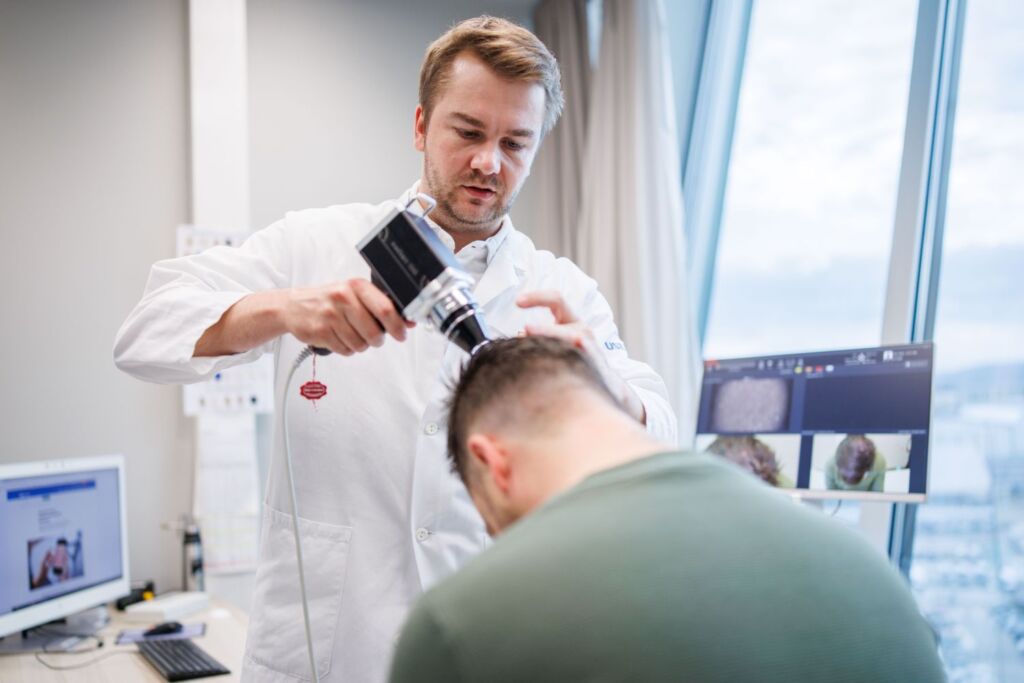
PhotoFinder
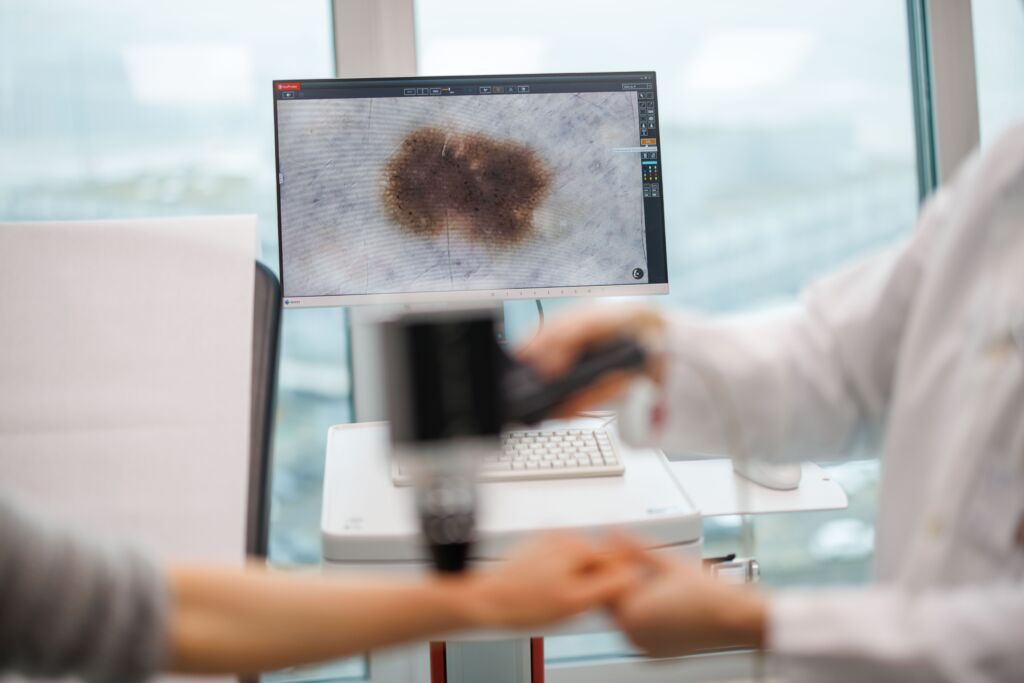
Moles and other skin lesions are analyzed using AI-supported digital dermoscopy. The system supports the early detection of skin cancer and enables progression-oriented monitoring.
Outlook: Digitalization as an opportunity for better care
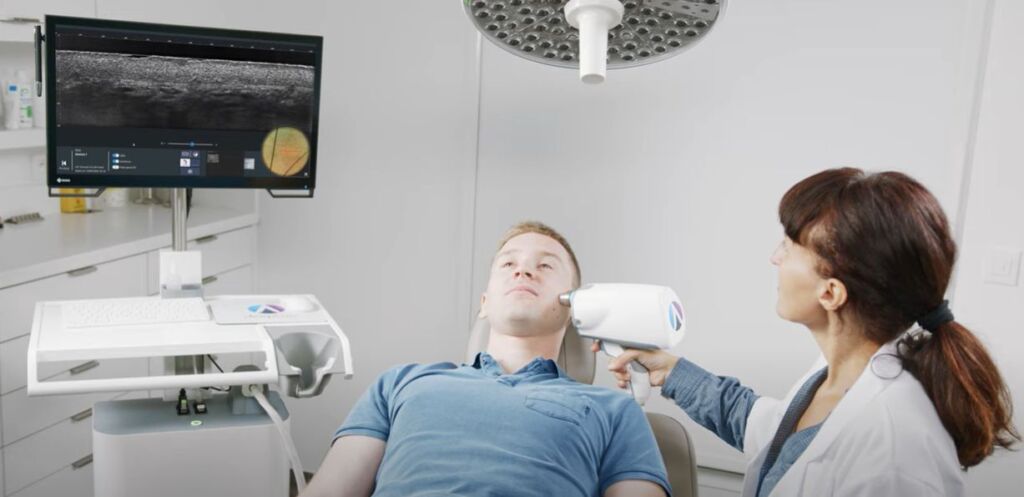
LC-OCT (Line-field Confocal Optical Coherence Tomography) – Innovative skin diagnostics without biopsy
LC-OCT is a modern, high-resolution imaging technology that allows us to examine your skin gently, painlessly and without removing tissue. The combination of two innovative procedures produces detailed, three-dimensional images of the uppermost layers of the skin in real time without invasive procedures. The CE-certified technology is supported by intelligent AI software that helps doctors to detect skin changes, especially basal cell carcinomas, early and reliably.
In addition, LC-OCT is also suitable for diagnosing other forms of white skin cancer and its precursors, such as actinic keratoses or spinocellular carcinomas. Pigmented skin changes such as moles and melanomas can also be precisely analyzed, as can inflammatory skin diseases. In addition, the method enables preoperative monitoring of tumor margins, allowing surgical interventions to be planned and performed in a more targeted manner. It also makes it possible to monitor the progress of therapies in real time and assess their success immediately.
This enables us to make precise diagnoses and select the appropriate treatment method together with you – often without an additional skin biopsy. With LC-OCT, you benefit from state-of-the-art medical technology that offers you greater convenience, safety and fast results.
“Digital technologies such as teledermatology and AI are no longer a vision of the future for us, but a reality. They enable faster and more precise diagnostics – and give us more time to concentrate on the essentials: providing the best possible care for our patients.”
Full-body skin scan (from 2026)
Outlook: Digitalization as an opportunity for better care
Digital technologies enable personalized and predictive dermatology. Our aim is to detect and treat skin cancer and other diseases as early as possible – for greater safety and quality of life.